Why Commercial Construction Jobs Are in High Demand
Commercial construction jobs offer stable and well-paying career opportunities. With thousands of positions available in major markets like Las Vegas and the U.S. Bureau of Labor Statistics projecting 5% growth for construction managers through 2032, the industry provides clear pathways to financial and professional success.
Top Commercial Construction Job Opportunities:
- Construction Superintendent – $70,000 to $180,000 annually
- Construction Project Manager – $80,000 to $145,000 annually
- Commercial Construction Estimator – $80,000 to $150,000 annually
- BMS Control Technician – $95,000 to $120,000 annually
- Site Engineer (HVAC & Controls) – $95,000 to $120,000 annually
The commercial sector differs from residential work in scale and complexity, involving large-scale projects like office towers, hospitals, and schools that shape our communities. This field combines competitive salaries, job security, and the satisfaction of making a lasting impact. As one industry professional noted, construction managers often spend most of their time “working out of a field office at a construction site, where they monitor the project and make daily decisions about construction activities.”
With 284,750 projected job openings for construction managers alone through 2032, and thousands of current positions available, now is an excellent time to explore a career in commercial construction.
Basic commercial construction jobs terms:
- commercial construction builders
- commercial construction management
- commercial construction financing
Exploring the Blueprint: Key Roles in Commercial Construction
The world of commercial construction jobs requires a diverse team of specialists working together to transform blueprints into towering office buildings, busy hospitals, and state-of-the-art schools. From project conception to final inspection, each professional plays a vital part in ensuring every structure is built safely, efficiently, and to the highest standards.
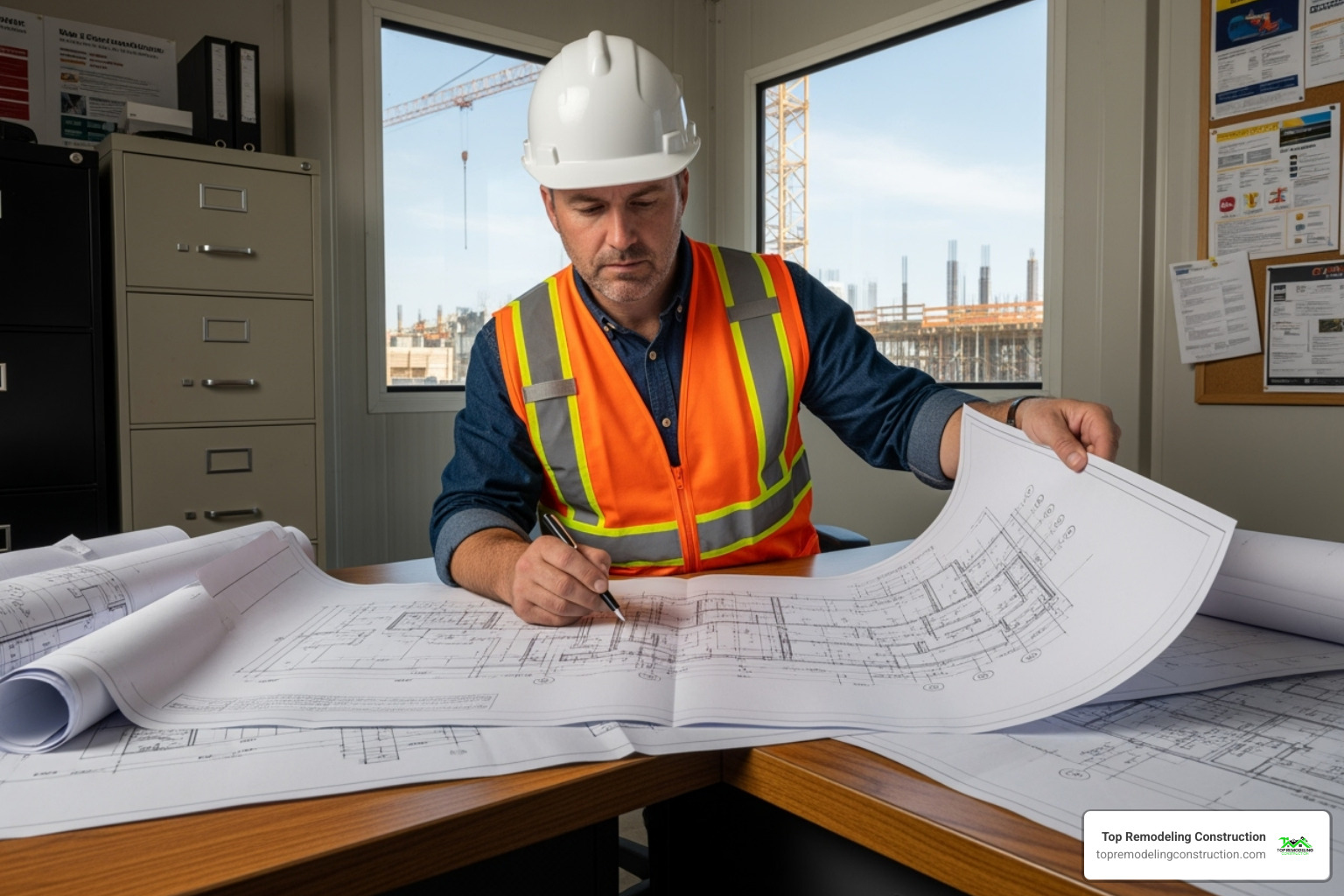
At the heart of most projects are the Construction Project Manager and the Construction Superintendent. They work hand in hand, with distinct but connected roles, to bring projects to life.
| Feature | Construction Project Manager | Construction Superintendent |
|---|---|---|
| Primary Focus | Strategic planning and overall project coordination | Daily on-site operations and execution |
| Key Responsibilities | Budget management, contract negotiation, stakeholder communication | Safety enforcement, quality control, crew supervision |
| Work Environment | Split between office and field, client meetings | Primarily on-site in all weather conditions |
| Daily Interactions | Clients, architects, engineers, senior management | Subcontractors, trades workers, site personnel |
| Skills Needed | Financial management, communication, contract knowledge | Leadership, problem-solving, technical expertise |
| Salary Range | $80,000 – $145,000 annually | $70,000 – $180,000 annually |
What makes commercial construction jobs particularly exciting is their complexity and scale. Unlike residential projects, commercial construction involves massive undertakings that shape entire communities.
The On-Site Leader: Construction Superintendent
The Construction Superintendent is the general of the job site, changing architectural plans into concrete reality. They are responsible for the smooth, safe, and efficient operation of the construction site.
Their daily world involves leading morning safety meetings, conducting site walk-throughs to inspect progress, and planning daily priorities. They coordinate with subcontractors, solve unexpected problems, and ensure quality standards are met.
The responsibilities are substantial: scheduling work crews, enforcing safety protocols, managing quality control, and keeping projects on track. This requires a deep understanding of construction drawings, building codes, and strong leadership skills.
What they earn reflects this high level of responsibility, typically ranging from $70,000 to $180,000 annually in major markets. The role demands physical stamina and quick decision-making.
More info about Commercial Construction Management
The Strategic Planner: Project Manager
While the Superintendent manages the site, the Project Manager is the strategic mastermind orchestrating the entire operation. They see the big picture and ensure all moving pieces fit together.
Their expertise lies in budget management, contract negotiation, and managing relationships with architects, inspectors, and clients. They are the primary point of contact for stakeholder updates and concerns.
A typical day involves reviewing project schedules, analyzing budget reports, coordinating with design teams, and preparing progress reports. Communication is constant, from conference calls with engineers to site meetings with the superintendent.
The earning potential for Project Managers ranges from $80,000 to $145,000 annually, with specialized roles in complex sectors commanding even higher salaries.
The Financial Expert: Construction Estimator
Behind every successful bid is a Construction Estimator who has carefully calculated every cost. Their accuracy is critical to a project’s financial success.
Their analytical skills are used to perform detailed cost analysis by reviewing blueprints and specifications. They create material take-offs and prepare competitive bids that determine whether a company wins a contract.
Their daily work involves reviewing plans, contacting suppliers for material prices, and negotiating with subcontractors. They use sophisticated software to prepare comprehensive bid proposals.
Their expertise commands salaries from $80,000 to $150,000 annually.
Learn about our Commercial Construction Cost Estimator services
Skilled Trades and Technicians
Beyond managers and estimators, skilled tradespeople and technicians are the backbone of any project, turning plans into reality.
- Commercial Carpenters perform everything from framing to installing doors, windows, and interior finishes.
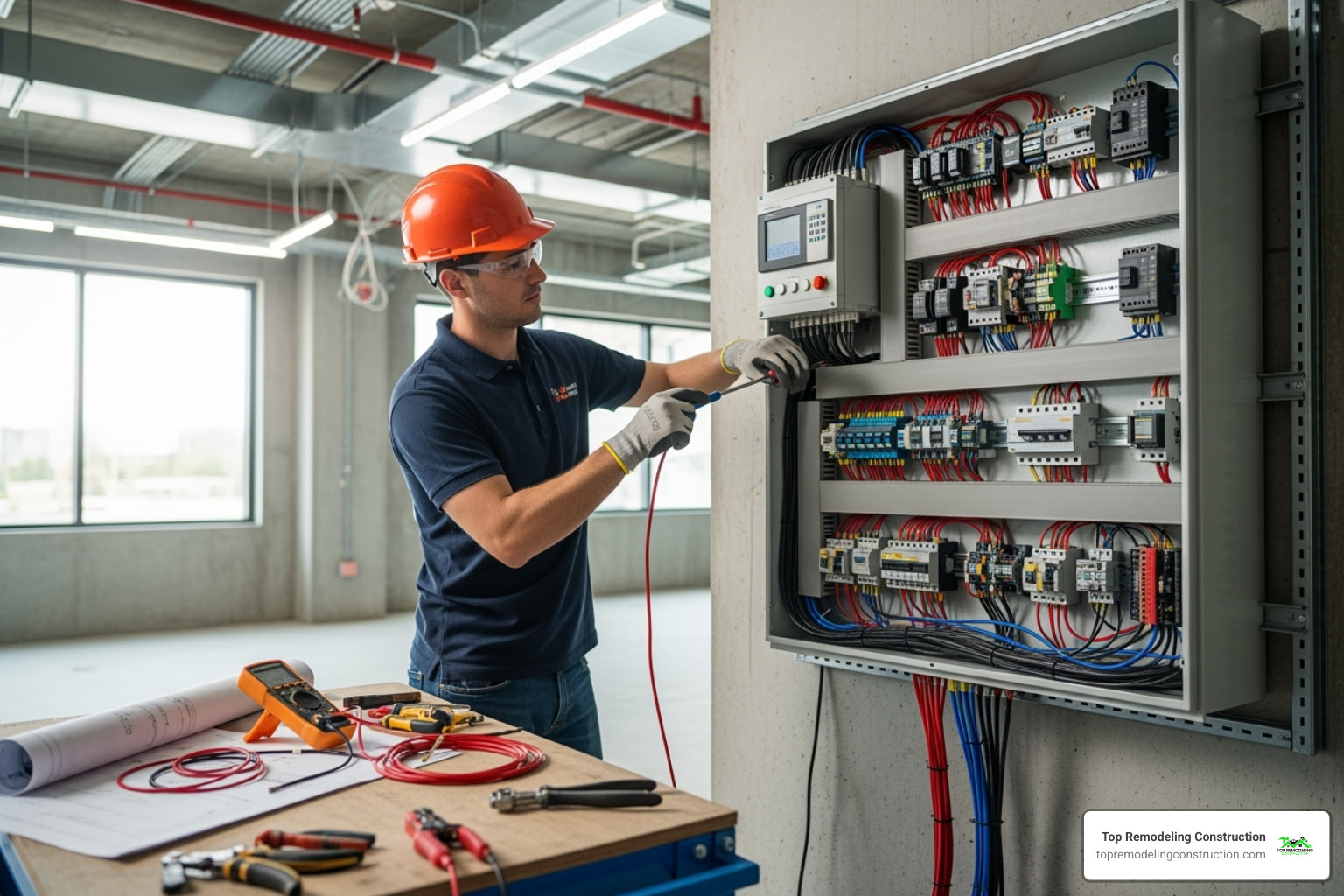
- BMS Control Technicians specialize in Building Management Systems, installing and programming automated controls for HVAC, lighting, and security. Their skills command salaries of $95,000 to $120,000 annually.
- HVAC and Site Engineers design and implement climate control systems, overseeing installation and ensuring code compliance. They typically earn $95,000 to $120,000 yearly.
- Electricians, Plumbers, and other traditional trades remain essential, contributing their specialized expertise to every project.
Building Your Foundation: Skills, Qualifications, and Career Paths
Starting a career in commercial construction requires a strong foundation of skills and knowledge. This industry rewards hard work and continuous learning, offering clear paths from entry-level positions to senior leadership roles. Many successful professionals began as construction workers and advanced to become project managers or even company owners.
Learn essential skills with a Construction Management course
Essential Qualifications for commercial construction jobs
Certain qualifications can fast-track your career in commercial construction jobs.
- Higher education, such as a Bachelor’s degree in Construction Management or Engineering, is increasingly important for management positions.
- Certifications prove your expertise. The OSHA 30 certification is the gold standard for on-site safety, while the PMP (Project Management Professional) is valuable for project managers.
- Trade-specific certifications and licenses are required for electricians, plumbers, and HVAC technicians. Specialized credentials in building automation systems can boost earning potential.
- On-the-job experience is irreplaceable. Many senior roles require at least 10 years of hands-on experience, as there is no substitute for solving real-world problems on a job site.
- Apprenticeships offer a blend of learning and earning, providing structured training and practical experience that leads to higher-paying positions.
Key Skills for Success
Beyond formal qualifications, certain skills are essential for thriving in modern commercial construction jobs.
- Project management software proficiency in industry-standard tools is crucial for scheduling, documentation, and coordination.
- BIM (Building Information Modeling) technology is the future of construction. Understanding BIM provides a significant competitive advantage.
Master Building Information Modeling (BIM) for Construction
- Communication skills are vital for writing clear reports, explaining complex issues to clients, and coordinating with diverse teams.
- Problem-solving abilities are tested daily by weather delays, material shortages, and design changes. The ability to find practical solutions is key.
- Leadership qualities are necessary for supervising crews, motivating teams, and making decisive decisions.
- Technical knowledge of construction methods, materials, building codes, and safety protocols is the foundation of quality work.
- Attention to detail is critical to prevent costly errors. Catching small issues before they become major problems is an invaluable skill.
Career Progression and Advancement
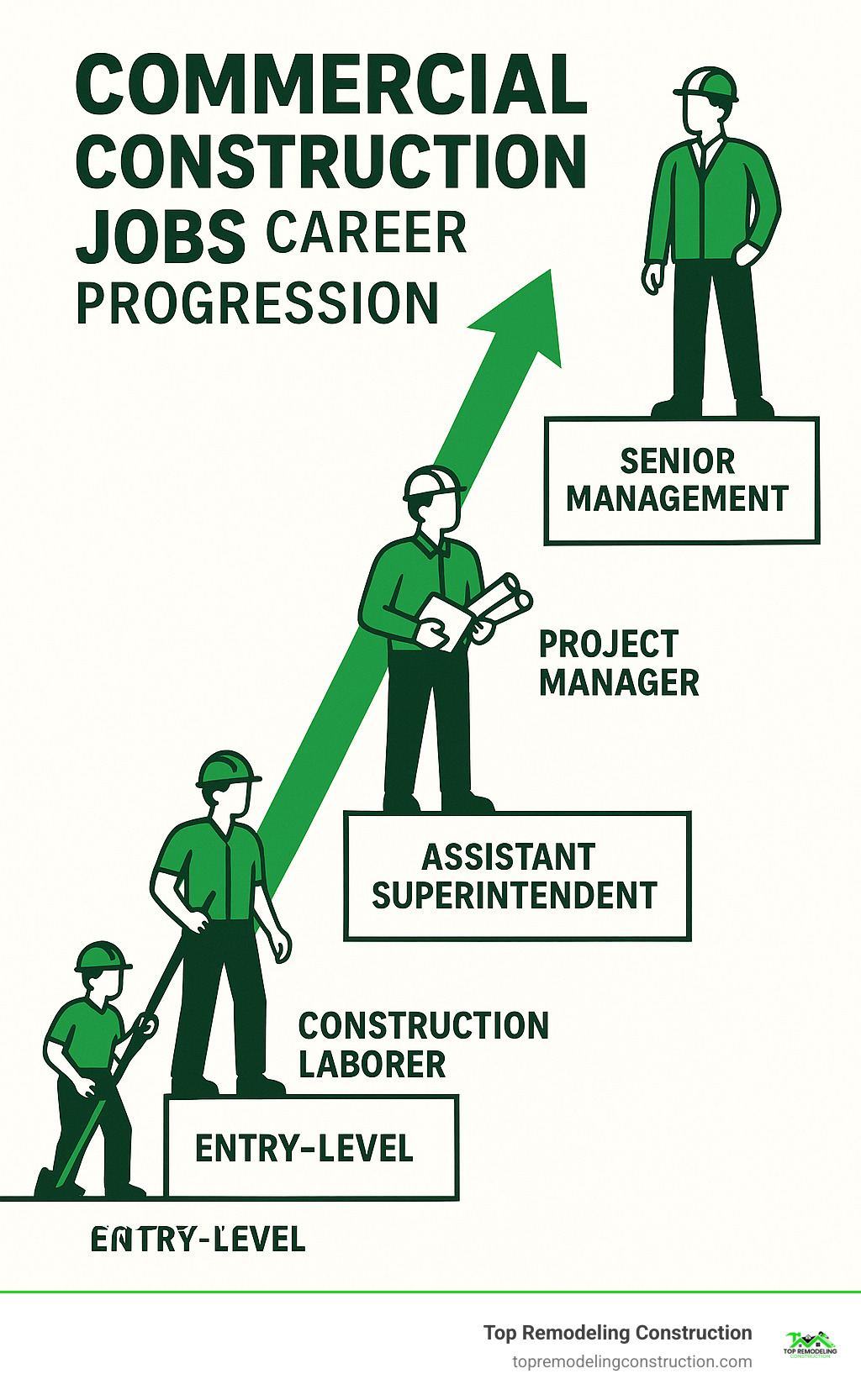
Commercial construction offers a clear career progression path.
- Entry-level roles like Construction Worker or Assistant Project Coordinator provide a foundation for learning the fundamentals.
- Mid-level roles such as Assistant Project Manager or Assistant Superintendent involve taking on more responsibility and supervising smaller teams.
- Senior roles like Senior Project Manager or Director of Construction combine technical expertise with business acumen to oversee major projects and shape company strategy.
The path from trade to management is a unique opportunity in construction. Many successful leaders started as skilled tradespeople, giving them practical knowledge that complements academic backgrounds. Your career path is ultimately limited only by your ambition and willingness to develop new skills.
The Booming Market for Commercial Construction Jobs
The future is bright for commercial construction jobs. The U.S. Bureau of Labor Statistics projects that construction manager positions will grow 5% from 2022 to 2032, which is in line with the average for all occupations. This translates to significant opportunities in a stable industry.
This growth is reliable because commercial construction is always needed. Companies require new offices, hospitals need expansions, and schools require updates. This steady demand creates excellent job security not just for managers, but for skilled carpenters, electricians, BIM technicians, and project estimators.

With 7,264 available construction manager positions currently and 284,750 projected job openings through 2032, there are hundreds of thousands of opportunities for people ready to build their careers in this field.
Finding High-Paying commercial construction jobs
Landing a great commercial construction job requires the right strategy and tools. There are more resources than ever to find these opportunities.
- Online job boards like LinkedIn and Indeed are excellent starting points. For best results, set up alerts with specific keywords like “Commercial Construction Superintendent” or “Healthcare Project Manager.”
- Company career pages often feature openings before they are posted elsewhere. Researching firms that share your values, such as a commitment to quality, integrity, and attention to detail, can lead to a rewarding work environment.
- Specialized recruitment agencies can be game-changers, as they often have access to positions that are not publicly advertised and can provide insider knowledge.
- Professional networking at industry events and trade shows remains one of the most effective ways to find opportunities, as many top jobs are filled through referrals.
Tapping into Government and Emergency Contracts
Government contracts represent a massive and stable source of work in commercial construction, offering the chance to contribute to public infrastructure.
State contract systems are the gateway to these opportunities. Most states maintain online portals where they post construction bids. Nevada’s Government eMarketplace (NGEM), for example, lists numerous projects. Getting registered and setting up alerts is the first step.
Vendor registration with state and federal agencies provides access to projects ranging from small facility improvements to major infrastructure builds. While it requires some paperwork, these contracts offer excellent stability and growth potential.
Emergency contracting offers unique opportunities for qualified contractors who can respond quickly and work efficiently under pressure. These fast-track projects are essential for community resilience.
The bidding process for government work follows specific rules that level the playing field. Whether through qualifications-based selection or competitive bidding, these contracts reward companies that demonstrate reliability, quality, and attention to detail.
Example of a state contract portal
Government work is about more than just a single project; it’s about building a reputation for quality and reliability that can open doors throughout your career.
Frequently Asked Questions about Commercial Construction Careers
Here are answers to some of the most common questions about working in commercial construction.
What are the biggest benefits of working in commercial construction?
Commercial construction jobs offer a unique combination of benefits. The work provides a tangible sense of accomplishment—the ability to point to a finished building and say, “I helped build that.”
Key benefits include:
- Competitive Salary: Many roles command impressive salaries, often well into six figures, reflecting the high demand for skilled professionals.
- Strong Job Security: Businesses and communities constantly need new facilities and infrastructure upgrades, creating a stable foundation for employment.
- Tangible Results: Professionals see concrete progress daily, which provides a deep sense of satisfaction.
- Opportunities for Advancement: The industry values experience and skill development, offering clear career paths from entry-level roles to senior leadership.
- Team Collaboration: You get to work with a diverse group of experts—architects, engineers, and tradespeople—to create something remarkable together.
How is commercial construction different from residential?
The differences between commercial and residential construction go far beyond project size.
- Scale and Complexity: Commercial projects are larger and more complex, involving intricate designs, advanced engineering, and sophisticated building systems.
- Materials: Commercial construction uses heavy-duty, industrial-grade materials like steel and reinforced concrete to meet durability and safety standards.
- Building Codes: Regulations are far more stringent, covering accessibility (ADA), fire safety, and complex zoning laws. Safety protocols are also more comprehensive.
- Project Timelines: Commercial projects often span months or years, requiring sustained coordination and long-term planning.
- Client Types: Clients are typically businesses, corporations, or government agencies, leading to a more formal, contract-driven environment with multiple stakeholders.
What does a typical day look like for a Construction Superintendent?
A Construction Superintendent’s day is dynamic and hands-on. The day typically begins early with a morning safety meeting to review tasks and potential hazards with all on-site personnel.
This is followed by a comprehensive site walk-through to inspect progress, ensure quality, and verify safety compliance. A significant portion of the day is spent coordinating subcontractors, ensuring that different trades can work efficiently without impeding one another.
Problem-solving is a constant. The superintendent is the first responder for issues like equipment failures, material delays, or unexpected site conditions, and must find effective solutions to keep the project on schedule. Throughout the day, they are responsible for progress reporting to the project manager, documenting milestones and challenges.
The role is demanding and often requires long hours, but it is incredibly rewarding for those who enjoy leading teams and seeing a project come together from the ground up.
Conclusion: Build Your Future in Commercial Construction
The world of commercial construction jobs offers a place for nearly every type of professional talent, from the strategic thinking of Project Managers to the hands-on leadership of Superintendents. Every role is essential to creating the remarkable buildings that shape our communities.
Beyond the competitive salaries and strong job security, with over 284,000 projected openings through 2032, the true reward is the satisfaction of creating tangible structures that serve the community. These buildings are where people work, heal, and learn.
The clear career pathways in commercial construction mean you are never stuck. The industry rewards dedication, problem-solving, and a commitment to quality, allowing for continuous growth and advancement.
For companies undertaking commercial construction projects, success depends on partnering with a team that understands the complexities of the field. At Top Remodeling Construction, we bring that same attention to detail and commitment to excellence to every job. Our family-owned approach means we treat every project with the personal care and quality focus it deserves.
If you’re ready to build a meaningful career, commercial construction offers an industry where your work creates lasting value and every project brings new opportunities to grow.