Understanding Commercial Construction: Building the Foundations of Business
Commercial Construction is the process of building and renovating structures designed for business use, ranging from retail stores and office buildings to warehouses and healthcare facilities. Unlike residential construction, commercial projects involve larger-scale developments, specialized systems, and stricter regulatory requirements that serve the needs of businesses and their customers.
Key aspects of commercial construction include:
- Project Types: Retail spaces, office buildings, industrial facilities, hospitality venues, and healthcare centers
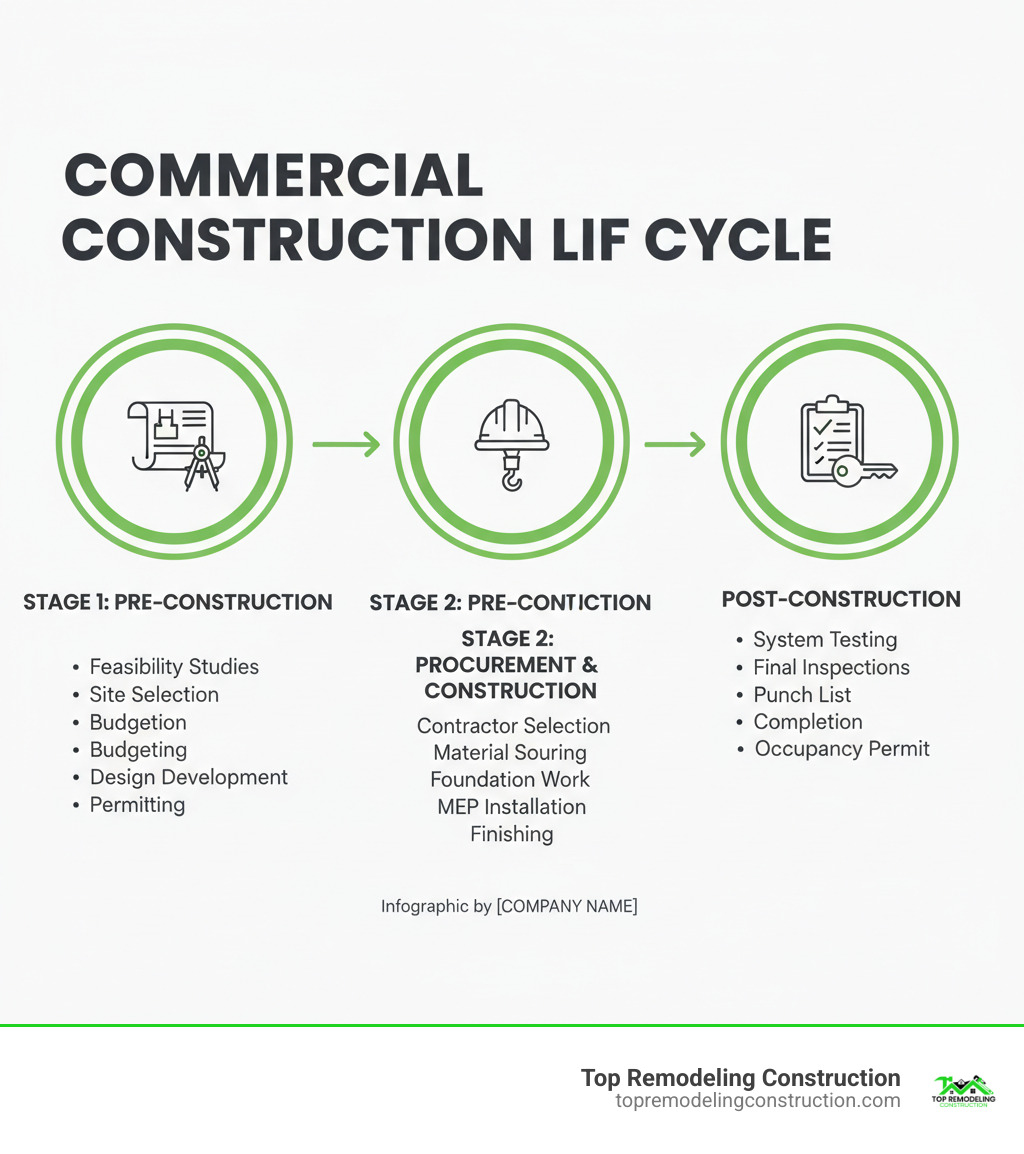
- Main Stages: Pre-construction planning, procurement and construction, and post-construction closeout
- Core Requirements: Permitting and Certificates of Occupancy, building code compliance, ADA accessibility standards
- Average Costs: $150 to $400 per square foot, depending on project type and location
- Key Players: General contractors, project managers, architects, engineers, and specialized trades
The commercial construction sector represents a significant economic force. According to industry projections, the sector is expected to grow by 4.5% annually over the next five years. In Canada alone, the total value of commercial construction projects is estimated to reach $100 billion by 2025. This growth is driven by expanding e-commerce logistics needs, evolving workplace designs, and increased demand for specialized facilities.
Whether you’re a business owner planning your first retail location or a property developer considering a large-scale project, understanding the commercial construction process helps you make informed decisions. From navigating complex permitting requirements to selecting the right construction team, each decision impacts your project’s timeline, budget, and ultimate success.
Getting started on commercial construction can feel overwhelming. As one industry expert notes, the process requires “meticulous planning of every detail” before agreeing on scope and budget. The good news? With the right knowledge and professional partners, you can transform your business vision into a functional, profitable reality.
Basic Commercial Construction terms:
- commercial construction management
- commercial construction financing
- commercial construction cost estimator
What Are the Primary Types of Commercial Construction?
When you think about Commercial Construction, you might picture a generic office building or shopping center. But the reality is far more interesting. Every commercial project tells its own story and serves a unique purpose in our communities. A hospital needs completely different design considerations than a warehouse. An upscale restaurant faces challenges that would never cross an office manager’s mind.
The beauty of commercial construction lies in this diversity. Each project type requires specialized knowledge, specific building systems, and a deep understanding of how people will actually use the space. Whether it’s the flow of customers through a retail store or the precise temperature control needed in a distribution center, every detail matters.
We’ve had the privilege of working on many different types of commercial projects over the years. You can see examples of our work in our Projects section, which showcases the variety and quality we bring to every job.
Retail and Office Construction
These are the spaces where most of us spend our days, whether we’re shopping, working, or grabbing a bite to eat.
Retail spaces are all about creating an experience. The retail construction market is growing at about 5.2% annually, and there’s a good reason for that. Today’s customers want more than just a place to buy things. They want an environment that reflects their values and makes them feel something. A coffee shop needs a completely different atmosphere than a high-end boutique, and both need layouts that encourage people to stay, explore, and ultimately make a purchase.
When we design retail spaces, we think about how customers will move through the area. Where will their eyes naturally go? What lighting makes products look their best? For restaurants, we focus on kitchen layouts that keep staff moving efficiently while maintaining safety standards. Many retailers now want sustainable materials and energy-efficient systems, which isn’t just good for the planet—it also resonates with customers who care about these issues.
Office construction has changed dramatically in recent years. The old model of endless rows of identical cubicles? That’s fading fast. Modern offices need to be flexible, collaborative spaces that actually make people want to come to work. We’re talking about adaptable layouts that can shift as teams grow or change, technology integration that feels seamless rather than clunky, and design elements that support employee well-being.
Every company has its own culture and way of working. Our job is to create office spaces that reflect that unique identity while improving how people actually get their work done. Sometimes this means creating quiet zones for focused work. Other times it means designing open areas that spark creativity and conversation. And yes, budgeting for office construction can get complicated, but with careful planning and open communication, we help clients steer those challenges without breaking the bank.
Industrial and Logistics Construction
If you’ve ordered anything online lately, you’ve benefited from the industrial and logistics construction boom. E-commerce has transformed this sector, creating massive demand for warehouses, distribution centers, and manufacturing facilities.
Warehouses and distribution centers are the unsung heroes of modern commerce. Building them right means thinking about efficiency at every turn. These facilities need flooring systems tough enough to handle constant forklift traffic and heavy loads. They require high ceilings to maximize storage capacity and strategically placed loading docks that keep goods moving smoothly.
Some warehouses need specialized features. If you’re storing pharmaceuticals or fresh food, you need precise temperature control throughout the entire building. This means creating an unbroken thermal envelope and installing sophisticated HVAC systems that maintain exact conditions while staying energy efficient. Getting the details right prevents costly problems like moisture infiltration or temperature fluctuations that could ruin inventory.
Manufacturing facilities bring their own set of challenges. These spaces need to accommodate specific equipment, support efficient workflow patterns, and allow room for future growth. The foundations often need extra reinforcement to support heavy machinery. We also conduct vibration analysis to make sure equipment operations won’t damage the building structure over time.
Certain industries face even stricter requirements. Pharmaceutical manufacturing, for instance, demands cleanroom environments that meet GMP standards. This involves HEPA filtration systems, specialized HVAC setups, and materials that can be thoroughly sanitized. Every detail gets scrutinized because public health and safety depend on it.
We offer comprehensive Commercial Construction Services designed to meet the demanding needs of industrial and logistics operations. These projects require expertise and attention to detail that comes from years of experience.
Hospitality and Healthcare Construction
These two sectors might seem different, but they share something important: both revolve around the human experience. One focuses on comfort and enjoyment, the other on healing and care.
Hospitality construction covers hotels, motels, and other lodging facilities where guest experience is everything. Nobody wants to hear their neighbors through paper-thin walls, so sound control becomes a top priority. Guests expect comfortable temperatures year-round, which means efficient HVAC systems that work quietly in the background. And because hotels see constant traffic, all finishes need to be durable enough to withstand heavy use while still looking great.
The best hospitality projects create spaces that feel special. It’s not just about providing a bed for the night—it’s about offering an experience that guests remember. This might mean incorporating local design elements, creating inviting common areas, or adding thoughtful touches that show someone cares about the details.
Healthcare facilities present unique challenges because they must serve both patients and medical staff effectively. A well-designed medical office or dental clinic makes patients feel more comfortable while helping staff work efficiently. The layout needs to support smooth patient flow, from check-in through treatment to checkout.
Healthcare construction also involves specialized systems that you won’t find in other building types. Medical facilities need advanced ventilation systems to maintain air quality and prevent infection spread. Electrical systems must meet strict safety codes to support life-saving equipment. All materials need to support sterile environments and withstand rigorous cleaning protocols.
Whether we’re building a dental office or a therapy center, we focus on creating spaces that put patients at ease while giving healthcare professionals the tools they need to provide excellent care. It’s a balancing act that requires both technical expertise and genuine understanding of how these spaces will be used every day.
The Key Stages of a Commercial Construction Project
Think of Commercial Construction as a carefully choreographed performance. Every successful project moves through distinct phases, each one building on the last. Whether you’re planning a small retail shop or a sprawling warehouse, understanding this journey helps you know what to expect at every turn.
We’ve guided countless clients through this process, and we’ve learned that the projects that run smoothest are the ones where everyone understands the roadmap from day one. Let’s walk through what that journey looks like.
Stage 1: Pre-Construction and Planning
This is where we lay the groundwork for everything that follows. It’s not the most glamorous phase—there are no hard hats or heavy machinery yet—but it’s absolutely the most important. Get this part right, and the rest of the project flows naturally.
Feasibility studies and site selection come first. We dig into the details: Is this location right for your business? Does the zoning allow what you have in mind? What about environmental factors? These early questions save you from expensive surprises down the road.
Budgeting is where many projects live or die. We help you understand the real costs involved, from architectural drawings to the final coat of paint. The truth is, Commercial Construction costs vary widely—typically between $150 and $400 per square foot—depending on what you’re building and where. Our Commercial Construction Cost Estimator gives you a realistic starting point. We also walk you through financing options so you know exactly what you’re working with.
Design development is when your vision starts taking shape on paper. Architects and engineers translate your ideas into detailed blueprints. They’re thinking about everything: structural integrity, material selections, and how the mechanical, electrical, and plumbing systems will work together.
Then comes permitting and regulatory compliance—often the trickiest part of pre-construction. Here’s something many business owners don’t realize until it’s too late: the Certificate of Occupancy (CO) is everything. This document dictates exactly what your property can legally be used for. Planning to open a restaurant in a space that’s only approved for office use? You’ll need to change that CO, and that process can take up to a year and cost a small fortune.
We always tell clients: check the CO before you sign anything. Understanding the Certificate of Occupancy can save you months of headaches. We also investigate any existing building violations that could halt your construction and ensure your project meets accessibility standards. Major renovations often trigger ADA compliance requirements, meaning you might need to add ramps, wider doorways, or accessible restrooms. You can learn more about making accommodations for people with disabilities and how these requirements affect your project.
If you’re converting a space into a food establishment, we thoroughly review the existing MEP systems to make sure the infrastructure can handle increased demand. And if your building sits in a historic district, there may be restrictions on what you can change on the exterior.
Stage 2: Procurement and Construction
This is when things get exciting. Plans are approved, permits are secured, and it’s time to build.
Selecting contractors and sourcing materials sets the tone for construction quality. We work with skilled subcontractors we trust and source materials from reputable vendors. Quality matters here—cutting corners on materials now means problems later.
Site mobilization transforms an empty lot or existing building into an active construction zone. We set up temporary facilities, establish safety protocols, and organize logistics for material deliveries. Safety is non-negotiable on our sites.
Foundation and structural work forms the backbone of your building. For industrial facilities, this might mean pouring high-strength reinforced concrete foundations designed to support heavy machinery. We use sophisticated vibration analysis to ensure equipment won’t compromise structural integrity over time.
MEP installation is where the building truly comes alive. The mechanical, electrical, and plumbing systems are like the arteries and nervous system of your space. For specialized facilities like cold storage warehouses, this means installing insulated metal panels and advanced vapor barriers to create a perfect thermal envelope. Food processing plants require non-porous, food-grade finishes and specialized sanitary drainage systems. Each building type has unique requirements, and we know them inside and out.
Interior and exterior finishing brings your design vision to reality. For retail spaces, this is about creating an environment that draws customers in and reflects your brand. For offices, it’s about building functional, collaborative spaces where people actually want to work. From facade work to flooring, paint to fixtures—every detail matters.
Stage 3: Post-Construction and Closeout
The last nail is hammered, but we’re not done yet. This final phase ensures everything works perfectly before you open your doors.
System testing and commissioning means we put every building system through its paces. HVAC, electrical, plumbing, fire suppression—each one is thoroughly tested to confirm it functions correctly and efficiently.
Final inspections and punch list completion involve detailed walkthroughs to identify any remaining items that need attention. We create a punch list and methodically address each item until everything meets our standards.
The occupancy permit is your golden ticket. Once all inspections are passed and the building meets every code and regulation, this permit is issued. Only then can you legally move in and start operating your business.
Warranty period and maintenance support means our relationship doesn’t end at handover. We stand behind our work during the warranty period and offer ongoing maintenance solutions. Your investment deserves to last, and we’re here to make sure it does. Browse our Gallery to see the quality of our finished projects.
Every stage matters. Skip steps or rush through planning, and you’ll pay for it later. But follow this roadmap with experienced partners, and your Commercial Construction project will transform from concept to completion smoothly and successfully.
The Professional’s Role in Modern Commercial Construction
When you’re planning a Commercial Construction project, you’re taking on something big. Really big. And here’s the truth: trying to manage it all yourself is like trying to conduct an orchestra when you’ve never held a baton. That’s where we come in.
At Top Remodeling Construction, we’ve spent years building out corporate offices, retail spaces, and institutional facilities. We’ve learned that successful projects don’t just happen—they’re carefully orchestrated by people who know what they’re doing. Think of us as your guide through what can otherwise feel like a maze of decisions, regulations, and moving parts.
What do we bring to your project? First, there’s experience. We’ve seen it all—from the smooth builds to the ones that threw us curveballs. That history means we can anticipate problems before they become expensive headaches. We also become your single point of contact, which means you’re not juggling phone calls with ten different contractors. You call us, and we handle it.
Then there’s the money side. Nobody wants to blow their budget, and our meticulous planning helps prevent that. We know how to find cost savings through smart material choices and efficient scheduling. We also prioritize quality—we work with reputable vendors and use superior materials because we want your building to last. And of course, safety is non-negotiable. We implement comprehensive safety programs and training to protect everyone on site.
Project Management for Success
If you’ve ever wondered what a project manager actually does, picture someone who’s part conductor, part detective, and part diplomat. Our project managers keep everything moving in the right direction.
Budget control is their bread and butter. They track every dollar, watch for potential overruns, and use something called value engineering to find smarter, more cost-effective solutions. The biggest budget killer? Change orders. Someone decides they want to move a wall after construction starts, and suddenly costs balloon. Our managers help you make the right decisions upfront to minimize these expensive surprises.
They’re also obsessed with schedule adherence. During the planning and pre-construction phases, they identify challenges and milestones, resolving discrepancies before they delay the project. Time really is money in construction, and staying on schedule protects both.
Risk mitigation might sound fancy, but it’s really just smart thinking. What if there’s an unexpected soil condition? What if a permit takes longer than expected? Our managers anticipate these possibilities and have backup plans ready.
And then there’s communication. Our project managers make sure everyone—you, the architects, the engineers, the subcontractors—knows what’s happening and what’s expected. No one’s left in the dark wondering what’s going on.
Want to learn more about how we handle projects from start to finish? Check out our Commercial Construction Management services.
Overcoming Common Challenges
Let’s be honest: things go wrong sometimes. Even with perfect planning, Commercial Construction projects can hit snags. The difference between a disaster and a minor inconvenience? Having professionals who know how to handle it.
Budget overruns are the nightmare that keeps business owners up at night. Here’s our advice: build in a contingency fund. We tell clients to be generous with this—it’s much better to have money left over than to scramble for cash mid-project. We also recommend securing a line of credit before construction starts, just in case. And if something unexpected comes up that’s going to cost money, we explore value engineering options to keep you on track.
Timeline delays can come from anywhere—permit offices running slow, material shortages, surprise findies during demolition. Our thorough pre-construction analysis catches many potential delays before they happen. We identify crucial challenges early, when they’re still manageable.
Regulatory problems can stop a project in its tracks. Did you know that major renovations can trigger ADA compliance requirements, even in older buildings? Suddenly you need ramps, wider doorways, accessible restrooms. We stay on top of all these regulations so you don’t get blindsided. We also help you understand what accommodations might be needed for people with disabilities—you can find more details about making accommodations for people with disabilities through official resources.
Sometimes you encounter truly unexpected issues. Maybe there’s asbestos in the window glazing. Maybe the property is in a historic district, limiting what you can do with the facade. Maybe a building has violations you didn’t know about that need resolving before you can proceed. Our feasibility studies and site evaluations aim to uncover these surprises early, when they’re easier and cheaper to address.
One more piece of advice we always share: make sure you have temporary working capital to cover at least two months of operating expenses during construction. If something does cause a delay, you won’t be caught without the funds to keep your business running. It’s this kind of foresight—thinking three steps ahead—that separates successful projects from stressful ones.
At Top Remodeling Construction, we’re not just builders. We’re problem-solvers and partners in bringing your vision to life. Our family-owned approach means we treat your project like it’s our own, with the same attention to detail and commitment to quality that’s made us who we are.
Technology and Trends Shaping the Industry
The world of Commercial Construction is in the middle of a remarkable change. Every year brings new tools, techniques, and approaches that change how we build. As a company that’s been in the trenches for years, we’ve seen how innovation can turn a challenging project into a streamlined success story. And honestly? It’s exciting to watch this industry evolve.
What drives these changes? Two big forces: the push for greater efficiency and a genuine commitment to sustainability. Today’s clients don’t just want a building—they want a smart investment that performs well, costs less to operate, and treads lightly on the planet. We’ve acceptd these advancements wholeheartedly because they help us deliver projects that aren’t just functional today, but ready for tomorrow’s challenges.
How Technology is Revolutionizing Building
Let’s talk about the tools that are genuinely changing the game in Commercial Construction.
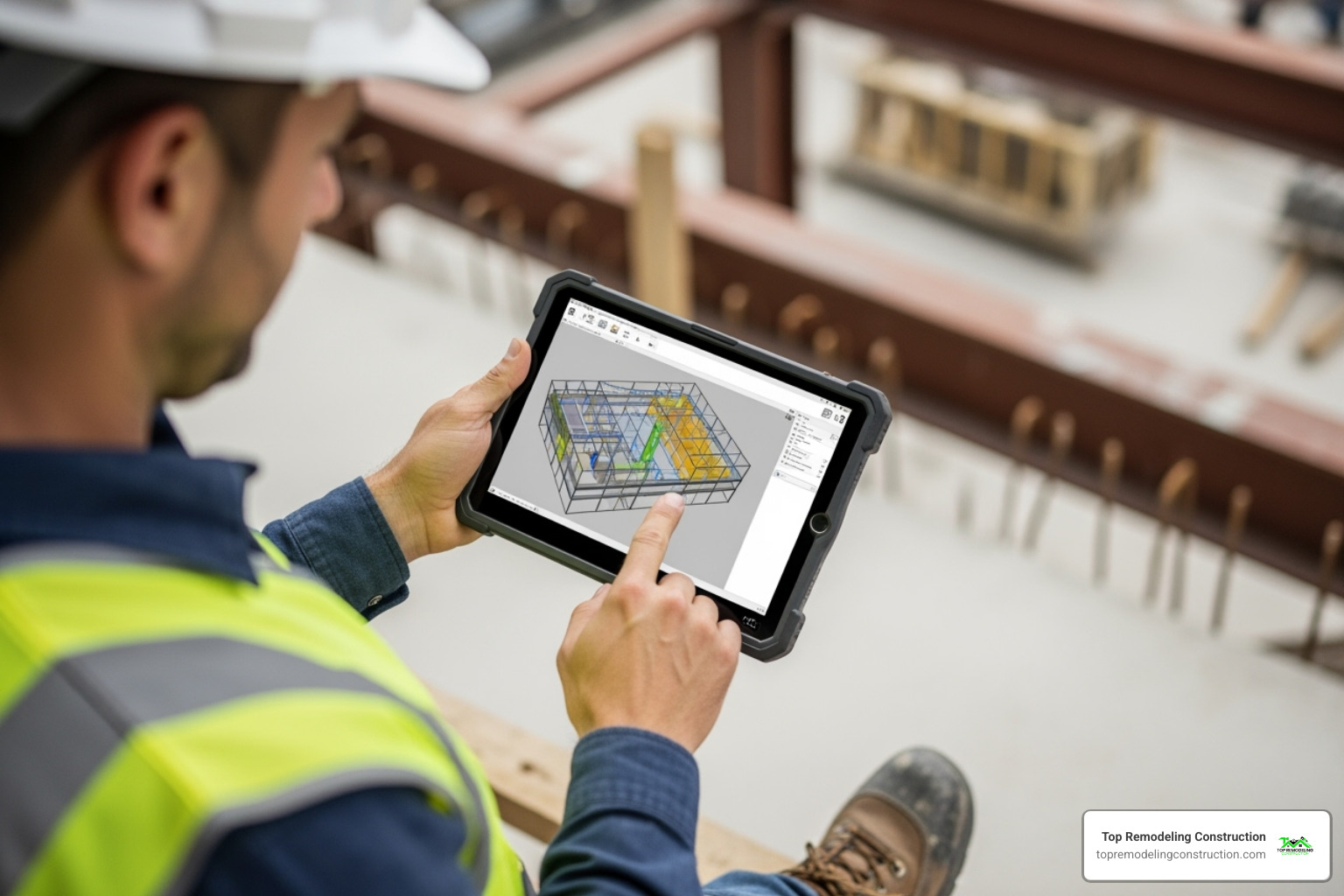
Building Information Modeling (BIM) might sound technical, but think of it as creating a digital twin of your building before we pour the first concrete. Instead of working from flat blueprints, everyone—architects, engineers, and our construction team—works within the same 3D model. The beauty of this? We can spot problems before they become expensive mistakes. That pipe that would’ve collided with an HVAC duct? We catch it on screen, not on site. Technology adoption like BIM is increasing project efficiency and reducing costs across the industry, and we’ve seen the difference it makes in keeping projects on budget and on schedule.
Drones have become one of our favorite tools. These flying cameras give us a bird’s-eye view of the entire construction site, allowing us to map terrain, monitor progress, and conduct safety inspections without putting anyone at risk. What used to take days of surveying now takes hours, and the accuracy is remarkable.
Project management software has transformed how we coordinate complex builds. Gone are the days of endless phone calls and paper trails. Now we can track every aspect of a project—schedules, budgets, materials, communication—in one central system. It means fewer surprises and better coordination across all the moving parts of a commercial build.
Prefabrication and modular construction is where we build sections of your project in a controlled factory environment, then bring them to the site for assembly. Think of it like high-quality LEGO blocks, but for buildings. This approach speeds up construction considerably, reduces waste, and often results in better quality because we’re not fighting weather or site conditions during fabrication.
3D printing is still emerging in our industry, but it’s worth watching. We’re starting to see complex architectural components and even structural elements being printed. While it’s not yet mainstream, the potential for reducing waste and creating intricate designs is fascinating.
Key Trends in Commercial Construction
Beyond the technology itself, several broader trends are reshaping how we approach commercial building projects.
The movement toward sustainable building practices isn’t just a buzzword—it’s become central to how we work. Clients increasingly want buildings that use less energy, generate less waste, and incorporate environmentally friendly materials. And it makes good business sense. A building designed with sustainability in mind typically costs less to operate over its lifetime. We’re talking about everything from energy-efficient HVAC systems to recycled building materials to designs that maximize natural light.
LEED certification represents the gold standard in green building. Leadership in Energy and Environmental Design certification demonstrates a serious commitment to sustainability, and sustainable building practices with LEED certification are becoming key factors in Commercial Construction. Buildings with this certification often see lower operating costs, higher property values, and reduced environmental impact. We help clients steer the certification process when it aligns with their goals.
Smart buildings are another trend we’re excited about. By integrating Internet of Things (IoT) technology, buildings can essentially think for themselves. Imagine lighting that adjusts based on occupancy, climate control that learns usage patterns, or security systems that send real-time alerts. These features don’t just add convenience—they reduce energy waste and operating costs while improving comfort for everyone inside.
Finally, adaptive reuse is gaining momentum, and for good reason. Instead of tearing down an older building, we can repurpose it for an entirely new function. An old warehouse becomes modern office space. A historic bank transforms into a restaurant. This approach preserves architectural character, reduces construction waste, and often creates truly unique spaces that new construction simply can’t match. It’s sustainable, creative, and often more cost-effective than starting from scratch.
The future of Commercial Construction is being written right now, and we’re proud to be part of this evolution. These technologies and trends aren’t just making our jobs easier—they’re helping us build better spaces for the businesses and communities we serve.
Frequently Asked Questions
We’ve been in the Commercial Construction business long enough to know that certain questions come up time and time again. And honestly, we love these questions—they show that you’re thinking carefully about your project. So let’s dive into the answers that matter most to our clients.
What is the average cost of a commercial construction project?
Here’s the truth: asking about the “average” cost of Commercial Construction is a bit like asking how much a vehicle costs. Are we talking about a basic pickup truck or a luxury sedan? The answer depends entirely on what you’re building.
Generally speaking, you’re looking at somewhere between $150 to $400 per square foot. But that range is pretty wide, and for good reason. Let’s break down what actually influences your final number.
Project type makes a huge difference. A straightforward warehouse with basic finishes will naturally cost less than a restaurant with a fully equipped commercial kitchen and custom dining areas. And if you’re building a medical facility? Those specialized MEP systems, medical-grade materials, and strict regulatory requirements will push costs higher.
Location matters more than you might think. Building in a major metropolitan area often means higher labor costs, different permitting fees, and sometimes longer timelines. The same project in different regions can have surprisingly different price tags.
Then there’s material quality. You can choose budget-friendly options, or you can invest in premium finishes that’ll last decades. Neither choice is wrong—it just depends on your goals and budget. We always help our clients understand the trade-offs so they can make informed decisions.
The complexity of your design also plays a role. Unique architectural features, advanced technology integration, or specialized structural requirements all add to the bottom line. But sometimes, these investments pay for themselves in operational efficiency or customer experience.
Want a number that’s actually meaningful for your specific project? Our Commercial Construction Cost Per Square Foot resource can give you a better starting point, and we’re always happy to sit down and discuss your particular needs.
How do companies ensure quality and safety in commercial construction?
This question gets right to the heart of what matters. Because at the end of the day, Commercial Construction isn’t just about putting up a building—it’s about creating a safe, lasting space that serves its purpose for years to come.
Quality and safety aren’t things we tack on at the end. They’re woven into every single phase of our work. We implement quality control protocols from the moment we select materials to the final walkthrough. That means choosing superior materials from reputable vendors, because we know that cutting corners on quality now just creates headaches later.
Some of our most critical work is done by teams we trust completely. For specialized trades like masonry, steel, and concrete, we often rely on crews we’ve worked with for years. This tighter control over quality makes all the difference in the finished product.
When it comes to safety management, we don’t mess around. Every project gets a comprehensive safety plan custom to its specific challenges. Our teams receive regular safety briefings, and we constantly monitor the site for potential hazards. We strictly follow OSHA compliance standards—not because we have to, but because it’s the right thing to do.
Our supervisors aren’t just there to keep things moving. They’re trained to spot safety issues before they become problems, and they have the authority to stop work if something doesn’t look right. Regular inspections—both our own and third-party—happen throughout the project to catch any issues early.
We’re proud of our industry accreditations, including certifications that demonstrate our commitment to maintaining the highest safety standards. Because when you hire our Commercial Construction Builders, you’re hiring people who genuinely care about doing the job right.
What economic factors influence the commercial construction sector?
The Commercial Construction industry doesn’t exist in a vacuum. It’s constantly shaped by broader economic forces, and understanding these helps explain why timing matters for your project.
Interest rates have a big impact on commercial construction. When rates are low, businesses find it easier to secure financing for new buildings or expansions. Money flows more freely, and projects get greenlit. When rates climb, companies tend to pump the brakes on new construction, waiting for more favorable conditions.
Material costs can swing dramatically, and they’re not always predictable. A steel shortage here, a lumber supply disruption there—these ripple through every project budget. We’ve learned to stay flexible and creative, finding solutions when our first-choice materials suddenly become cost-prohibitive.
The labor market keeps us on our toes. Good skilled workers are always in demand, and when there’s a shortage, it affects both timelines and costs. We invest in relationships with reliable subcontractors and maintain our own skilled teams for critical work.
Government spending and policy decisions can shift the entire landscape. New infrastructure projects create demand for materials and labor. Tax incentives for business development can spark building booms. Regulatory changes can open new opportunities or create new challenges.
And of course, market demand drives everything. The explosion of e-commerce fueled massive growth in industrial and warehouse construction. The shift toward flexible workspaces transformed office construction. Healthcare facilities expand to meet community needs. When businesses in a sector are thriving, they need space to grow—and that’s where we come in.
These economic factors create a constantly changing environment. But that’s also what makes Commercial Construction interesting. Every project is a little different, and we adapt our approach to make sure yours succeeds, regardless of market conditions.
Conclusion
Every Commercial Construction project tells a story—a story of vision, planning, and change. Throughout this guide, we’ve walked through the essential elements that turn empty lots into thriving business spaces. From understanding the diverse project types that shape our commercial landscape to mastering the critical stages that take a concept from blueprint to ribbon-cutting, each piece plays a vital role in the bigger picture.
We’ve explored how retail spaces create memorable customer experiences, how industrial facilities power modern commerce, and how healthcare and hospitality buildings serve specialized needs. We’ve examined the importance of thorough pre-construction planning, including the often-overlooked but crucial Certificate of Occupancy review. We’ve seen how technology like BIM and sustainable building practices are revolutionizing the way we build, making structures smarter, greener, and more efficient.
But here’s what it really comes down to: the right partner makes all the difference. A professional Commercial Construction team brings more than just tools and materials to your project. They bring experience navigating complex regulations, skill in managing budgets and timelines, and commitment to safety and quality that protects your investment. They turn potential headaches into smooth solutions and transform your business vision into a physical reality.
At Top Remodeling Construction, we’re a family-owned business that understands what it means to build something that matters. We know that behind every project is someone’s dream, someone’s livelihood, someone’s future. That’s why we approach each job with exceptional attention to detail and an unwavering focus on customer satisfaction. We don’t just meet specifications—we ensure your project reflects your unique vision and supports your business goals for years to come.
Whether you’re opening your first retail location, expanding your warehouse operations, or renovating an existing space, your construction journey deserves a partner who cares as much as you do. We’re here to guide you through every decision, answer every question, and deliver results that exceed your expectations.
Ready to bring your commercial project to life? Learn more about What We Do and let’s start building your success story together.