
Why Proper Installation Matters for Your Kitchen Investment
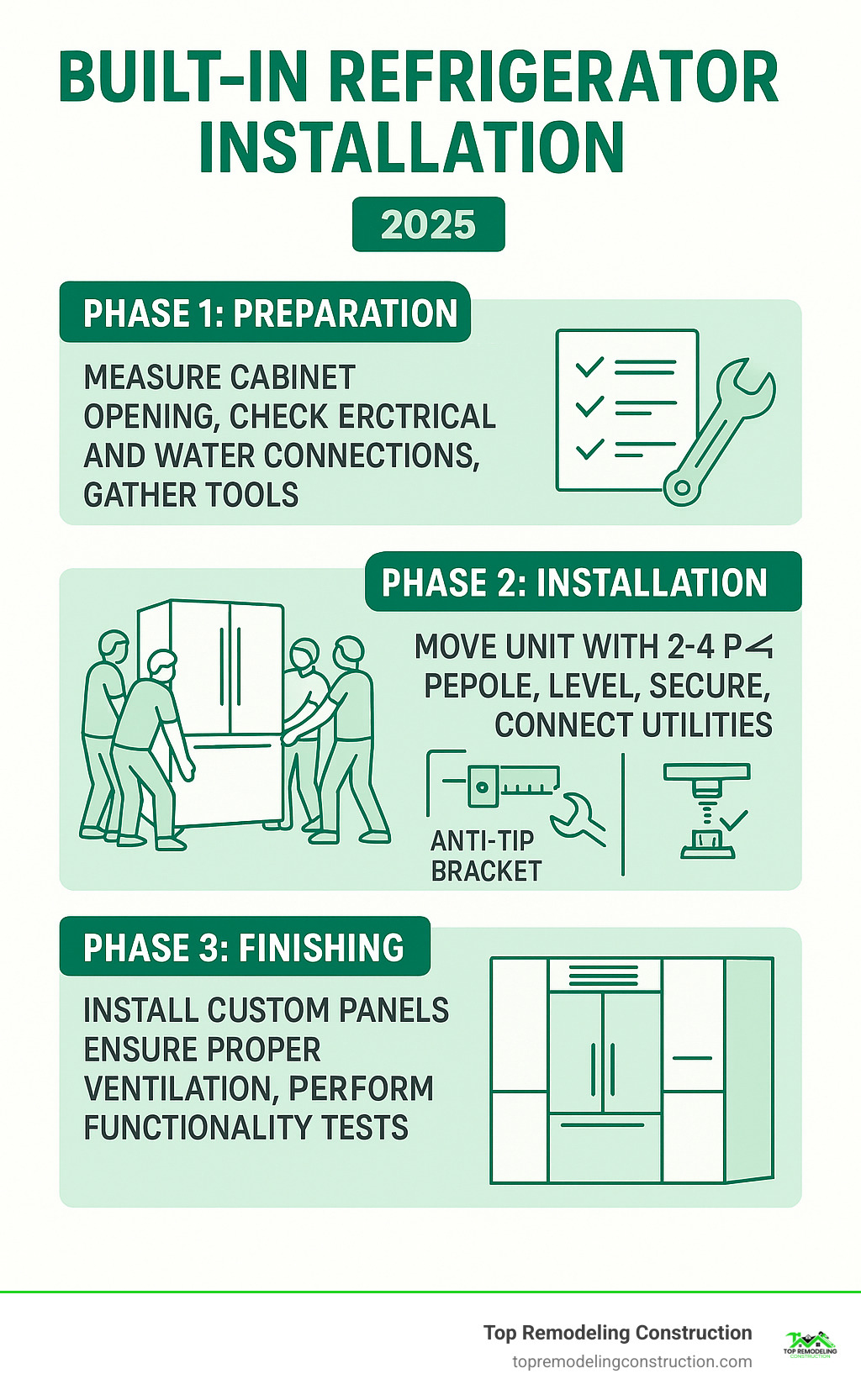
Built in refrigerator installation is a complex process that requires precise measurements, proper utility connections, and careful attention to safety details. Here’s what you need to know:
Essential Installation Steps:
- Preparation – Measure cabinet opening, verify electrical/water connections
- Installation – Move unit (requires 2-4 people), level, and secure with anti-tip brackets
- Connection – Attach water line, connect power, test for leaks
- Finishing – Install custom panels, ensure proper ventilation, perform final checks
Key Requirements:
- Cabinet cutout: Typically 24″ deep, varies by model width/height
- Electrical: Dedicated 120V, 15-20 amp grounded outlet
- Plumbing: 1/4″ copper water line with shutoff valve (40-120 psi)
- Team: Minimum 2-4 people due to weight (300-700+ lbs)
A built-in refrigerator represents a significant investment in your kitchen’s functionality and style. Unlike standard refrigerators that simply plug in, built-in units require seamless integration with your cabinetry, precise utility connections, and careful attention to ventilation requirements.
The stakes are high with this installation. Improper installation can void warranties, create safety hazards, and result in poor performance. As one manufacturer warns: “Product failure due to improper installation is not covered under warranty.”
Professional installation ensures your refrigerator operates efficiently, maintains proper temperatures, and achieves that coveted furniture-like appearance that makes built-in units so desirable. The process involves three critical phases: thorough preparation, precise installation, and careful finishing touches.
Phase 1: Preparation and Planning
Think of this phase as laying the groundwork for success. Just like building a house, you wouldn’t start without a solid foundation. The same principle applies to built in refrigerator installation – proper preparation prevents problems and ensures everything goes smoothly when it’s time to move that heavy appliance into place.
Gathering Your Tools and Materials
Before you dive in, let’s make sure you have everything you need. There’s nothing worse than getting halfway through an installation only to realize you’re missing a crucial tool!
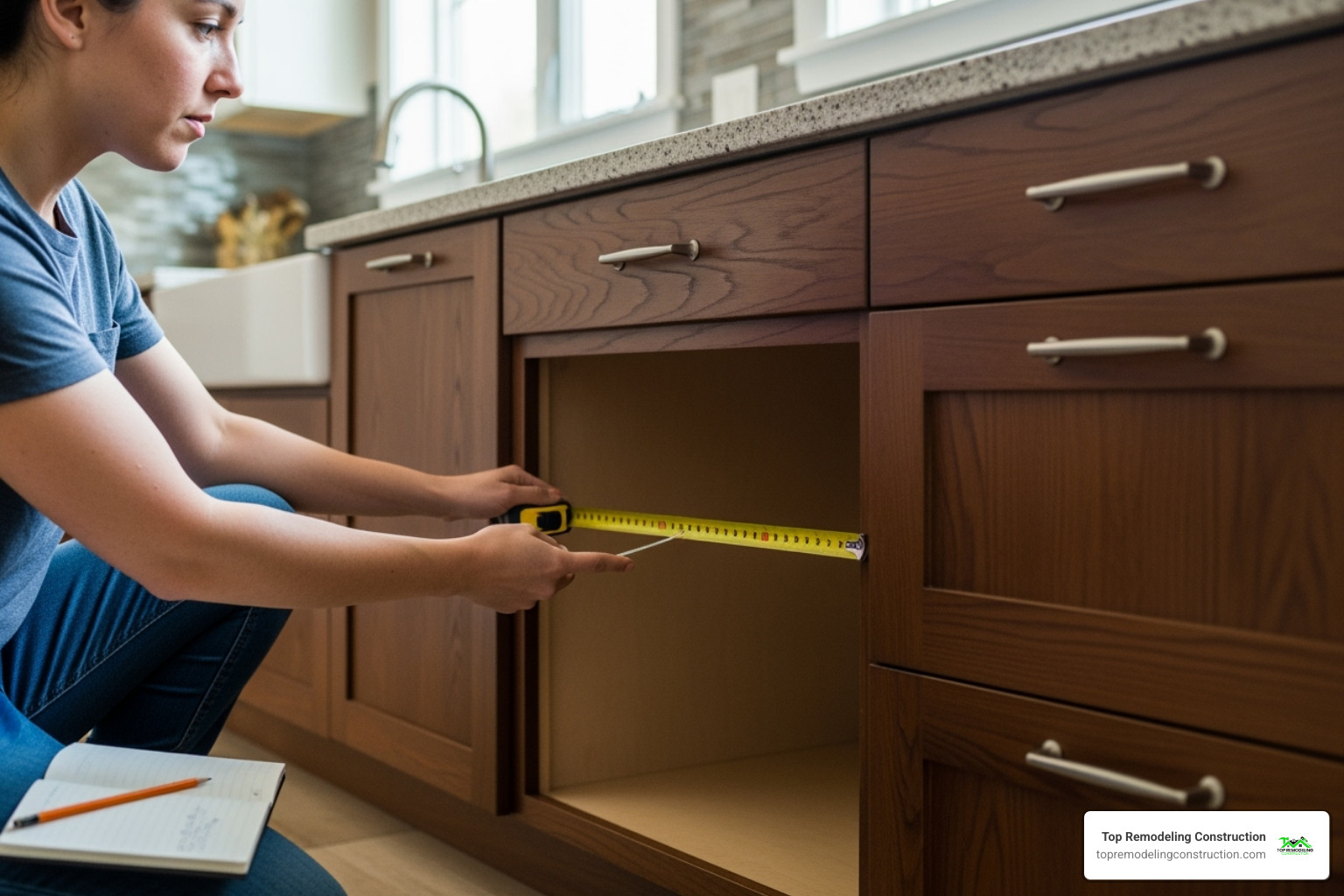
Your tape measure will be your best friend throughout this process – you’ll use it more than you think. A reliable level is absolutely critical because built-in refrigerators need to be perfectly level (we’re talking within 1mm!) for proper door alignment and operation.
You’ll need a drill for securing anti-tip brackets and various components, plus both adjustable wrenches and screwdrivers (Phillips and flathead) for connections and adjustments. Don’t even think about moving the unit without an appliance dolly – these refrigerators can weigh close to 700 pounds, and your back will thank you later.
For the water connection, gather your 1/4″ copper or polyethylene water line tubing and make sure you have an easily accessible shutoff valve. The manufacturer typically provides anti-tip brackets and specific screws for securing the unit – these are absolutely non-negotiable for safety.
Round out your toolkit with pliers, a utility knife, and potentially a caulk gun with sealant for finishing touches.
Critical Measurements: Dimensions and Clearances
Here’s where precision becomes everything. One small measurement error can turn your dream installation into a nightmare. Measure twice, cut once isn’t just a saying – it’s your mantra for this project.
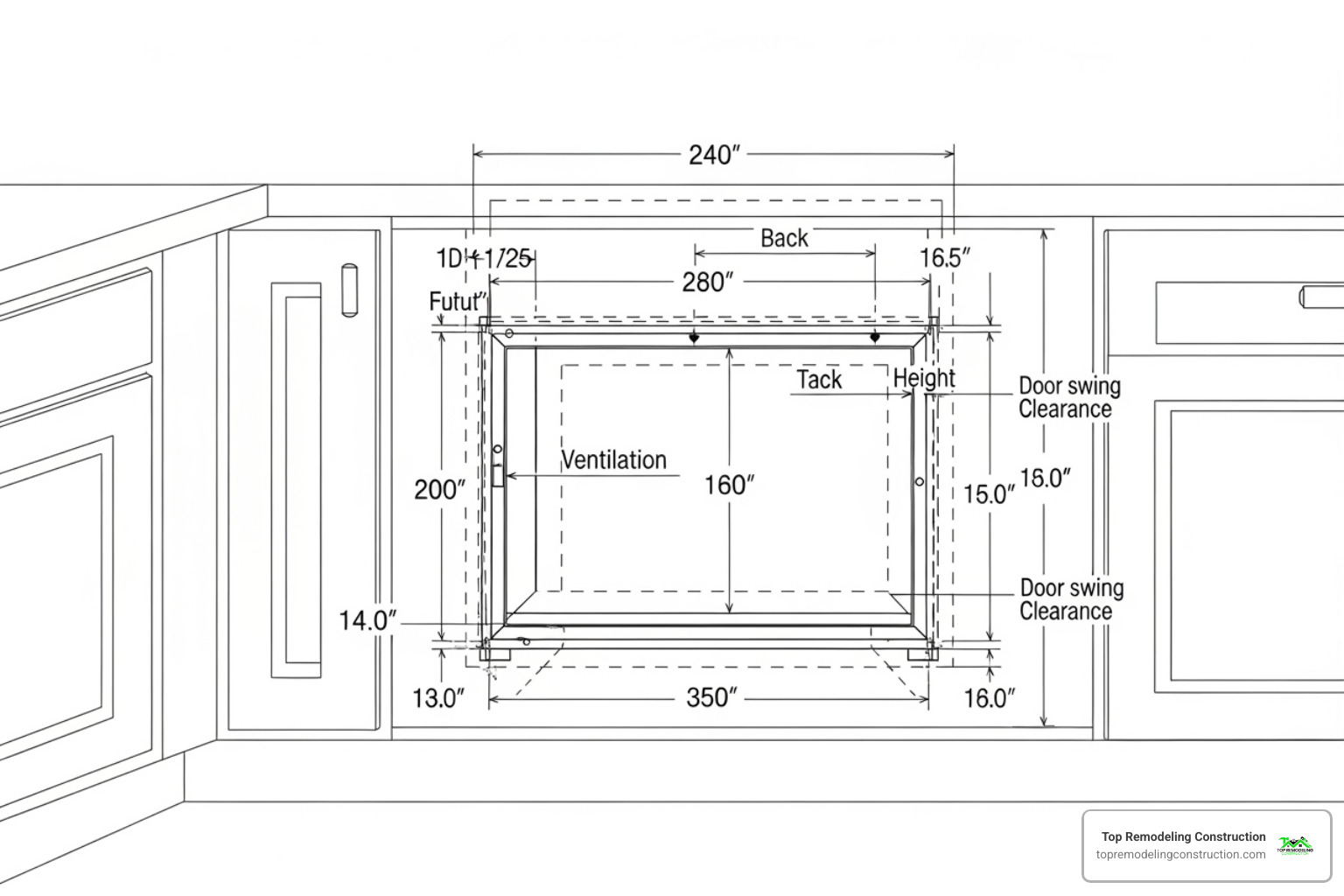
Start with your refrigerator’s installation manual, which provides exact cutout dimensions. Every model is different, so don’t assume! A typical 36-inch wide unit might need a cutout width of exactly 36 inches, a height of 84 inches, and a depth of 25 inches. Some manufacturers recommend slightly larger openings – perhaps 41-1/2 inches wide by 83-3/4 inches tall.
Cabinet width needs that perfect balance – tight enough for a seamless look but with just enough wiggle room (often 1/8 inch on each side) for installation and ventilation. Cabinet height must account for the unit itself plus leveling feet and any top trim pieces.
The cabinet depth is typically designed around standard 24-inch deep cabinetry, but always verify your specific model’s requirements. Don’t forget about rear clearance for electrical and plumbing connections.
Here’s what many people overlook: door swing clearance. Your beautiful built-in refrigerator won’t be so beautiful if you can’t fully open the doors! Most models need at least 4 inches for a proper 90-degree door swing. Make sure drawers can pull out completely and you can actually access the food inside comfortably.
Ventilation space is crucial for efficiency and longevity – we’ll cover this in detail later, but plan for adequate airflow around the unit during your initial measurements.
Need help optimizing your cabinet space? Check out our kitchen cabinet services for expert guidance.
Preparing the Installation Space
With measurements confirmed, it’s time to prep the utilities that will bring your refrigerator to life. Think of this as connecting the lifelines your appliance needs to function properly.
Most built-in refrigerators need a dedicated electrical circuit – typically 120-volt, 60Hz, 15 or 20 amp. The key word here is dedicated, meaning this outlet shouldn’t share a circuit with other appliances. You’ll need a properly grounded 3-prong outlet positioned correctly within the cutout space, usually behind the unit where the power cord won’t get pinched.
Skip the extension cords and adapters – they’re fire hazards waiting to happen. If your outlet isn’t in the right spot or on a dedicated circuit, call an electrician before proceeding.
For refrigerators with ice makers or water dispensers, you’ll need a cold water line connection. This involves running 1/4-inch copper tubing to an accessible shutoff valve. The water pressure should fall between 40 and 120 psi – most homes fall within this range, but it’s worth checking.
Position that shutoff valve somewhere you can actually reach it. Trust us, when you need to turn off the water quickly, you don’t want to be crawling behind cabinets with a flashlight!
Finally, clear the delivery path from your front door to the kitchen. Remove obstacles, protect your floors, and measure doorways to ensure they’re wide enough. These units are heavy and bulky – your delivery team (and your walls) will appreciate the preparation.
Phase 2: The Core Built In Refrigerator Installation Process
Now comes the moment of truth – the actual built in refrigerator installation where careful planning meets precise execution. This is where things get real, and honestly, it’s both exciting and nerve-wracking at the same time.

Moving and Positioning the Refrigerator
Here’s where we face reality: built-in refrigerators are heavy. We’re talking anywhere from 300 pounds for compact units to over 700 pounds for those impressive dual-zone models. This isn’t the time to be a hero – you’ll need help, and lots of it.
Most professionals recommend having at least four people for bringing the unit into your home, though two experienced installers can handle the actual positioning once it’s in the kitchen. Think of it like moving a piano – it’s all about coordination and control, not just brute strength.
An appliance dolly becomes your best friend during this process. It’s not just about making the job easier (though it definitely does that) – it’s about maintaining control as you steer tight corners and doorways. Before we even think about moving, we always lay down protective coverings on floors. Trust me, explaining scratches on hardwood floors to a homeowner is a conversation nobody wants to have.
The actual sliding into position requires patience and precision. As the refrigerator moves into its cabinet niche, we’re constantly checking clearances and making sure nothing gets pinched or damaged. The power cord needs special attention here – it should remain accessible and never get crushed behind the unit.
A Guide to Leveling and Securing the Unit
Once your refrigerator is roughly in position, the real finesse work begins. Leveling isn’t optional – it’s absolutely critical for proper operation. A refrigerator that’s even slightly off-level can have doors that swing open unexpectedly, poor drainage during defrost cycles, and reduced efficiency.
Every built-in refrigerator comes with adjustable leveling legs, typically four of them positioned at strategic points. Using a quality level, we check both front-to-back and side-to-side positioning. We’re looking for perfection here – the unit needs to be both plumb (perfectly vertical) and level (perfectly horizontal) in all directions.
Here’s where safety becomes paramount: anti-tip brackets are non-negotiable. These tall, heavy units can become dangerously top-heavy, especially when doors are open and loaded with food. The brackets provided by the manufacturer must be properly installed and securely fastened to wall studs or adjacent cabinetry.
The securing process involves more than just the anti-tip brackets. Depending on your specific model’s requirements, the refrigerator frame gets anchored to surrounding cabinetry or wall studs using manufacturer-supplied screws and mounting hardware. This creates a rock-solid installation that won’t shift or settle over time.
Connecting Utilities and Final Placement
Now we get to connect the lifelines that make your refrigerator more than just an expensive cabinet. If your unit includes an ice maker or water dispenser, the water line connection is our first priority.
We carefully connect the quarter-inch water line to your shutoff valve, using wrenches to achieve connections that are snug but not overtightened. There’s a fine line here – too loose and you’ll have leaks, too tight and you risk stripping threads or cracking fittings.
Testing for leaks happens immediately, before we push the unit into its final position. We turn on the water supply and let it run for several minutes, carefully inspecting every connection point. This is also when we flush the water system, running about five gallons through the dispenser to clear out any air bubbles or manufacturing debris.
With water connections confirmed leak-free, we plug in the power cord to that dedicated electrical outlet we prepared earlier. The final positioning involves gently sliding the refrigerator completely into the enclosure until it sits perfectly flush with surrounding cabinetry.
This careful, methodical approach ensures your built in refrigerator installation is done right the first time. When you’re investing in a kitchen upgrade of this magnitude, having experienced professionals handle the complex details makes all the difference. If you’re considering a comprehensive kitchen renovation that includes sophisticated appliance installations like this, learn about our general contractor services.
Phase 3: Finishing Touches and Final Checks
The final phase of built in refrigerator installation is where your kitchen truly transforms, as we focus on aesthetic integration and ensuring everything works flawlessly.

Installing Custom Panels and Handles
Here’s where the magic happens! This is the moment when your expensive appliance truly disappears into your kitchen design, creating that coveted furniture-like appearance that makes built-in refrigerators so special.
Panel-ready refrigerators are designed specifically to accept custom panels that perfectly match your existing cabinetry. Think of them as a blank canvas waiting for their finishing touches. The difference between a standard appliance and a truly integrated one comes down to these panels.
You’ll encounter two main panel styles: overlay panels that sit on top of the refrigerator door, and integrated panels that make the unit virtually invisible within your cabinetry. Panel thickness typically ranges from 1/4″ to 1-1/8″ total, depending on your cabinet style and manufacturer specifications.
Weight matters more than you might think. Each manufacturer sets strict panel weight limits – for example, a fresh food panel might max out at 70 pounds, while freezer panels combined could handle up to 30 pounds. Exceeding these limits puts stress on the hinges and can void your warranty, so we always weigh panels before installation.
The attachment process involves mounting panels to brackets or directly to the refrigerator door frame using specific screws and template guides. Handle placement happens before the panels go on, ensuring perfect alignment with your other cabinet hardware.
Once everything’s attached, we make final door alignment adjustments. Built-in refrigerators have mechanisms to adjust door height and positioning, creating that consistent gap (usually around 5/16″) between doors for a perfectly flush, professional appearance.
Understanding Ventilation Requirements
Think of ventilation as your refrigerator’s breathing system. Without proper airflow, even the most expensive built-in unit will struggle, work harder, and potentially fail prematurely.
Unlike freestanding refrigerators that can dissipate heat from all sides, built-ins are enclosed and need our help to stay cool. Proper airflow is absolutely critical for efficiency, longevity, and safe operation.
Most built-in units draw cool air from the bottom through the toekick or grille area and exhaust warm air through the top or front. If your kitchen design includes a kickplate, it might need to be entirely open – sometimes requiring 50% of the kickplate area to have holes for adequate airflow.
Toekick ventilation is often the make-or-break factor for proper operation. Some installations require removing the unit’s front grille entirely to ensure sufficient air intake. It might not look as clean, but it’s essential for performance.
For certain installations, especially in enclosed spaces, you’ll need specific upper and lower vents. The lower vent provides fresh air intake while the upper vent exhausts hot air. Any obstruction to these vents can cause serious problems.
Here’s something many people miss: if there’s more than 1/4″ gap between your refrigerator and the enclosure, or if the recess depth exceeds 1 inch, you’ll need insulation or baffles to fill that space. These baffles direct airflow efficiently across the cooling coils, dramatically improving performance.
Sealing the enclosure becomes critical for gas-powered units, preventing any gas leakage into your living area. Safety always comes first.
Getting these finishing touches right transforms a simple appliance installation into a seamless kitchen integration that you’ll enjoy for years to come.
Troubleshooting Your Built In Refrigerator Installation
Even with careful planning and precise execution, built in refrigerator installation can present a few unexpected challenges. Don’t worry – most issues have straightforward solutions, and we’re here to walk you through the most common ones.
Common Problems and Solutions
Sometimes the refrigerator just doesn’t want to cooperate, even when you’ve done everything by the book. Here’s what we typically encounter and how to fix it.
When the unit doesn’t fit properly, it’s usually a measurement mishap from the planning phase. If your refrigerator is slightly too large, you might need some cabinetry modifications – not ideal, but manageable. If it’s too small, filler strips can close those gaps, though this does affect that seamless, flush look you’re going for.
Misaligned doors are incredibly common, especially after installing custom panels. The good news? Most built-in refrigerators come with adjustable hinges and leveling feet that let you fine-tune everything. We grab a level and make small, careful adjustments until those doors are perfectly even and close like a dream.
Water line leaks usually happen right at the connection points. First, we check that connections are snug (but not so tight they strip the threads – learned that the hard way!). If water’s still dripping, we might need to re-seat the connection or swap out a faulty fitting.
An unlevel refrigerator causes all sorts of headaches – doors that swing open on their own, ice makers that throw tantrums, or water pooling where it shouldn’t. We break out the level again and adjust those leveling legs until everything sits perfectly stable and plumb.
Strange noises from your new appliance can be nerve-wracking. New refrigerators do make some unfamiliar sounds as they settle in, but loud or persistent noises need attention. We check for proper clearance, make sure nothing’s vibrating against the unit, and confirm the leveling is spot-on.
Post-Installation Functionality Test
Once the physical built in refrigerator installation is complete, patience becomes your best friend. Your new appliance needs time to settle into its new home.
Give it a full 24 hours before expecting perfect performance. It takes time for internal temperatures to stabilize, so resist the urge to start loading it with food immediately. Most manufacturers preset temperatures around 37°F for fresh food and 0°F for the freezer – pretty much perfect for most households.
That first batch of ice cubes? Toss them out. This clears any manufacturing residue or impurities from the ice maker and water lines. Think of it as a cleansing ritual for your new appliance.
After the waiting period, we verify temperatures with a thermometer to make sure both sections are holding steady. The water dispenser should run for at least two minutes to purge any lingering air from the system – you’ll know it’s ready when you get a steady, consistent flow.
Our final safety check covers all the important stuff – electrical connections, water fittings, and those crucial anti-tip brackets. Everything needs to be secure and safe before we call the job complete.
For homeowners who love tackling projects themselves, check out our DIY remodeling tips for more helpful guidance on your kitchen improvement journey.
Frequently Asked Questions about Built-In Refrigerator Installation
Can I install a built-in refrigerator myself?
This is probably the most common question we hear, and I totally understand the appeal of tackling this as a DIY project. The honest answer? It’s technically possible if you’re someone with advanced mechanical, carpentry, and plumbing skills under your belt.
But here’s the reality check: we’re talking about appliances that can weigh close to 700 pounds. That’s not a typo! These units require a minimum of 4 people just to move them into your home, and at least 2 skilled people for the actual installation process.
The complexity goes way beyond just the weight, though. You’re dealing with precise measurements, electrical connections, plumbing work, and those critical anti-tip bracket installations that keep your family safe. Built-in refrigerators can be top-heavy, making proper securing absolutely essential.
Here’s something that might surprise you: product failure due to improper installation often isn’t covered under warranty. That’s a expensive risk when you’re investing in a premium appliance. Professional built in refrigerator installation ensures you’re protected and everything works perfectly from day one.
What are the most critical measurements I need?
Getting the measurements right is where the magic happens – or where everything goes sideways if you’re not careful! The three most critical measurements are your cabinet cutout’s height, width, and depth, and these must match the manufacturer’s specifications exactly.
Most built-in refrigerators are designed for a 24-inch cabinet depth, but don’t assume – always check your specific model’s requirements. Even being off by half an inch can mean the difference between that beautiful, seamless look and a frustrating gap that ruins the whole aesthetic.
But here’s what many people forget: you also need to account for door swing clearance. Some models need a full 4 inches for a 90-degree door swing. Imagine installing your gorgeous new refrigerator only to find the door hits your adjacent cabinet every time you try to open it!
Proper air ventilation clearances are equally important. Without these precise measurements and clearances, achieving that flush, furniture-like appearance that makes built-in refrigerators so desirable becomes impossible.
What are the electrical and plumbing requirements?
The electrical side is pretty straightforward, but it’s non-negotiable for safety. Most built-in refrigerators need a dedicated 120V, 60Hz, 15 or 20-amp grounded electrical outlet. The key word here is “dedicated” – this outlet should be on its own circuit breaker to prevent any overloading issues.
We never recommend using extension cords or multi-tap adapters for these connections. That’s not just being picky – it’s a genuine safety hazard that could lead to electrical fires or damage to your expensive appliance.
For the plumbing side, if your refrigerator has an ice maker or water dispenser, you’ll need a cold water line with an accessible shutoff valve. This typically involves a 1/4-inch O.D. copper or polyethylene tube that can handle water pressure between 40 and 120 psi.
The “accessible” part is crucial – trust me, you’ll appreciate being able to easily reach that shutoff valve if you ever need maintenance or repairs down the road. Planning these utility connections properly during installation saves headaches later!
Conclusion: Achieving a Flawless, Professional Finish
Installing a built-in refrigerator isn’t your typical weekend DIY project. It’s a complex dance of proper preparation, precision installation, and thorough safety checks that transforms your kitchen from ordinary to extraordinary.
Think about it – you’re not just plugging in an appliance. You’re creating a seamless piece of functional furniture that needs to look perfect, work flawlessly, and stay safe for years to come. Every measurement matters. Every connection counts. And honestly, with units weighing up to 700 pounds and requiring everything from dedicated electrical circuits to custom water lines, there’s a lot that can go sideways if you’re not careful.
A built-in refrigerator represents a significant investment in your kitchen’s style and function, and correct installation is the key to maximizing that investment. When done right, your new appliance disappears into your cabinetry design, operates efficiently, and becomes the centerpiece of your dream kitchen. When done wrong? Well, let’s just say warranty claims for improper installation can be costly headaches.
The three-phase process we’ve outlined – from those critical measurements and utility preparations through the heavy lifting and precise positioning, all the way to the custom panel installation and final testing – each step builds on the last. Skip a step or rush through the details, and you might find yourself dealing with misaligned doors, water leaks, or worse, safety hazards.
For a project of this complexity, partnering with experienced professionals like Top Remodeling Construction ensures a perfect, stress-free result. As a family-owned business, we understand that your kitchen is the heart of your home. We bring the expertise, the right tools, and the careful attention to detail that turns a complicated installation into a smooth change.
Ready to take your kitchen to the next level? We’re here to make it happen without the stress, the guesswork, or the heavy lifting. Ready to upgrade your kitchen? Explore our expert kitchen remodeling services in Las Vegas!