Why Patio Covers Transform Your Outdoor Living Experience
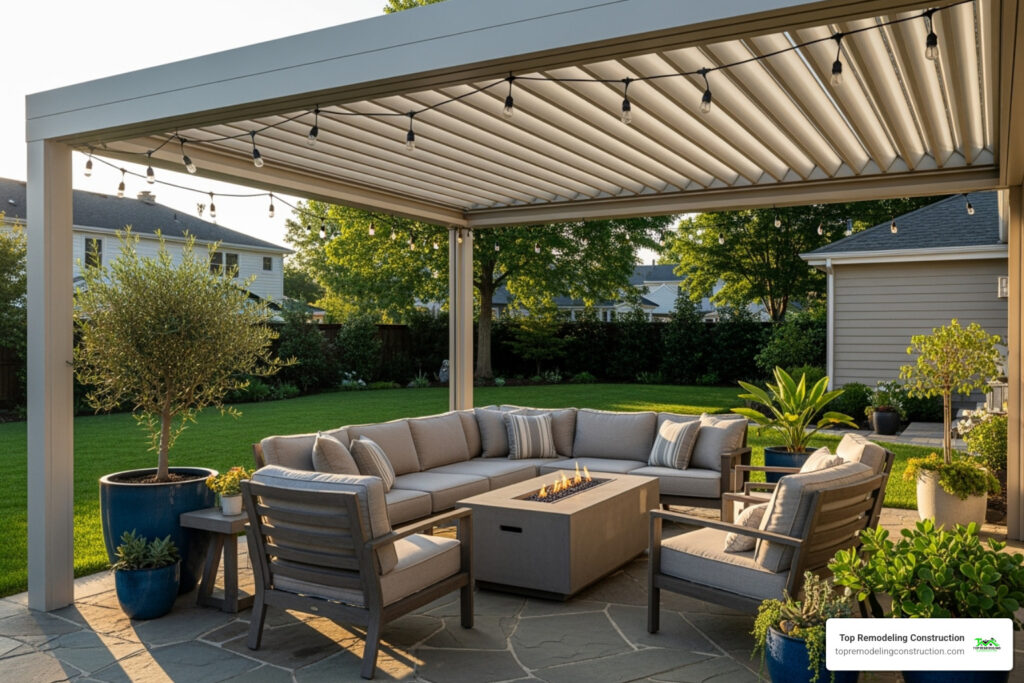
A patio cover is a structure that provides shelter and shade for your outdoor patio. Here are the main types and their benefits:
Types of Patio Covers:
- Solid roof covers – Offer complete weather protection with materials like aluminum or insulated panels.
- Louvered systems – Feature adjustable slats for customizable light and airflow.
- Pergola-style covers – Have open-beam designs that can support plants or fabric.
- Retractable awnings – Provide flexible coverage that extends and retracts as needed.
Key Benefits:
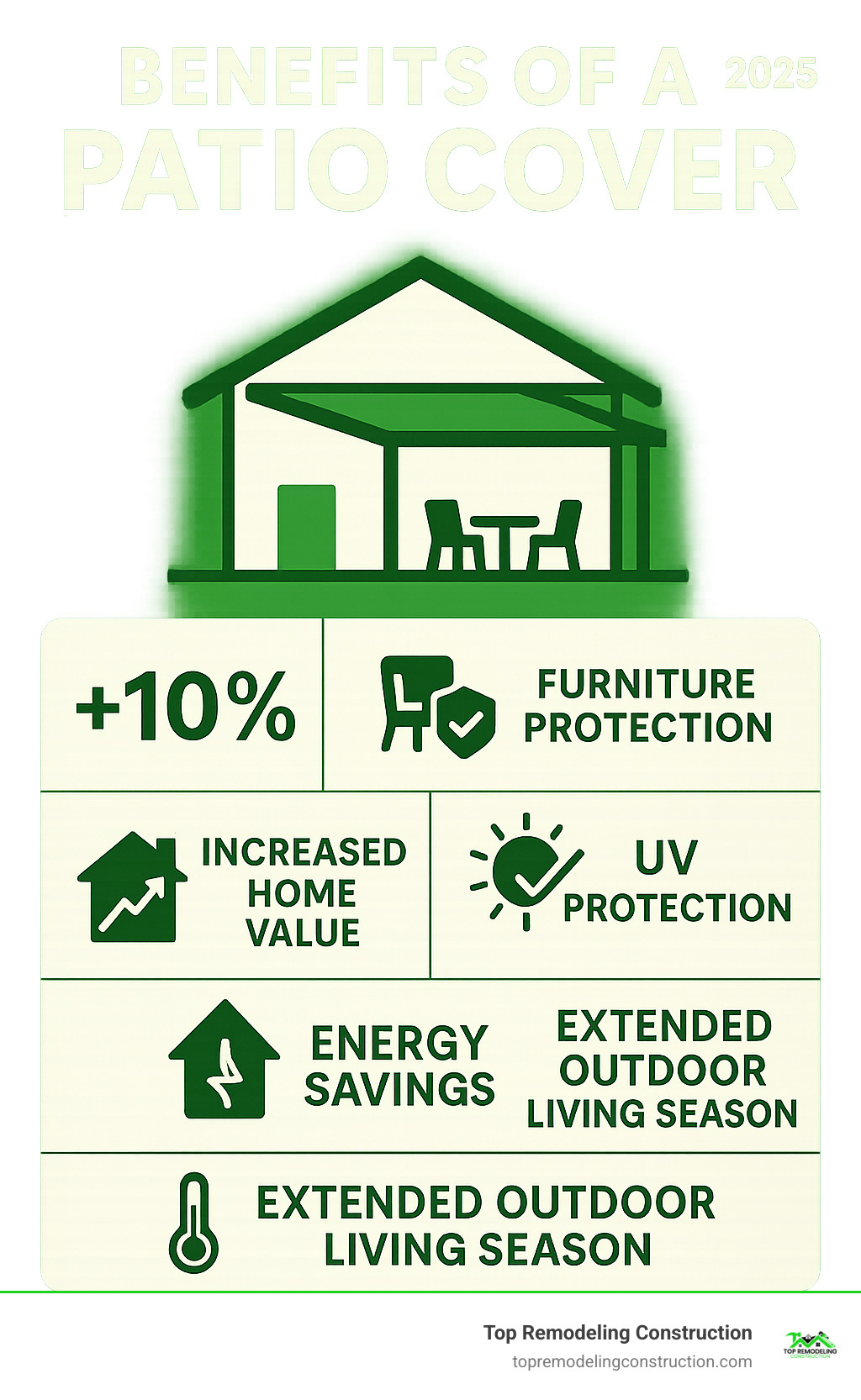
- Extends usable outdoor space year-round
- Protects furniture from sun and weather
- Increases home value and curb appeal
- Reduces energy costs by shading windows
- Creates comfortable entertainment areas
The right patio cover can transform your outdoor space into a cozy coffee spot or an expansive entertainment area. As one homeowner noted, “Having some dining furniture or lounge furniture and you have a wonderful place to relax or to meet up with friends and family.”
Your patio becomes an extension of your home’s living space.
Choosing the right style, material, and size for your needs, climate, and home architecture is key. Today’s options range from simple aluminum structures to custom pergolas with integrated lighting, fitting every budget and aesthetic.
Why a Patio Cover is a Smart Home Investment
Adding a patio cover is a smart investment in your property. It’s like adding an extra room with fresh air and a garden view, significantly increasing your home’s value and making it more attractive to potential buyers. Homes with functional outdoor living spaces often sell faster and for better prices.
A patio cover transforms daily life by extending your living space outdoors. This means more family barbecues, quiet morning coffee, and evening gatherings without weather interruptions. A dreamy patio setup expands the functional footprint of your house, giving you more outdoor enjoyment each year.
Your outdoor furniture also benefits. A cover blocks harsh UV rays that fade cushions and warp wood, while protecting everything from rain and moisture. This extends the life of your outdoor investments and eliminates the hassle of bringing things inside during storms. As a bonus, shading your windows and glass doors helps keep your home cooler, reducing air conditioning costs. A patio cover creates year-round enjoyment, providing shade on hot days and shelter from rain, so you can use your patio far more often.
Enhancing Aesthetics and Functionality
A well-designed patio cover transforms an ordinary patio into a defined, comfortable outdoor room that feels like a natural part of your home.
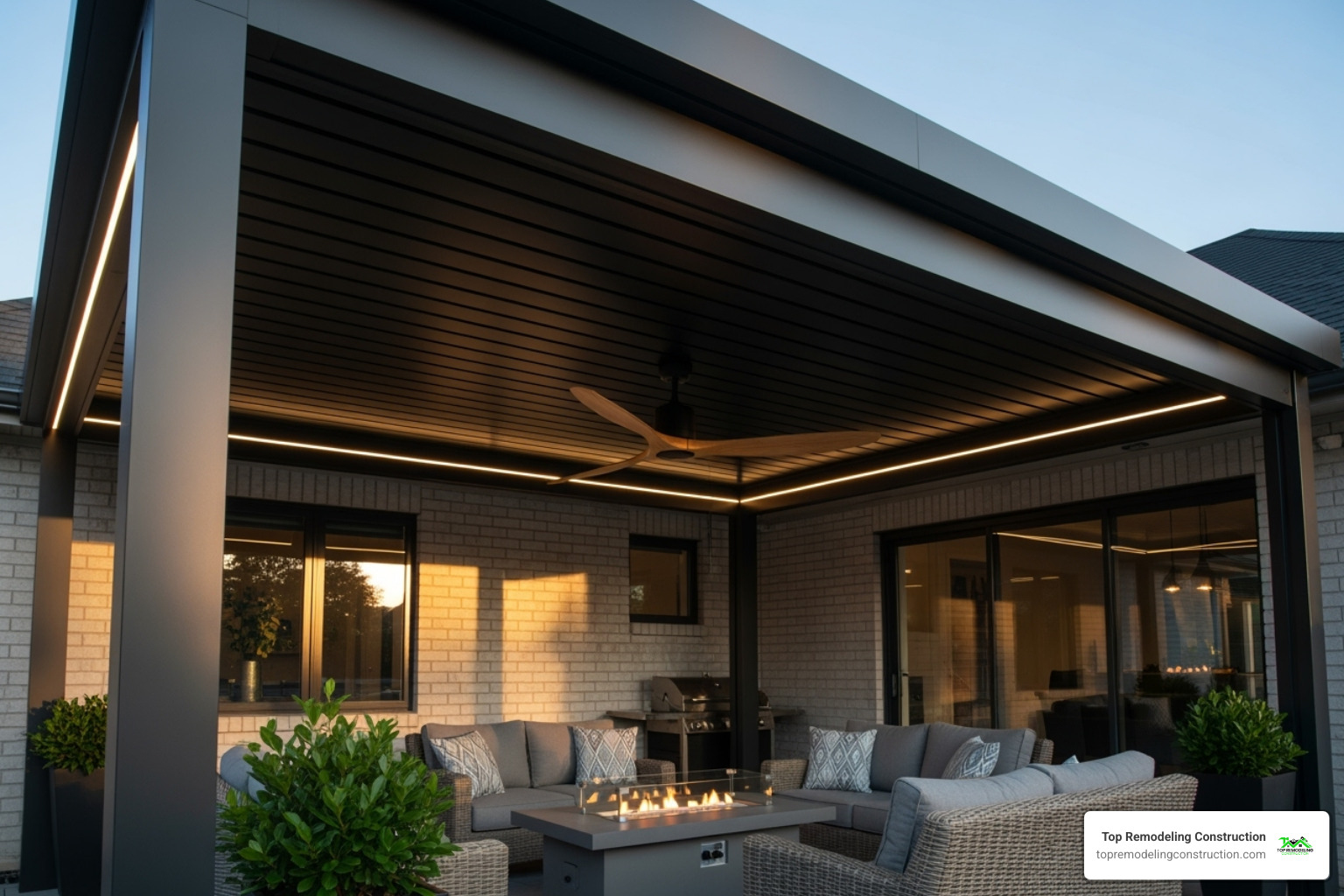
When integrated properly, a cover improves your home’s curb appeal. This new space is perfect for alfresco dining, comfortable reading areas, or an entertainment zone with speakers and ambient lighting. Popular design trends combine style with practicality, including:
- Minimalist steel frames for a sleek, contemporary look.
- Rustic wood beams for warmth and classic charm.
- Custom louvered roofs for ultimate control over sun and breeze.
Protecting Your Outdoor Furniture and Belongings
Your investment in outdoor furniture is significant, and a patio cover is its best defense against the elements. It acts like sunscreen, blocking destructive UV rays that fade fabrics and cause wood and plastic to become brittle. It also keeps furniture dry and ready to use, preventing the mold and mildew that come with constant moisture. This convenience means no more rushing to bring cushions in during a storm—your outdoor space is always ready for you.
Exploring Patio Cover Types and Materials
Choosing the right patio cover is easier when you understand your options. The main types include:
- Solid roof covers: These offer complete protection from sun and rain, using materials like insulated aluminum or polycarbonate to create a finished ceiling.
- Louvered roofs: With adjustable slats, you can control the amount of sunlight and breeze, or close them completely during a storm.
- Pergola-style covers: Their open-beam design provides gentle, filtered shade and is perfect for training climbing vines.
- Custom awnings: These offer flexible coverage, from fixed installations to retractable systems, and are great for smaller spaces.
The material you choose defines your patio cover’s personality and maintenance needs:
| Material | Durability | Maintenance | Cost (General) | Aesthetics |
|---|---|---|---|---|
| Aluminum | Excellent (rust-resistant) | Low (no painting/staining) | Mid-range | Sleek, modern, industrial, versatile |
| Wood | Good (with treatment) | High (sealing/staining) | Mid-to-High | Natural, warm, classic, customizable |
| Vinyl | Excellent (fade/crack-resistant) | Very Low (wash with soap/water) | Mid-range | Clean, contemporary, often encases aluminum |
| Polycarbonate | Good (impact-resistant) | Low (simple cleaning) | Mid-range | Translucent, allows light, modern |
What materials are best for a patio cover?
The best material depends on your priorities: low maintenance, rustic charm, or modern style.
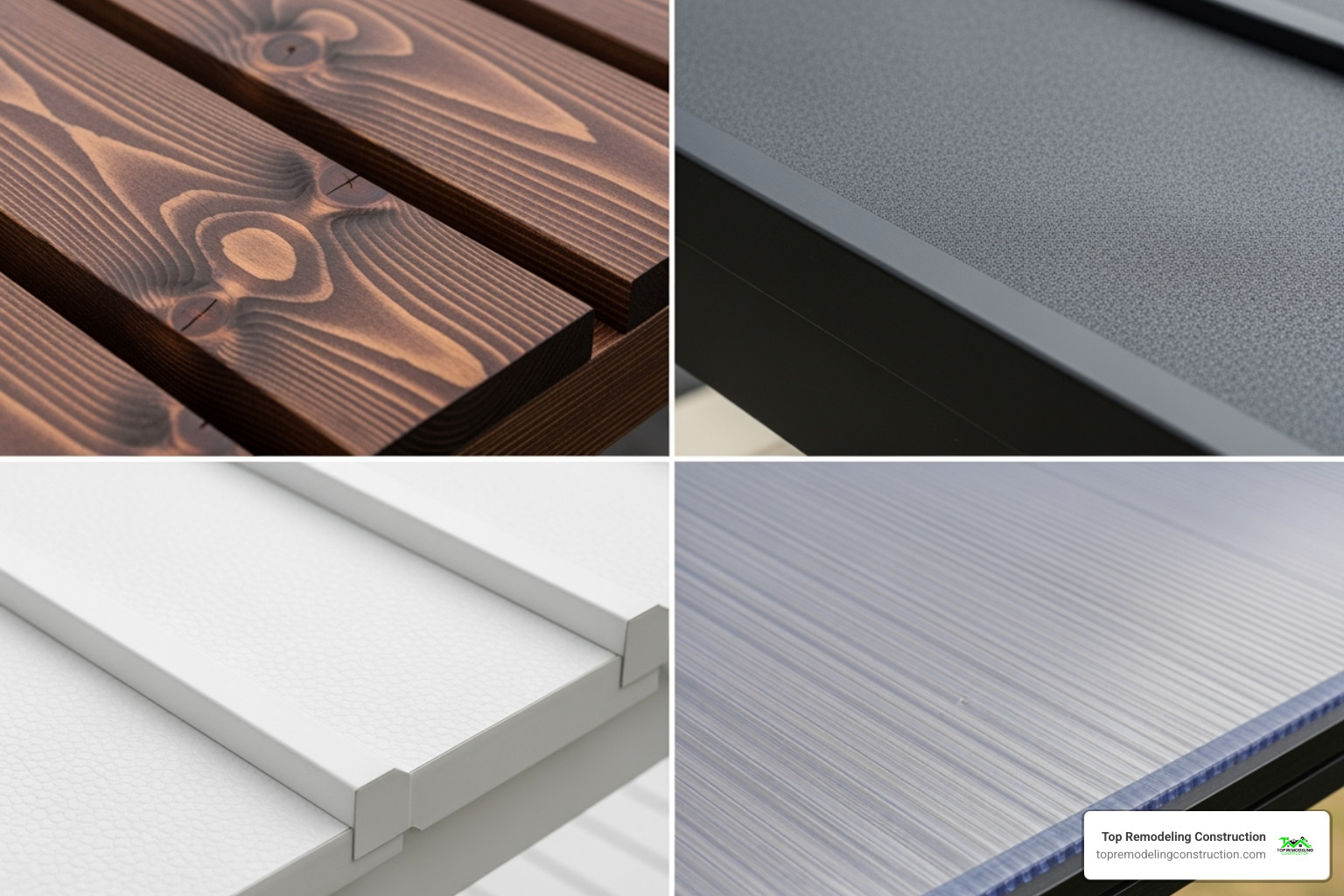
- Aluminum is popular for its durability, low weight, and rust resistance. Modern finishes mean you’ll likely never need to paint it, offering a sleek look that suits contemporary homes.
- Wood provides natural warmth and can be stained or painted to match your home. It requires regular sealing and maintenance to protect against weather and insects.
- Vinyl offers durability without the fuss. It often encases a strong aluminum frame, providing a clean look that won’t fade, crack, or peel.
- Insulated panels are a high-performance option, keeping the area underneath noticeably cooler by blocking heat.
- Composite materials combine wood fibers and plastic, offering the look of wood with the low maintenance of vinyl.
Attached vs. Freestanding Structures
Your choice between an attached or freestanding cover depends on how you plan to use the space.
- Attached lean-to style covers connect directly to your home, creating a seamless extension of your indoor living area. They use the house for support, making it easier to run electricity for fans or lights.
- Freestanding options offer more placement flexibility. You can create a quiet reading nook in the garden, a poolside cabana, or a dining area away from the house. These require their own structural support and footings.
As an expert says, “A simple pergola like this one is easy to add to any existing patio,” modern options provide a perfect solution for every home.
Designing Your Perfect Patio Cover
Designing the perfect patio cover is about creating an outdoor room that reflects your style and meets your family’s needs.
Your local climate is the starting point. In Las Vegas, NV, a patio cover must provide excellent UV protection and shade from intense sun, while being strong enough to handle occasional high winds. While snow load isn’t a concern, choosing a durable, weather-resistant cover is a smart investment.
Budget is also a key factor. Patio cover costs vary, but there’s a solution for every price point. We work with families to find the sweet spot between their vision and their budget. Getting the size and scale right is also crucial—it should be proportional to your yard and home.
Your cover should look like a natural extension of your home’s architecture. Match its style, materials, and colors to your house for a cohesive look. Be sure to check any HOA requirements early on to avoid potential issues.
Integrating Lighting and Accessories
The right accessories can turn your covered patio into a magical gathering spot, day or night.
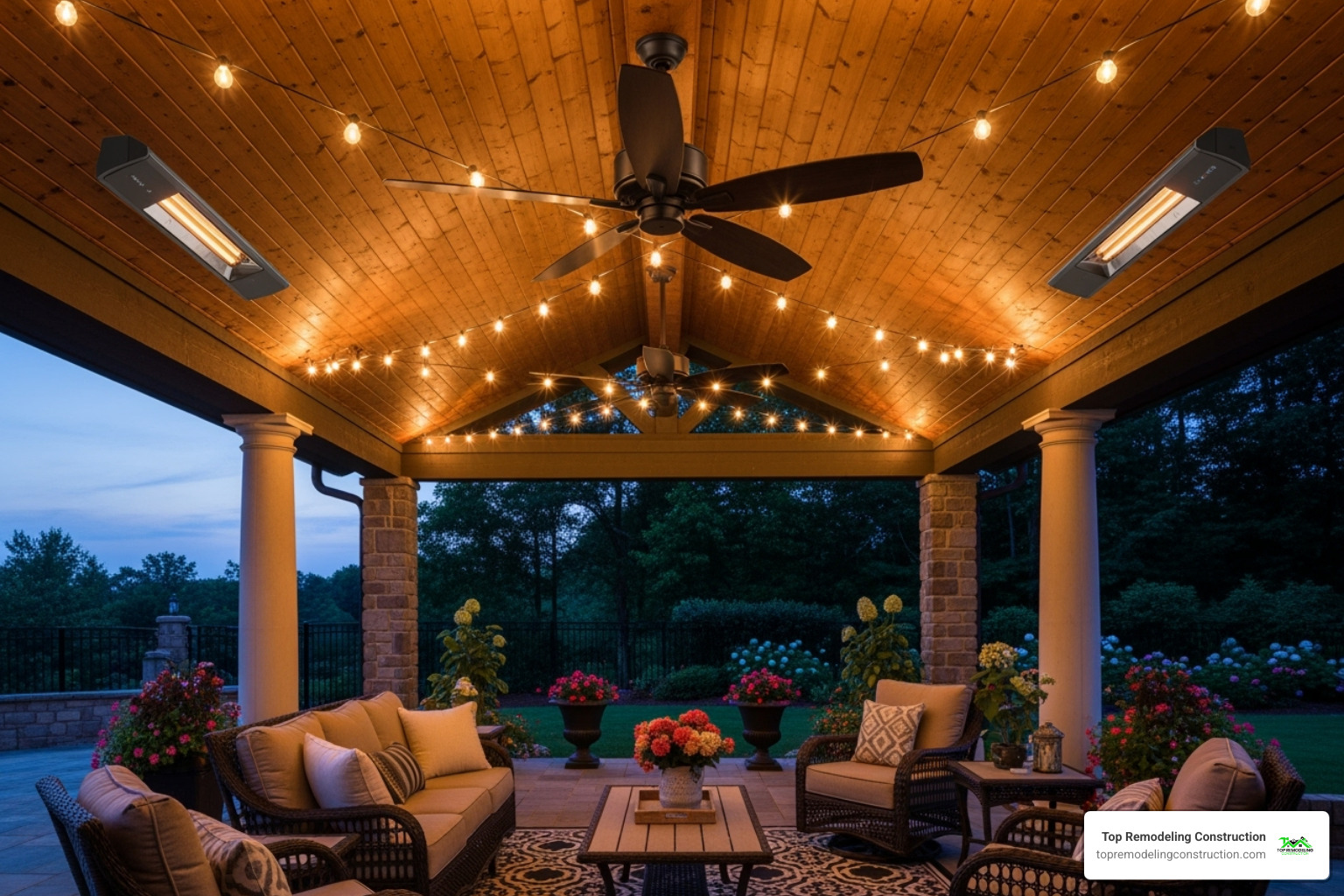
Planning for integrated wiring from the start allows for easy installation of features like:
- Ceiling fans for a cooling breeze on hot days.
- Heaters to extend your outdoor season into cooler evenings. As a design specialist notes, “What’s wonderful about patio covers is that they allow for shade during the day and provide structure for gas or electric heaters to be affixed to.”
- Pendant and string lights for task lighting and ambiance.
- Outdoor speakers for music while you relax or entertain.
How to Choose the Right Style for Your Home
Choosing the right style creates harmony between your patio cover and your home.
- Modern designs favor clean lines and minimalist frames in aluminum or steel, often with neutral colors.
- Traditional aesthetics use ornate wood details and classic columns for a timeless look.
- Rustic charm is achieved with natural, weathered wood and rough-hewn beams for a cozy, lived-in feel.
- The coastal look is breezy and relaxed, with lighter colors and more open structures.
The key is to match your home’s exterior materials, colors, and architectural details. This creates a space that feels authentically yours.
Installation, Maintenance, and Regulations
Understanding the installation process, maintenance needs, and local regulations ensures your patio cover project is a long-term success.
Modern patio covers are engineered for superior weather performance. They are designed with wind resistance to handle strong gusts and, in other climates, are rated for specific snow load capacities. In our Las Vegas desert climate, the focus is on extreme heat tolerance and secure anchoring against windstorms.
Fortunately, maintenance is often minimal. Aluminum and vinyl covers are low-maintenance superstars, requiring only an occasional wash with soap and water. Wood covers need more care, including regular sealing or staining to protect against moisture and UV damage. For any material, routine cleaning of gutters and surfaces prevents debris buildup.
DIY vs. Professional patio cover installation
Deciding between a DIY project and professional installation is a key step.
DIY kits can offer upfront cost savings for handy homeowners, with pre-cut parts and instructions. However, these projects can be more challenging than they appear, requiring the right tools and skills.
Professional installation ensures your project is done right the first time. As a family-owned business, we provide:
- Expert design consultation to select the perfect materials and style.
- Guaranteed structural integrity for a cover built to last.
- Permit compliance, navigating local building codes so you don’t have to.
- Peace of mind, with our team managing the project from start to finish.
While DIY may seem cheaper, professional installation delivers superior craftsmanship and a lasting investment.
Permits and Building Codes
Understanding local regulations and permit requirements is crucial before starting your patio cover project.
Rules vary by city, and the Las Vegas area has specific requirements. Most permanent patio covers require a permit. Regulations include setback rules, which dictate distance from property lines, and height restrictions. Larger projects may require engineered plans to ensure structural safety.
Compliance matters—skipping permits can lead to fines, forced removal of the structure, or issues when selling your home. As experienced professionals, we handle the entire permit process for you, ensuring your project goes smoothly.
Frequently Asked Questions about Patio Covers
It’s natural to have questions when considering a patio cover. Here are answers to some of the most common ones we hear from families in Las Vegas.
How much does a typical patio cover cost?
Patio cover costs vary widely based on several factors. The final price depends on:
- Material: Aluminum and vinyl are often mid-range, while premium wood or louvered systems cost more.
- Size: A larger cover will naturally cost more than a smaller one.
- Custom Features: Integrated lighting, fans, and heaters will add to the investment.
- Installation: DIY kits can save on labor but require your time and tools, while professional installation ensures a high-quality, warrantied result.
We provide transparent, competitive pricing custom to your specific project.
Can a patio cover increase my home’s resale value?
Yes, a well-designed patio cover can significantly increase your home’s resale value. It boosts curb appeal and adds a functional outdoor living space, which is a major selling point for modern buyers. Homes with ready-to-enjoy outdoor areas are highly desirable and often sell faster, making a patio cover a strong return on investment.
What kind of maintenance does a patio cover require?
Maintenance is generally minimal and depends on the material.
- Aluminum and vinyl patio covers are virtually maintenance-free, requiring only an occasional cleaning with soap and water. They resist rust, rot, and fading.
- Wood patio covers need regular sealing or staining every few years to protect them from the elements.
- Polycarbonate covers are also low-maintenance, needing just a simple cleaning.
Regardless of the material, keeping gutters clear of debris is important for proper drainage. With professional installation, your cover will remain a beautiful feature for decades with minimal effort.
Conclusion
A patio cover is a transformative addition to any home. It’s a smart investment that increases property value, extends your living space outdoors, and creates a beautiful setting for relaxation and entertainment.
Whether you prefer the sleek look of aluminum, the warm charm of wood, or the high-tech function of a louvered system, there is a perfect solution to match your home’s character and your budget. A patio cover allows you to create a personal oasis for enjoying morning coffee, hosting dinner parties, or simply unwinding, protected from the elements year-round.
This improvement offers long-term value, making your home more attractive to future buyers who value functional outdoor living spaces. It’s an investment in both your daily enjoyment and your home’s future.
We understand that this is more than a construction project—it’s about bringing your vision to life. As a family-owned business, we are committed to quality, competitive pricing, and exceptional customer satisfaction. We ensure every detail meets your specifications.