

Why Aging in Place Modifications Matter for Your Home and Future
Aging in place modifications are changes made to your home that help you live safely, comfortably, and independently as you grow older. These modifications can include installing grab bars, adding ramps, improving lighting, widening doorways, and updating kitchens and bathrooms for better accessibility.
Key modifications to consider:
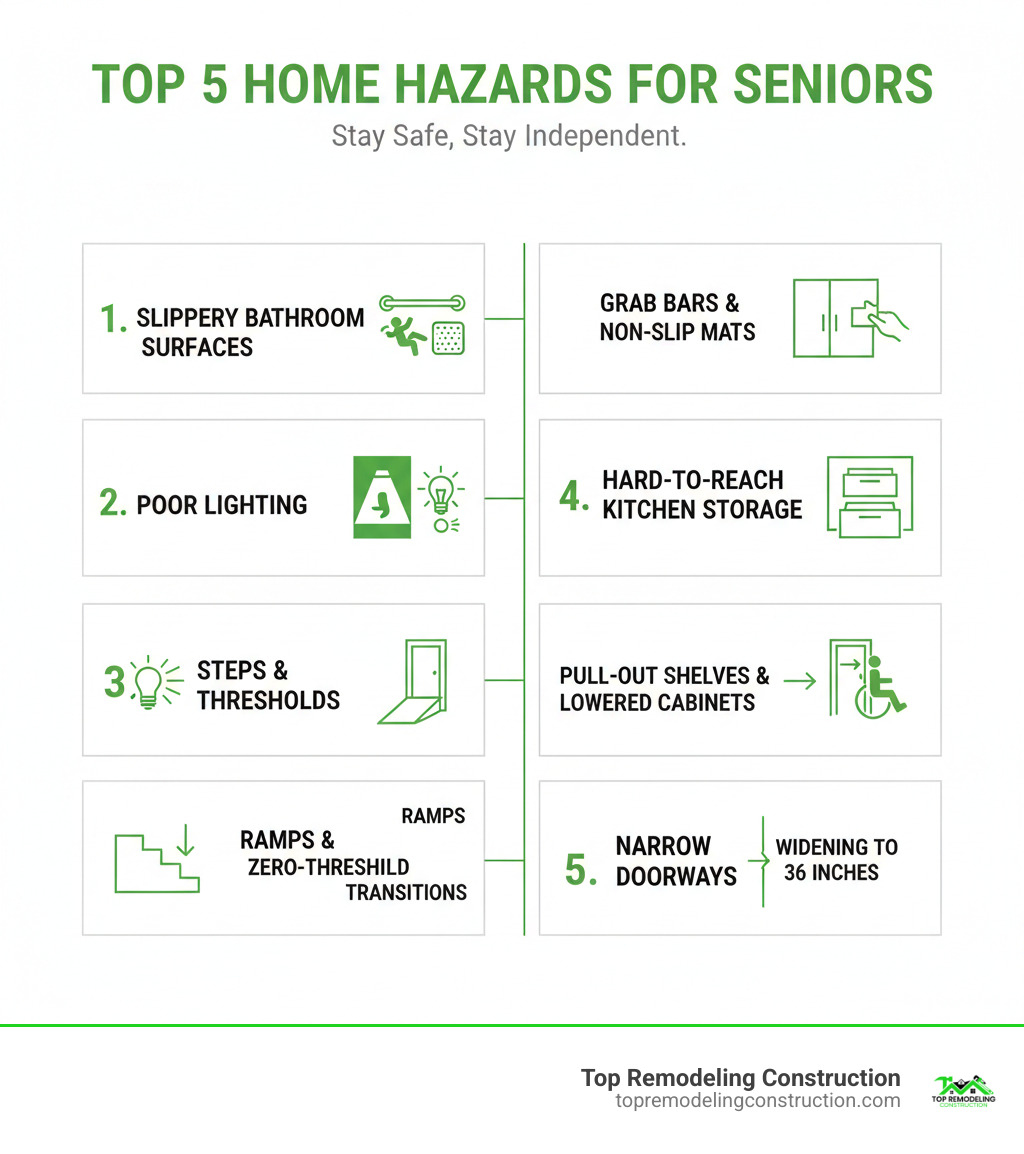
- Bathroom safety: Walk-in showers, grab bars, non-slip flooring, raised toilets
- Kitchen accessibility: Pull-out shelves, lowered countertops, lever-style faucets
- Mobility improvements: Ramps, stairlifts, handrails, widened doorways (36 inches)
- Fall prevention: Motion-sensor lights, secured rugs, clear pathways
- Smart home features: Voice-activated controls, video doorbells, medical alert systems
The idea of “home” is powerful. It’s a sanctuary filled with memories. It’s no surprise that more than 77% of adults over 50 say they want to stay in their homes as long as possible.
However, a home that was perfect at 40 might present challenges at 70. Simple tasks like stepping into a shower or navigating stairs can become difficult or even dangerous. The good news is that you don’t have to choose between staying home and staying safe. Strategic home modifications can transform your living space into a secure, accessible environment that supports your independence.
The financial case is also compelling. With the cost of assisted living often running thousands of dollars per month, a one-time investment in home modifications is frequently far more affordable and allows you to remain in the place you love.
One in four seniors fall every year, and most of these falls happen at home due to preventable hazards like poor lighting or slippery floors. The bathroom is statistically one of the most dangerous areas. But aging in place modifications are about more than just preventing falls. They preserve your independence, reduce the burden on caregivers, and maintain your quality of life in familiar surroundings. Whether you’re planning ahead or responding to current needs, the right changes can make all the difference.
Important Aging in place modifications terms:
Room-by-Room Guide to a Safer Home
Aging in place involves targeted changes to key areas of your home. The focus is on the rooms and pathways that present the most challenges or risks as we age. Let’s review how to make your home safer and more accessible, room by room.
Essential Bathroom Modifications for Safety
The bathroom is a high-risk area for seniors due to wet surfaces and confined spaces, leading to thousands of injuries from falls annually. With thoughtful aging in place modifications, this area can be transformed into a haven of safety and independence.
First, grab bars are non-negotiable. Professionally installed into wall studs, they provide crucial stability near toilets and in showers. Modern designs can even look like stylish towel racks, blending seamlessly with your decor.
Next, consider the bathing area. Traditional tubs are often replaced with walk-in or zero-threshold showers. These curbless designs allow for easy entry, whether walking or using a mobility aid. A fold-down seat and an adjustable, handheld showerhead further improve safety.
Non-slip flooring is another critical element. Replacing slippery tiles or applying adhesive strips can drastically reduce fall risks. For the toilet area, raised-height toilets (17-19 inches) make sitting and standing easier. Finally, lever-style faucets simplify operation for those with reduced hand strength.
As a family-owned business, we know a bathroom can be both safe and stylish. Bathroom remodels that improve accessibility often yield a high return on investment, paying off in both peace of mind and home value.
More info about Home Remodeling Las Vegas NV
Functional and Accessible Kitchen Modifications
The kitchen is the heart of the home, but tasks like reaching high shelves or bending into cabinets can become hazardous with age. Smart aging in place modifications can restore functionality and safety.

One of the biggest game-changers is adjusting storage. Lowered countertops make food prep more comfortable, especially from a seated position. Inside cabinets, pull-out shelves and lazy Susans bring items to you, eliminating strain. For water access, lever-handle faucets are much easier to operate than traditional knobs. Consider appliances like a side-by-side refrigerator for easier access and a wall oven installed at an accessible height.
Good lighting is essential. Under-cabinet and task lighting can illuminate workspaces, making cooking safer. Finally, anti-fatigue mats in front of the sink or stove can reduce discomfort and help prevent falls.
A well-planned kitchen remodel significantly improves daily life and is a smart investment, with reports showing a high cost recoup value for mid-grade projects. We pride ourselves on delivering exceptional customer satisfaction, ensuring your kitchen becomes a joy to use.
Explore Custom Home Remodeling Services
Improving Entryways, Hallways, and Stairs
Entryways, hallways, and stairs can become major barriers as mobility changes. Aging in place modifications in these areas are key to ensuring smooth, safe passage throughout your home.
For your home’s entrance, a zero-step entryway is ideal. If a step is unavoidable, installing ramps with sturdy handrails provides a safe incline. Motion-sensor lighting at main entry points can also prevent fumbling in the dark.
Inside, stairlifts are an effective solution for multi-story homes. For those who can still manage stairs, ensuring sturdy handrails on both sides is crucial.
Widening doorways to at least 36 inches accommodates wheelchairs and walkers. Similarly, replacing high thresholds with level transitions between rooms eliminates tripping hazards.
These changes can prevent serious accidents. With one in four seniors falling each year, often due to such obstacles, our goal is to eliminate these hazards for safer movement through your home.
Key Strategies for Fall Prevention and Accessibility
A safer home requires thinking beyond individual rooms to how you move through the entire space. Broader aging in place modifications work together to reduce fall risks and make daily activities easier for everyone.
Proactive Aging in place modifications for Fall Prevention
Most falls are preventable, caused by hazards that can be addressed with straightforward changes.
Start by examining your pathways throughout the home. Aim for routes that are at least 36 inches wide to allow comfortable movement, even with a cane or walker.
While stylish, throw rugs are a major fall hazard. We recommend securing loose rugs with non-slip pads or removing them entirely from high-traffic areas. An unanchored rug is a serious risk.
Lighting also deserves special attention. As we age, our eyes need more light to see clearly. Improving both ambient and task lighting is vital for safety and comfort. Replace dim bulbs with brighter LEDs and add focused lighting where you read or cook.
Installing motion-sensor nightlights in hallways, bathrooms, and bedrooms is one of the smartest investments you can make. They automatically light your path at night, eliminating the risk of stumbling in the dark.
Decluttering is a free and effective way to improve safety. Clear walkways of electrical cords, stacked items, and other obstacles.
Common household tripping hazards to eliminate:
- Loose area rugs or mats without non-slip backing
- Clutter on floors, especially in hallways and stairs
- Electrical cords running across pathways
- Uneven flooring or raised thresholds between rooms
- Poor lighting in stairwells and dark corners
- Slippery bathroom surfaces without mats or treatments
- Furniture placed awkwardly in high-traffic areas
General Accessibility and Smart Home Improvements
Beyond fall prevention, aging in place modifications can make your home more user-friendly for everyone. These changes follow universal design principles, creating features that work for people of all ages and abilities.
Consider small details like lowering light switches and raising electrical outlets to reduce bending and reaching. Swapping out traditional round doorknobs for lever handles makes opening doors effortless, even with full hands or limited grip strength.
Smart home devices are practical tools that can genuinely improve independence and safety. Voice-activated assistants like Alexa or Google Home let you control lights, adjust the thermostat, or call for help without moving from your chair.
For security, smart locks and video doorbells let you see who’s at your door and open it remotely. For added peace of mind, medical alert systems with automatic fall detection can be lifesaving, automatically contacting emergency services if you’re unable to call for help.
We’ve helped many families integrate these technologies into their homes. The key is choosing solutions that fit your lifestyle and comfort level.
Learn about Energy Efficient Home Renovations
The Full Picture: Benefits Beyond Physical Safety
The benefits of aging in place modifications extend far beyond physical safety. These changes can restore confidence, improve relationships, and positively impact every aspect of daily life.
How Modifications Support Independence and Reduce Caregiver Burden
Simple acts of daily living, like preparing a meal or taking a shower without help, are deeply tied to our sense of self-worth and independence. Aging in place modifications preserve this autonomy.
A walk-in shower with a built-in seat gives someone the freedom to maintain their daily routines on their own schedule. Pull-out shelves in the kitchen enable someone to continue cooking their favorite recipes.
This independence also benefits caregivers. With less physical demand and worry, their role can shift from constant assistance to meaningful companionship and support. Research shows that structural changes like improved bathroom accessibility can significantly reduce the physical strain on caregivers.
The result is increased autonomy for seniors and a sense of control that is vital to well-being. When you can steer your own home safely, you’re living life on your own terms.
The Psychological and Emotional Rewards of Aging in Place
The emotional benefit of home is immense. It’s a place woven with memories of family, hobbies, and life’s milestones.
Staying in this familiar environment provides a deep comfort that reduces stress and anxiety. This sense of place cannot be replicated in an assisted living facility. Following the same routines in the home you know by heart actively contributes to mental well-being.
Maintaining community connections is another gift of staying home. Your neighbors, local shopkeepers, and mail carrier are part of a vital social network that supports mental health and provides a sense of belonging.
Perhaps most importantly, aging in your own home preserves your sense of security and dignity. You remain the master of your own domain, making your own choices about your daily life. The emotional benefits are tangible: lower stress, improved mental health, and a stronger sense of security, all contributing to a better quality of life.
As a family-owned business, we understand that home modifications are deeply personal investments in independence and dignity. Every change represents someone’s continued ability to live fully and joyfully in the place they love most.
Planning and Financing Your Aging in place modifications
Planning and financing your home modifications can be manageable. With a thoughtful approach and a clear understanding of your options, aging in place modifications become surprisingly achievable.
A Phased Approach to Home Upgrades
Tackling all modifications at once can be overwhelming. We recommend a phased approach, taking it one step at a time.
Start with the quick wins (Phase 1). These are low-cost changes that make an immediate safety difference, such as installing grab bars, improving lighting with brighter bulbs and motion-sensor nightlights, securing rugs, and clearing clutter.
Move on to medium-scale projects (Phase 2). This might include installing a stairlift, replacing a tub with a walk-in shower, or swapping doorknobs for lever handles. These changes typically require professional installation but offer substantial improvements.
Save the major renovations for Phase 3. This includes comprehensive bathroom or kitchen remodels, widening all doorways, or installing exterior ramps. These larger projects transform your home for the long haul.
Success lies in a prioritized checklist based on your specific needs. We can help you assess your challenges and determine which changes will provide the greatest immediate benefit. Your plan should be unique to your situation.
Find a General Contractor for Home Renovation
Financial Considerations and Assistance
While modifications require an investment, they are often remarkably affordable when compared to the long-term cost of assisted living. Assisted living can cost tens of thousands of dollars annually. In contrast, even a comprehensive home modification project is typically a one-time investment.
| Item | Estimated Cost Comparison |
|---|---|
| Assisted Living (Annual Cost) | Tens of Thousands of Dollars |
| One-time Investment in Common Home Modifications | |
| Bathroom Remodel (High ROI) | $10,000 – $50,000+ |
| Stairlift | $2,000 – $15,000 |
| Ramp Installation | $1,000 – $5,000 |
| Grab Bars & Minor Fixes | $200 – $1,000 |
| Doorway Widening | $1,000 – $3,000 per door |
Many of these improvements also increase your home’s value. Accessible bathroom and kitchen remodels often show a significant return on investment, with reports indicating homeowners can recoup a large percentage of the cost.
Don’t overlook potential financial aid. Many medically necessary modifications may qualify for tax deductions (consult a tax advisor). Additionally, various grants, loans, and insurance programs—including Medicaid waivers and Veterans’ benefits—may help offset costs.
Budgeting for renovations is about looking at the big picture. Factoring in the cost of alternatives and the return on investment, aging in place modifications are one of the smartest financial decisions you can make. As a family-owned business, we are committed to helping you find solutions that fit your budget.
Frequently Asked Questions about Aging in Place Modifications
We understand that planning for the future can be overwhelming. Here are answers to some of the most common questions about aging in place modifications.
When is the best time to start making home modifications?
The best time to start is before you think you need to. Being proactive gives you control. Waiting for a fall or health crisis means making rushed decisions under stress. Starting with small, manageable changes makes the process less daunting and ensures safety is already in place when you need it most, providing peace of mind for you and your family.
What are the most critical first modifications to make?
Prioritize two key areas: the bathroom and your pathways. The bathroom is the most hazardous room, so installing grab bars, adding non-slip mats, and ensuring bright lighting are high-impact first steps. At the same time, clearing pathways of clutter, securing loose rugs, and improving lighting in hallways and stairways are immediate actions that reduce fall risks throughout the home. These modifications preserve your confidence and independence.
Can home modifications increase my property value?
Yes. Many people assume these modifications have a narrow appeal, but the opposite is often true. Features like updated kitchens and bathrooms with zero-threshold showers and wider doorways follow “universal design principles.” These improvements make homes more functional for everyone, including families with children or individuals with temporary injuries. The numbers back this up: accessible bathroom and kitchen remodels often have a high return on investment, with homeowners recouping a significant percentage of the cost at resale. You’re not just adapting your home; you’re improving it for the long term.
Create Your Forever Home Today
Your home holds a lifetime of memories, and leaving it can be difficult. The good news is that you don’t have to leave to stay safe.
With thoughtful aging in place modifications, you can transform your current home into a space that supports you through every stage of life. These are investments in your independence, comfort, and future. Every grab bar installed or doorway widened is a step toward maintaining the life you love, right where you are.
We understand this journey. It’s not about sacrificing style for a clinical look, but about making smart, subtle changes that blend into your home while dramatically improving safety and accessibility. The benefits go beyond fall prevention to preserving autonomy, reducing stress on loved ones, and maintaining vital community connections. You’re choosing to live on your own terms.
As a family-owned business, Top Remodeling Construction understands what home really means. We are your partners in creating a space where you can thrive for decades to come. We pride ourselves on exceptional customer satisfaction and attention to detail, ensuring your vision for a comfortable, safe home is our top priority.
Whether you’re starting with simple fixes or planning a major remodel, we’re here to guide you. Your forever home is within reach.
Ready to adapt your home for a safe and independent future? Explore our Home Remodeling services to get started.

