
Why Kitchen Remodel Planning is the Key to Your Dream Kitchen
Kitchen remodel planning is the foundation that transforms renovation dreams into an achievable, stress-free reality. Without a proper plan, any kitchen project can become a costly nightmare of delays, budget overruns, and disappointing results.
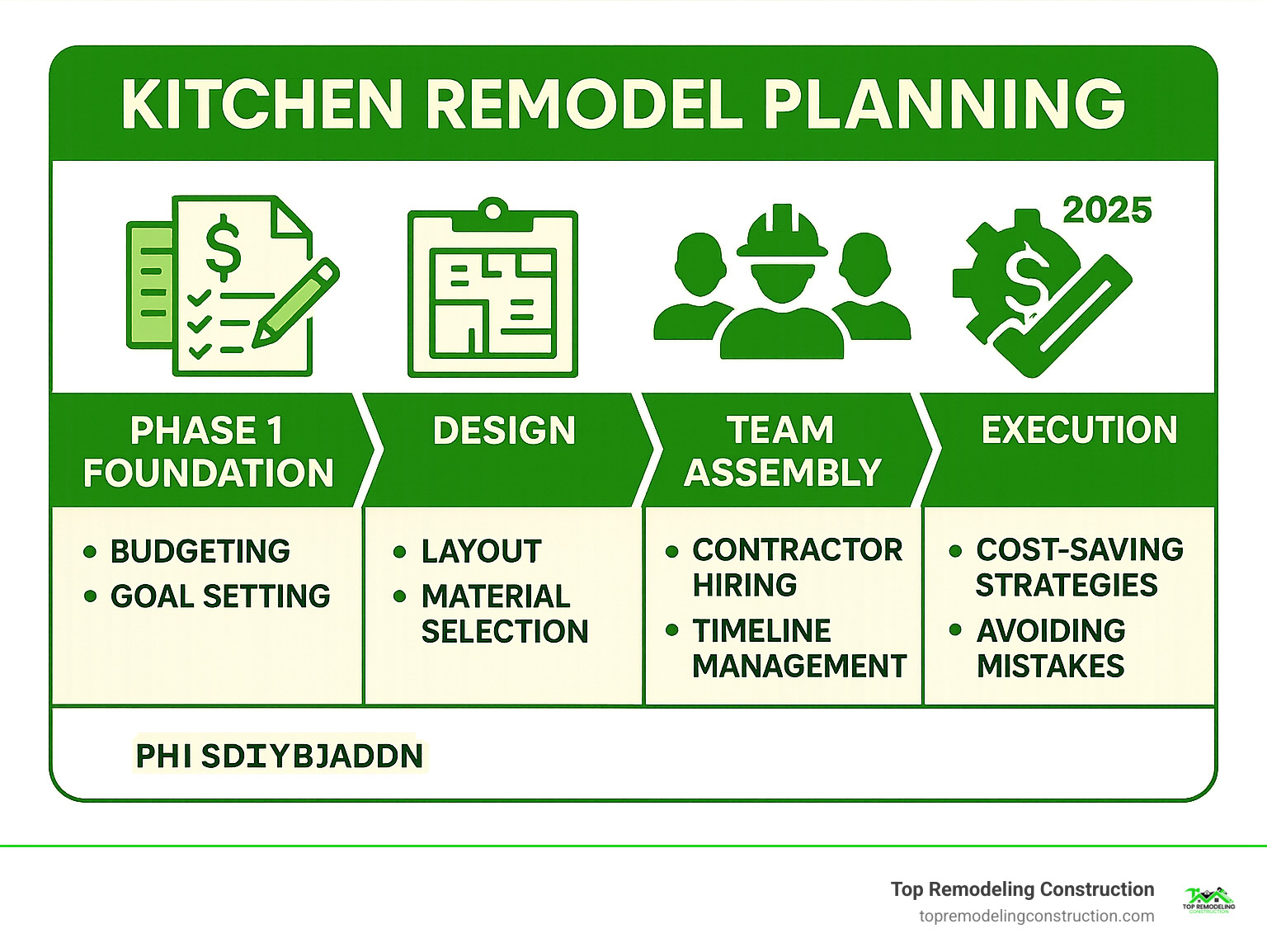
Essential Kitchen Remodel Planning Steps:
- Define your goals – List must-haves vs. nice-to-haves based on your lifestyle.
- Set a realistic budget – Average costs range from $14,600 to $41,485, with a 20% contingency fund.
- Choose your layout – Consider the work triangle and traffic flow for maximum efficiency.
- Select materials and appliances – Balance durability, maintenance, and aesthetics.
- Hire the right team – Vet contractors thoroughly, ensuring proper licensing and insurance.
- Plan the timeline – Expect 6-8 months of planning and 3-8 weeks of construction.
A prominent 2020 U.S. home study highlights the importance of this phase, showing that successful renovations average over 8 months of planning before construction even begins. This upfront effort is the key difference between a successful and a stressful project.
Your kitchen is the heart of your home. A well-planned renovation improves both function and value, boosting your home’s worth while creating a space perfectly customized to your lifestyle.
Phase 1: Laying the Foundation with Goals and a Realistic Budget

Every successful kitchen remodel planning journey starts by assessing your current situation. This foundational phase is crucial for ensuring the final result meets your real needs. Think of it as creating a blueprint before building a house—it guarantees a solid outcome.
Defining Your “Why”: Needs vs. Wants
Start by identifying your current kitchen’s pain points. Is it a lack of counter space, inaccessible cabinets, or a cramped layout? These frustrations help you separate what you need from what you simply want.
Your needs list should focus on functionality. Do you need more storage? A better workflow? These issues should drive your major decisions. The wants list is for features like a wine fridge or a smart refrigerator—nice to have, but not essential. Consider how you actually live. If you host weekly dinner parties, an open layout might be a need, but an elaborate coffee station might be a want if you’re always on the go.
A thoughtful renovation can also improve your home’s worth, especially when focused on timeless design and improved functionality. For inspiration, see examples of successful changes in more info about our kitchen remodel projects.
Creating a Realistic Kitchen Remodel Budget
Kitchen remodel planning without a realistic budget is a recipe for disaster. According to industry data, a kitchen remodel costs $26,934 on average, with a typical range of $14,600 to $41,485.
Here’s a typical cost breakdown:
- Cabinets: 25-30%
- Labor: 17-25%
- Appliances: 14-20%
- Countertops: 10-15%
- Flooring: 7-10%
The golden rule: always add a 20% contingency fund to your budget for unexpected issues like outdated wiring or plumbing problems. This isn’t pessimism—it’s smart planning.
Research costs in your area and decide where to splurge (e.g., high-quality cabinets) and where to save (e.g., a budget-friendly backsplash). Track every expense in a spreadsheet to stay on course. For a detailed breakdown, visit our Kitchen Remodel Cost Breakdown guide.
A well-planned budget makes your dream kitchen achievable, allowing you to make confident decisions you’ll love for years to come.
Phase 2: Designing Your Dream Space
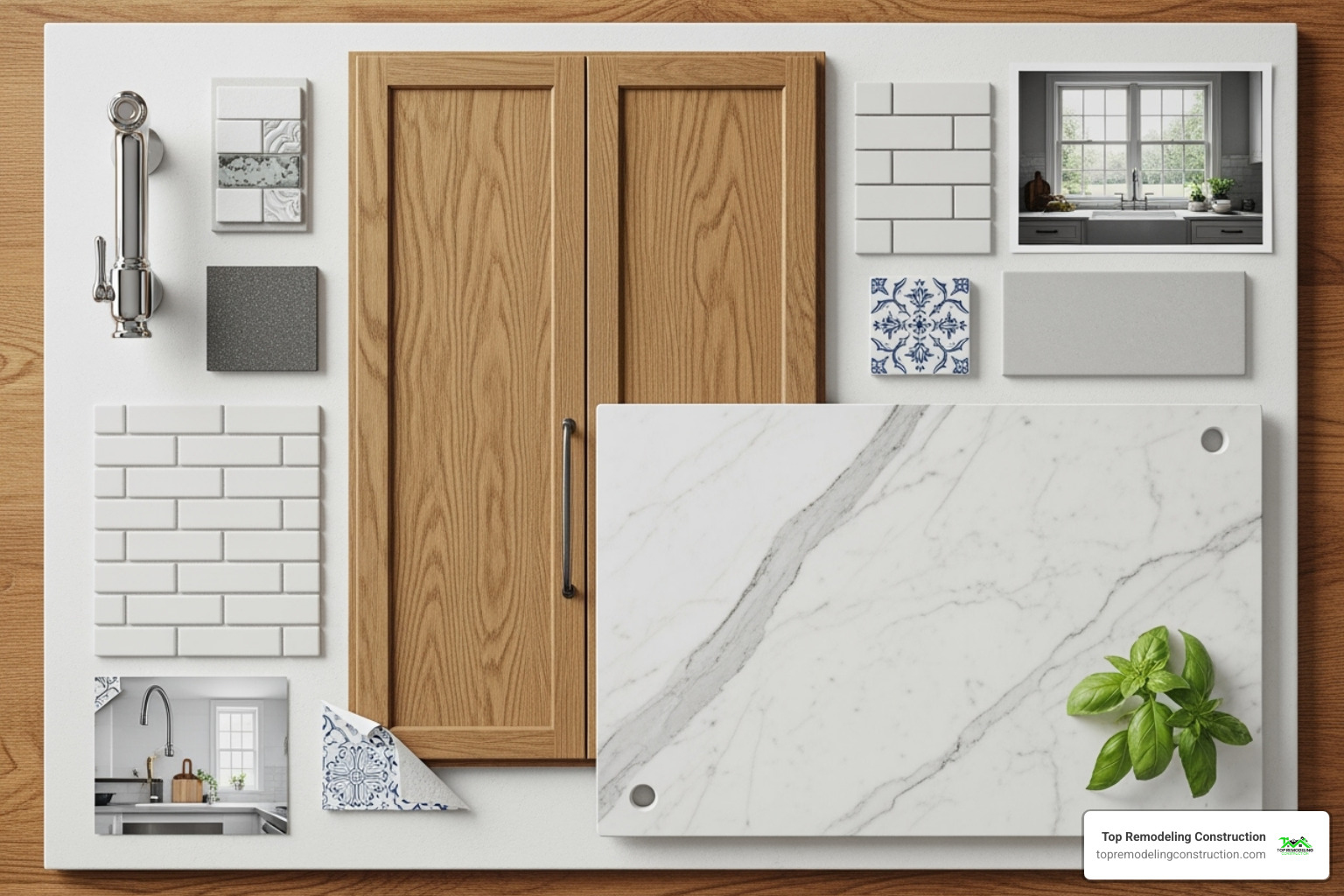
Now for the fun part of kitchen remodel planning: turning your vision into a functional, beautiful design. The decisions you make here, from layout to finishes, will define your daily experience in the new space.
Choosing the Perfect Kitchen Layout
Your kitchen’s layout is its foundation. The classic work triangle connects the sink, stove, and refrigerator for an efficient workflow. The concept of the kitchen triangle is key for workflow, though many modern kitchens also use a zonal approach with dedicated areas for prep, cooking, and cleaning.
Popular layouts include:
- L-shaped kitchens: Flexible and work well with islands.
- U-shaped layouts: Offer maximum storage and counter space.
- Galley kitchens: Efficient for narrow spaces with parallel counters.
Professional kitchen design guidelines recommend keeping work triangle legs between 4 and 9 feet. Kitchen islands are great for prep and seating but require at least 42 inches of clearance for traffic. Let your lifestyle drive these decisions. For more ideas, explore our Modern Kitchen Remodel Ideas.
Selecting Materials, Finishes, and Appliances
This is where your kitchen’s personality emerges. Balance durability, maintenance, and aesthetics with your budget.
- Countertops: Popular choices include low-maintenance quartz, natural granite, and luxurious marble.
- Cabinetry: This is a major expense (25-30% of the budget). Options range from custom to stock. Consider internal organizers like pull-out pantries and lazy Susans. If your cabinet boxes are solid, our Kitchen Cabinet Refacing Services can provide a new look for less.
- Backsplash: A great place to add personality with classic subway tile or natural stone.
- Flooring: Options like hardwood, durable tile, or waterproof luxury vinyl plank must handle heavy traffic and spills.
- Lighting: Layer ambient, task (under-cabinet), and accent lighting for full functionality and mood.
- Hardware: Cabinet pulls and knobs are the “jewelry” of the kitchen and are easy to update later.
- Appliances: Look for Energy Star ratings to save on utility bills and consider smart technology for convenience.
Phase 3: Assembling Your Team and Mastering the Kitchen Remodel Planning Timeline

With a vision and budget, the next phase in kitchen remodel planning is finding the right professionals. This is about choosing partners who will help transform the heart of your home with care and expertise.
How to Hire the Right Kitchen Remodel Contractor
The right contractor is your project champion. Here’s what to look for:
- Specialized Experience: Hire contractors who focus on kitchen remodels, as they understand the unique plumbing, electrical, and design coordination required.
- Licensing and Insurance: These are non-negotiable and protect you from liability. Any reputable pro will provide them.
- Client References: Speak with recent clients about communication, timeliness, and how unexpected issues were handled.
- Portfolio Review: Examine their work for quality, attention to detail, and a style that aligns with your vision.
When interviewing, ask about their timeline, communication process, and change order policies. Red flags include demands for large upfront payments, a lack of credentials, vague contracts, or high-pressure sales tactics. Trust your instincts. A General Contractor Kitchen Remodel service that includes design can streamline the process.
Managing the Project Timeline from Start to Finish
Understanding the timeline is a key part of kitchen remodel planning. A realistic expectation reduces stress. Most kitchen renovations involve 6-8 months of planning and 3-8 weeks of actual construction.
The planning phase involves finalizing designs, selecting materials, hiring your team, and obtaining permits. This upfront work prevents costly delays later. Material sourcing can be a wild card, as custom cabinets or special-order items can have long lead times.
Once construction begins, it follows a sequence: demolition, plumbing/electrical rough-ins, flooring, cabinets, countertops, and finally, appliances and finishes. Expect the unexpected. Issues like old wiring or plumbing problems are common, which is why your 20% contingency fund is essential. Build flexibility into your timeline to maintain sanity.
Good communication with your contractor is critical. Our Kitchen Remodelers Las Vegas team believes informed clients are happy clients. The disruption is temporary, but your new kitchen will bring joy for years.
Phase 4: Smart Strategies for a Smooth and Successful Renovation
The final phase of kitchen remodel planning is about smart execution. You’ve planned, designed, and hired your team. Now, it’s time to implement strategies that keep the project on track, on budget, and your sanity intact.
Saving Money Without Sacrificing Quality
Successful renovation is about spending money strategically. Splurge on high-use items that are hard to replace, like high-quality cabinets and durable countertops. Save on elements where cost-effective alternatives shine, such as using luxury vinyl plank flooring or a classic subway tile backsplash. If your cabinet boxes are sound, our Kitchen Cabinet Refacing Services can offer a new look for a fraction of the cost.
Keeping your existing layout is often the biggest money-saver, as moving plumbing and electrical lines is expensive. For the handy homeowner, DIY-appropriate tasks like painting or demolition can cut labor costs, but be honest about your skills. A botched job costs more to fix. Our DIY Kitchen Remodeling Tips can help you decide what to tackle. Finally, shop for appliances and fixtures during major sales events. Our approach to Affordable Kitchen Renovations proves that smart choices deliver beautiful results on a budget.
Common Mistakes to Avoid in Your Kitchen Remodel Planning
Knowing the common pitfalls in kitchen remodel planning helps you avoid them:
- Prioritizing style over function: A kitchen must work for your real life, not just look good in photos.
- Inadequate storage planning: Underestimating storage needs is a top regret. Maximize space with vertical storage, drawer organizers, and pull-out pantries.
- Poor lighting decisions: A single overhead light is not enough. Layer ambient, task, and accent lighting.
- Skipping the contingency fund: That 20% buffer is crucial for handling the unexpected issues that arise in nearly every project.
- Chasing every trend: Keep major investments classic. Use trendy colors or patterns on elements that are easy to change, like backsplashes or hardware.
- Rushing contractor selection: Choosing the cheapest bid can lead to inferior work and costly rework.
Surviving the Remodel: Tips for Living Through Construction
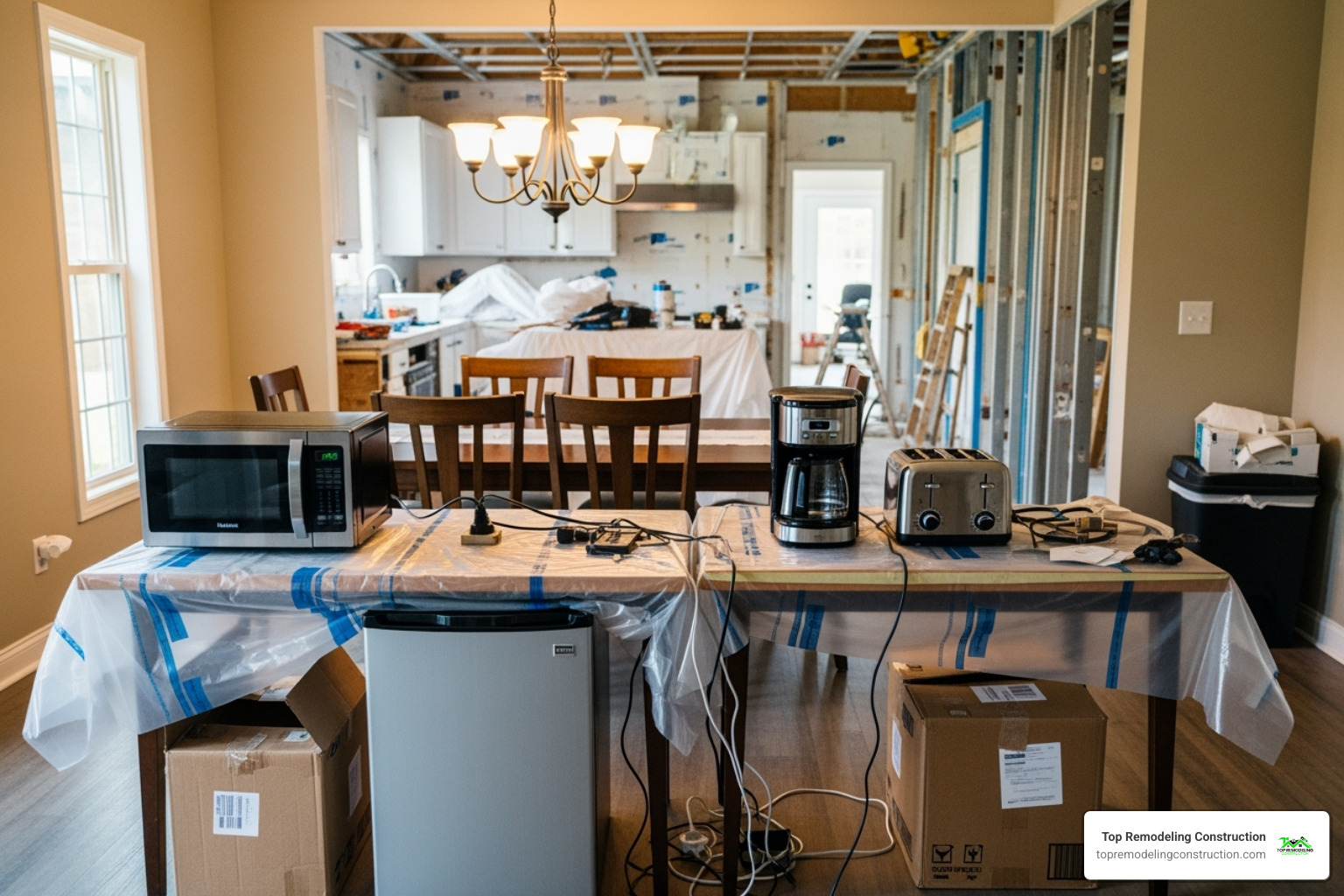
Living through a renovation tests anyone’s patience. A functional temporary kitchen is your key to survival. Set up a folding table with a slow cooker, microwave, and mini-fridge in a space away from the dust. Use disposable plates and utensils to avoid washing dishes in a bathroom sink.
Seal off the work area with plastic sheeting to contain dust. Maintain regular communication with your contractor to reduce anxiety and know what to expect each day. Most importantly, maintain your sense of humor. The chaos is temporary, but your dream kitchen will last for decades.
Frequently Asked Questions about Kitchen Remodel Planning
As you move through the phases of kitchen remodel planning, questions are inevitable. Here are answers to some of the most common ones we hear from clients.
What is the very first step in planning a kitchen remodel?
The first step is to assess your current kitchen’s pros and cons. Spend a week noticing what frustrates you. Create a “needs vs. wants” list to separate functional necessities (like more storage) from aesthetic desires (like a specific countertop material). This list becomes your guide for every decision, ensuring the final design solves your real-world problems.
How long does a typical kitchen renovation take?
While it varies, a typical project involves 6-9 months of planning and 3-8 weeks of actual construction. The planning phase includes design, material selection, and hiring, while the shorter construction phase is when the work happens in your home. The timeline can be affected by factors like moving walls, custom cabinet lead times, or permit approvals. Thorough planning leads to a smoother construction phase.
How can I make my kitchen design timeless?
To create a timeless design, focus on classic, neutral choices for your biggest investments like cabinets and countertops. Think whites, grays, or natural wood tones with clean lines. You can incorporate trends through easily changeable elements like cabinet hardware, light fixtures, bar stools, or a backsplash. Above all, prioritize a functional layout. A kitchen that works beautifully will always feel right, regardless of passing trends.
Your Stress-Free Remodel Starts Here
The journey to your dream kitchen doesn’t have to be overwhelming. Effective kitchen remodel planning breaks the project into manageable, logical steps.
By defining your vision first, you create a guide for every decision. Setting a realistic budget, including a 20% contingency fund, provides a crucial safety net for the unexpected. Choosing the right layout and materials becomes easier when you know your goals, ensuring your new kitchen is perfect for your life, not just a magazine.
Hiring a trusted team is essential to the experience. At Top Remodeling Construction, our family-owned approach means we treat your project with the care we’d want in our own home. We’ve seen how the right partnership transforms not just a kitchen, but the entire renovation process.
A well-planned renovation delivers a beautiful, functional space that adds value to your home and improves your daily life. The team at Top Remodeling Construction is dedicated to bringing your vision to life with quality and attention to detail.
Ready to start planning your dream kitchen in Las Vegas? Contact our Kitchen Renovation Experts today! Your stress-free remodel is just a conversation away.