
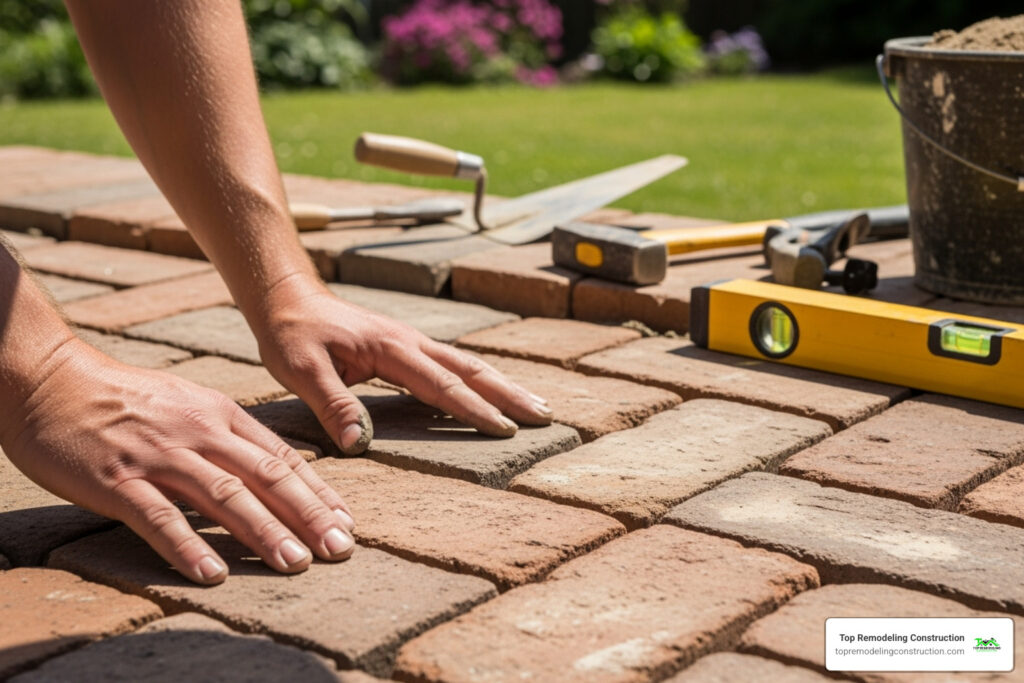
Why Your Brick Patio Deserves a Fresh Start
When you redo brick patio surfaces, you’re not just fixing problems – you’re reclaiming your outdoor living space. Whether your patio has sunken pavers, cracked bricks, or weeds sprouting between joints, restoration can transform it back into the beautiful gathering space it once was.
Quick Answer: To redo a brick patio, follow these key steps:
- Assess the damage – Determine if you need spot repairs or full restoration
- Remove problem bricks – Carefully lift damaged or sunken pavers
- Fix the base – Add and compact new sand or gravel as needed
- Re-lay the bricks – Ensure proper leveling and spacing
- Fill joints – Use polymeric sand to lock pavers in place
- Seal the surface – Protect against future damage and improve appearance
Your brick patio looked amazing when it was first installed, didn’t it? All those bricks perfectly aligned, creating an inviting outdoor space. But time takes a toll on paver surfaces. A crack here, a crooked brick there. And why do some pavers look like they’re sinking into the ground?
The good news is that brick patios are highly repairable. Unlike concrete that cracks and requires complete replacement, individual bricks can be lifted, the base can be fixed, and the same pavers can be reset. This flexibility makes brick patios one of the most cost-effective outdoor surfaces to maintain.
Most patio problems stem from base material issues – the sand underneath shifts over time, especially with poor drainage or freeze-thaw cycles. Professional repairs average $1,200, but DIY materials typically cost less than $100, potentially saving you over $1,000.
First, Diagnose the Damage: Repair or Full Restoration?
Before you roll up your sleeves and start pulling up bricks, let’s take a good look at what you’re dealing with. Think of this as your patio’s annual checkup – we need to know exactly what’s wrong before we can fix it right.
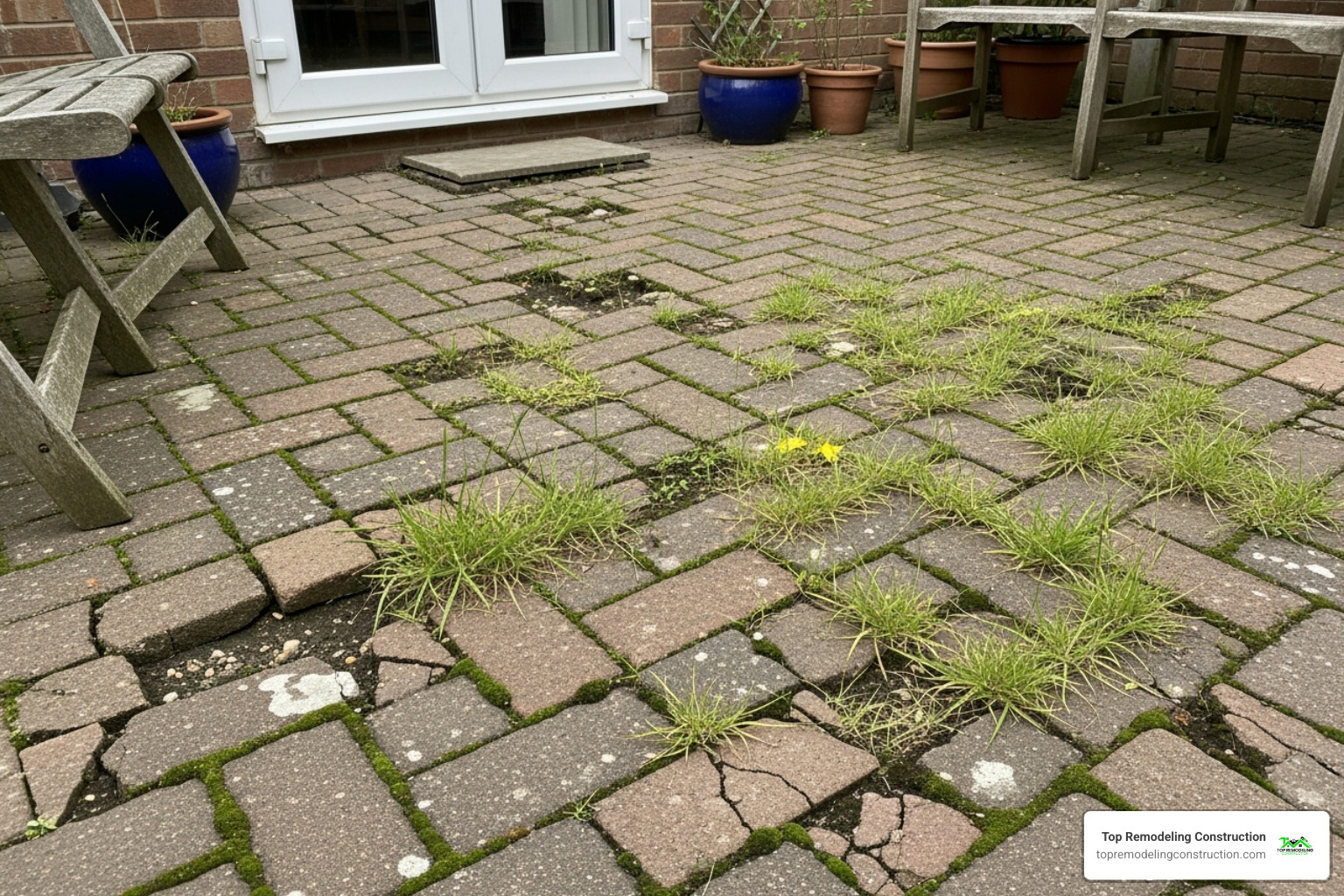
Walk around your patio with fresh eyes. Are there sunken pavers that create ankle-twisting hazards? These little dips and valleys aren’t just annoying – they’re telling you the base material underneath has shifted or washed away. You might notice uneven surfaces that make your patio furniture wobble, or worse, create genuine tripping hazards for family and guests.
Look closer at the joints between bricks. If you see weeds sprouting like tiny green flags of surrender, your jointing sand has probably deteriorated. Cracked bricks are obvious culprits, but don’t overlook chipped pavers that might seem minor but can worsen with freeze-thaw cycles.
Sometimes the problems are more subtle. Faded color might make your entire patio look tired and worn, even if the structure is sound. If your bricks were originally set with mortar, check for crumbling mortar joints that need attention. And here’s a big one – drainage issues like water pooling after rain often signal deeper problems that contributed to all those other symptoms.
Now comes the million-dollar question: repair or restoration? This decision affects both your timeline and your wallet.
Spot repairs work great when you’re dealing with isolated problems – maybe a handful of sunken bricks near the garden hose spigot, or a few cracked pavers where the patio furniture legs have been sitting. It’s like putting a bandage on a scraped knee.
But if problems are scattered across your patio, or if more than a quarter of your surface needs attention, you’re looking at full restoration territory. This means taking a comprehensive approach – power washing the entire surface, resetting larger sections, and addressing the underlying base issues that caused the problems in the first place.
Here’s the thing about assessing scope – sometimes what looks like a small problem is actually the tip of the iceberg. That one sunken paver might indicate base problems that affect a much larger area. When you redo brick patio surfaces properly, you’re not just fixing what’s visible – you’re preventing future headaches.
The good news? Most brick patio problems are totally fixable with some patience and the right approach. The key is being honest about what you’re seeing so you can tackle the root cause, not just the symptoms.
Gearing Up: Tools and Materials for the Job
Before you dive into your redo brick patio project, let’s talk about gathering your supplies. Think of this as preparing for battle – except instead of fighting dragons, you’re conquering sunken pavers and stubborn weeds. Having everything ready before you start will save you from those frustrating mid-project trips to the hardware store.
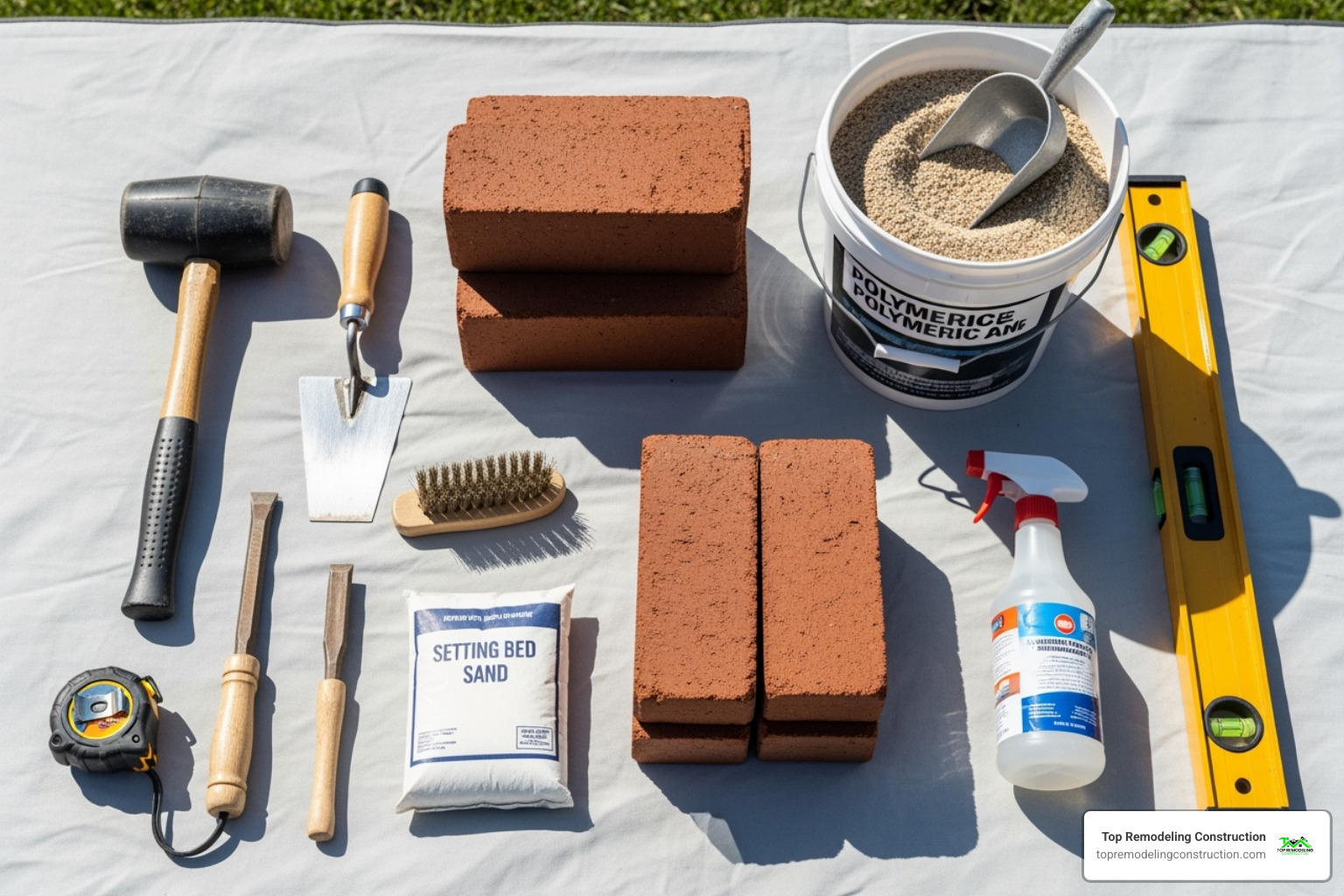
Your tool arsenal starts with a pry bar or flat screwdriver for carefully lifting out damaged bricks without destroying the good ones around them. A rubber mallet becomes your gentle giant – perfect for tapping bricks back into place without chipping or cracking them. You’ll also need a hand tamper to compact your base materials properly. For larger areas, consider renting a plate compactor from a local home improvement or tool rental store. This can save you money on expensive equipment. Your back will thank you later.
Don’t forget your level – this little tool is absolutely crucial for ensuring your patio drains properly and doesn’t create new puddles or trip hazards. A shovel and wheelbarrow will handle the heavy lifting of moving sand and gravel around, while a push broom helps you sweep jointing sand into all those tight spaces between bricks.
On the materials front, paver base (usually gravel or crushed stone) provides the rock-solid foundation your patio needs. Leveling sand goes on top to create that perfectly smooth bed for your bricks to rest on. If you’re dealing with cracked pavers, replacement bricks typically run between $0.35 and $0.75 each – try to find ones that match your existing patio as closely as possible.
Here’s where modern technology really shines: polymeric sand is like regular sand’s super-smart cousin. When you add water, it hardens and locks your pavers in place while keeping weeds from sprouting up between them. Paver sealer acts like sunscreen for your patio, protecting against stains, fading, and moisture damage.
If your patio originally used mortar, you’ll need fresh mortar for repairs, which typically costs between $10 and $20 per square foot. Don’t forget cleaning supplies – sometimes a good wash reveals that your “damaged” patio just needed a spa day.
Safety gear is non-negotiable: gloves, eye protection, and sturdy shoes should always be part of your setup. Trust me, stepping on a loose brick in flip-flops is not the kind of trip you want.
More info about our Patio Projects
Step-by-Step Guide to Your Brick Patio Redo
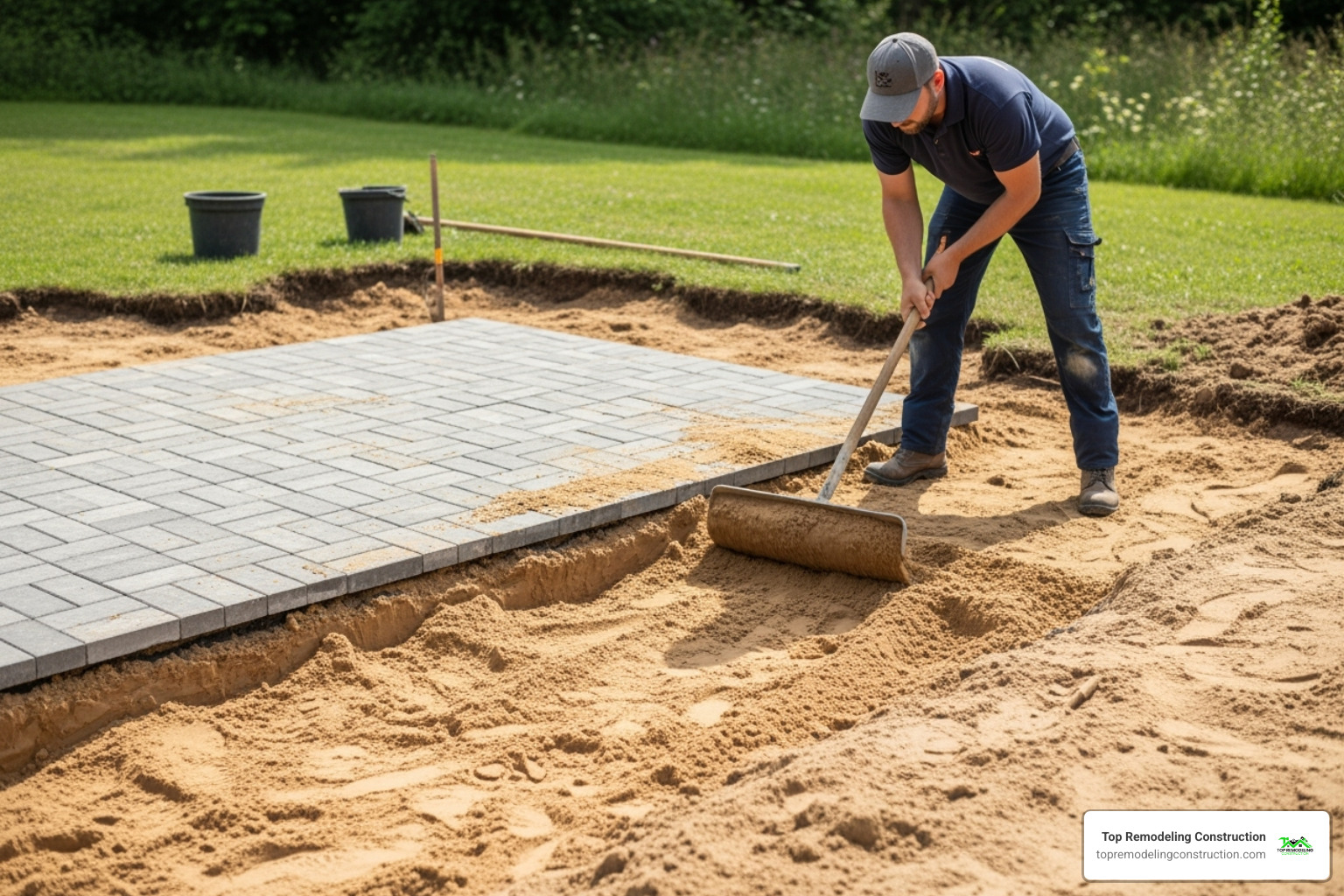
Here’s where the magic happens! Rolling up your sleeves and diving into your redo brick patio project is incredibly rewarding. Let’s walk through this methodically – trust me, taking your time here will save you headaches later.
Start with project preparation by clearing everything off your patio. Those planters, furniture, and decorative items need to find a temporary home. Give the entire area a thorough sweep to remove loose debris, leaves, and dirt. You want a clean workspace.
Now comes the careful work of removing damaged bricks. Use your pry bar or flat screwdriver to gently lift out any sunken, cracked, or problematic pavers. Here’s a pro tip that’ll save you hours of frustration: if your patio has an intricate pattern, number each brick with chalk or a crayon as you remove it. Your future self will thank you when it’s time to put everything back together.
Once those troublesome bricks are out, it’s time for excavating the base. Dig out any soft, muddy, or unstable material underneath. This might look messy, but you’re creating the foundation for a patio that’ll last for years. Think of it as surgery – we need to remove all the problematic material to ensure a healthy base.
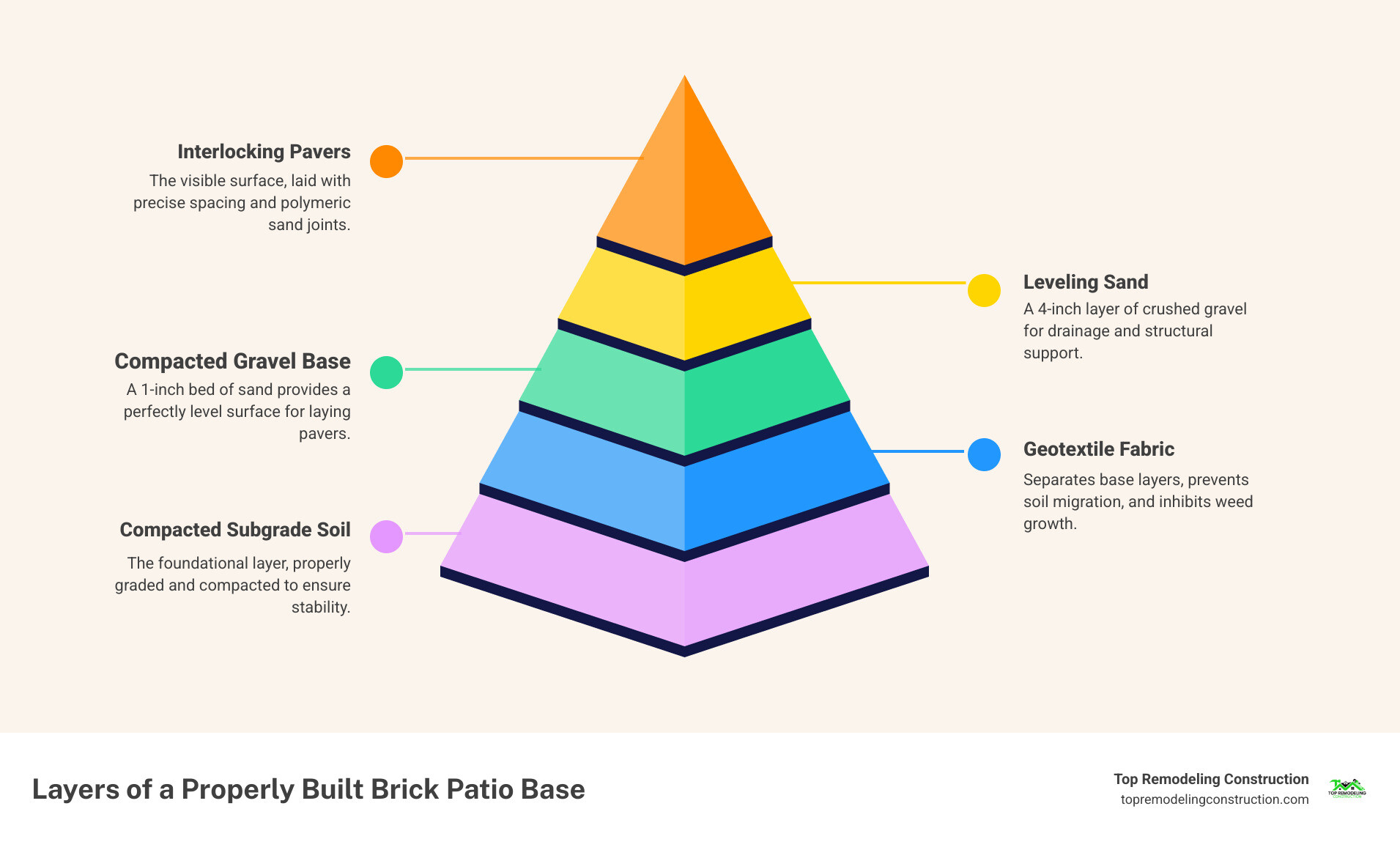
Leveling new base material requires patience and precision. Add fresh paver base (gravel) to fill any excavated areas, then top it with a 1-inch layer of leveling sand. It’s easier to add more sand than to remove excess, so start conservatively.
The compacting step is absolutely crucial – this is where many DIY projects succeed or fail. Use your hand tamper to thoroughly compact both the gravel base and the sand layer. Every square inch needs attention. For larger areas, consider renting a plate compactor from your local home improvement store. The investment pays off in long-term stability.
Finally, re-laying bricks brings everything together. Place each brick carefully into the prepared sand bed, using your rubber mallet to gently tap them into position. Keep your level handy – check frequently to ensure each brick sits flush with its neighbors. Don’t forget to maintain a slight slope away from your house for proper drainage.
How to Fix Sunken or Uneven Pavers
Sunken pavers are like that one wobbly table leg – annoying, but totally fixable! The key is addressing the root cause, not just the symptom.
Start by prying up bricks from the affected area. Wet the sand around sunken pavers first – this softens the material and makes removal much easier. Use your pry bar carefully to avoid chipping the bricks you plan to reuse.
Adding paver base comes next. Scoop out any soft, eroded material from the depression. This soggy mess is usually what caused the sinking in the first place. Replace it with fresh paver base material – either crushed limestone or quality leveling sand works well.
Tamping the base properly makes all the difference between a temporary fix and a permanent solution. Compact that new material thoroughly with your hand tamper. Don’t rush this step – proper compaction prevents future settling.
Checking with a level ensures your repair will blend seamlessly with the surrounding patio. Place your level across the prepared area and adjust the sand height until it matches the stable pavers nearby.
Re-setting the paver is satisfying work. Clean any debris from the brick and place it gently into position. Tapping with a mallet settles it firmly into the sand bed. Use light, even taps rather than heavy blows.
For larger sunken areas, using a plate compactor (available for rent at most home improvement stores) ensures professional-quality compaction. Run it over the newly laid section with a protective pad to avoid damaging the brick surface.
Replacing Cracked Bricks and Repairing Mortar Joints
Cracked bricks and crumbling mortar joints can make your patio look tired and neglected. The good news? These repairs are straightforward with the right approach.
Chiseling out old mortar requires patience if you’re dealing with a mortared patio. Use your chisel and hammer to carefully remove all loose, crumbling material from around the damaged area. Clean joints thoroughly – any remaining loose material will compromise your repair.
Removing broken bricks is easier once the surrounding mortar is cleared. For sand-set patios, simply pry out the damaged paver. For mortared installations, the brick should lift out easily once you’ve cleared the surrounding joints.
Sourcing matching bricks can be the trickiest part of any repair. Try to find replacements that closely match your existing pavers in color, texture, and size. Sometimes it’s worth moving a brick from a less visible area and replacing that spot with your new brick instead.
Mixing new mortar follows standard ratios – typically one part cement to three parts sand. For areas exposed to moisture, choose a quality masonry mortar designed for exterior use.
Applying mortar and setting new bricks requires steady hands. Spread a half-inch layer of fresh mortar where the new brick will sit. Butter the sides of the replacement brick with mortar before positioning it. Tap gently with your rubber mallet until it’s level with surrounding bricks.
Repointing joints (also called tuckpointing) gives your repair a professional finish. Use a grout bag or small trowel to fill the cleaned joints with fresh mortar, slightly overfilling them initially.
Curing time can’t be rushed. Keep foot traffic off the repaired area for at least 24-48 hours, or follow your mortar manufacturer’s recommendations. Protect the work from heavy rain during this critical period.
Common Mistakes to Avoid During Your Redo Brick Patio Project
Even experienced DIYers can stumble into these common traps. Learning from others’ mistakes saves time, money, and frustration.
Improper base compaction is the number one reason patio repairs fail. If you don’t compact thoroughly, those pavers will sink again within a season or two. Take your time with this crucial step – your future self will appreciate the effort.
Forgetting to slope for drainage creates long-term problems. Your patio needs a gentle slope of about 1/4 inch per foot away from your house. Without proper drainage, water pools, erodes the base, and can even threaten your foundation.
Using regular sand instead of polymeric might save a few dollars initially, but it costs more in the long run. Regular sand washes out easily, allowing weeds to sprout and pavers to shift. Polymeric sand hardens when wetted, locking everything in place.
Uneven paver height creates both safety hazards and visual problems. Check your work constantly with a level. Bricks that sit higher or lower than their neighbors catch toes and look unprofessional.
Not cleaning bricks before re-laying leads to poor fit and stability issues. Remove all debris, old mortar, and sand from brick surfaces before installation. Clean pavers fit together more precisely and create stronger joints.
Sealing a damp patio traps moisture and creates a cloudy, unattractive finish. Wait for complete drying – typically 24-48 hours after your final cleaning – before applying any sealer. Patience here prevents having to strip and re-seal later.
The Finishing Touches: How to Restore and Protect Your Patio
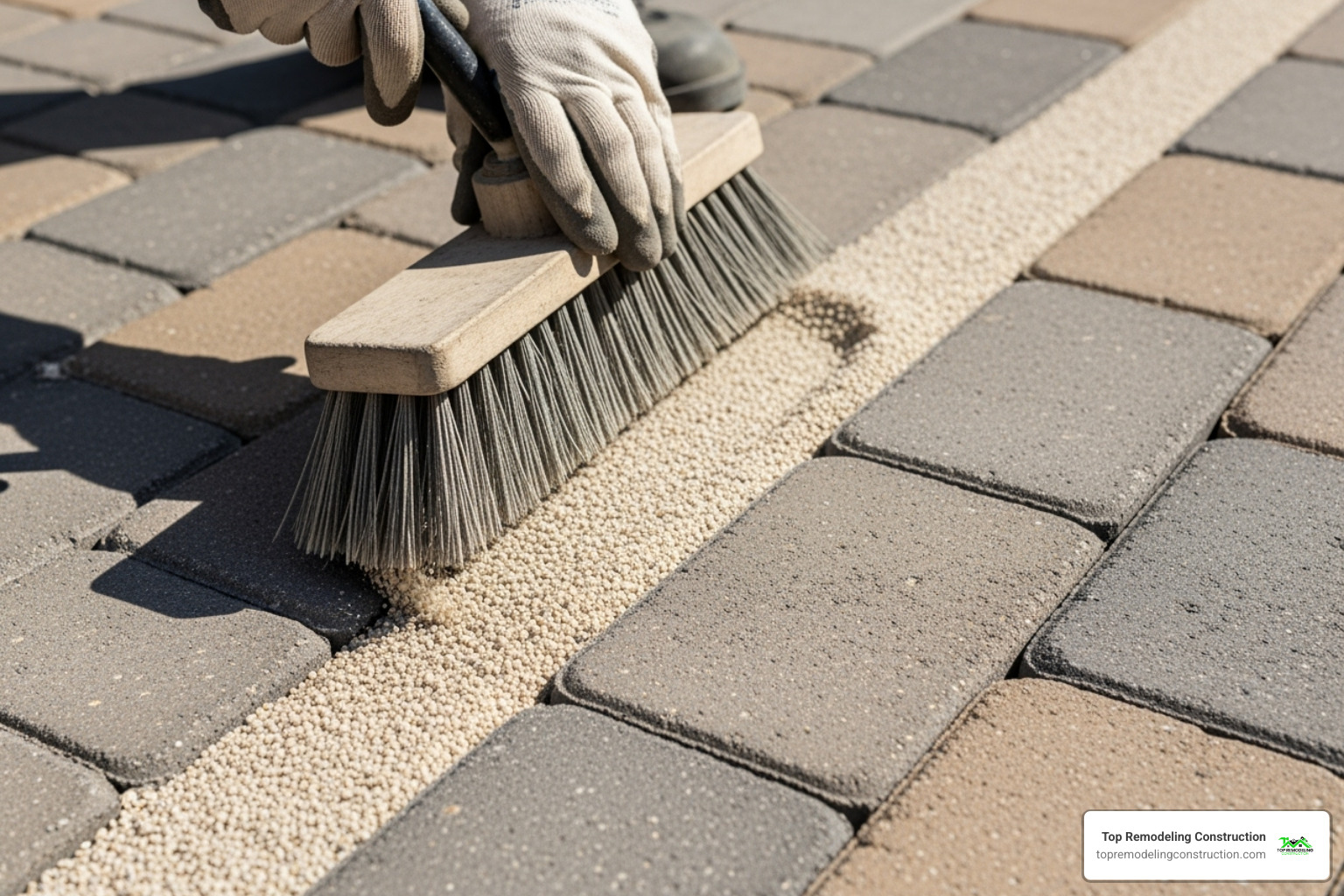
You’ve done the heavy lifting, and now comes the truly satisfying part – watching your redo brick patio project transform from “fixed” to “fabulous.” These finishing touches aren’t just about looks (though they certainly help). They’re about protecting your hard work for years to come.
Power washing is your first step to revealing what you’ve accomplished. Fire up that pressure washer and watch years of grime disappear, bringing back the original color of your bricks. It’s like magic, honestly! Just remember to keep the pressure reasonable – you don’t want to blast out all that carefully compacted sand you just installed.
Got some stubborn stains that won’t budge? Those rust spots from metal furniture or oil stains from the grill happen to the best of us. Specialized cleaners designed for specific stain types work wonders here. Follow the instructions on the bottle, and don’t be afraid to let the cleaner sit for the recommended time – patience pays off.
Restoring faded color often happens naturally during the cleaning process. Amazing how much brighter everything looks once the dirt is gone! A quality sealer applied later will improve these natural colors even more, giving your patio that “almost new” appearance.
Now, let’s talk about polymeric sand – this stuff is a game-changer for anyone looking to redo brick patio surfaces properly. Think of it as the superhero of jointing materials. Unlike regular sand that washes away with the first heavy rain, polymeric sand contains special polymers that harden when activated with water, creating a flexible yet strong bond between your pavers.
Applying polymeric sand requires a completely dry patio – and I mean bone dry. Even morning dew can mess with the process, so pick a sunny day and wait until any moisture has evaporated. Sweep the sand into every joint until they’re completely filled, using a stiff push broom to work it deep into the crevices. Don’t rush this part – thorough filling now means fewer problems later.
For larger patios, running a plate compactor (with a protective pad) over the surface helps vibrate the sand deeper into the joints. Once you’ve swept away excess sand from the brick surfaces, it’s time for the activation. Using your garden hose on a gentle shower setting, lightly mist the entire patio. The key word here is “lightly” – you’re not trying to flood the area. You’ll typically need to mist several times, waiting 10-15 minutes between applications, until the sand is properly saturated.
Sealing the patio is your final insurance policy against future damage. A good sealer repels water, prevents stains, reduces UV fading, and makes future cleaning much easier. Think of it as sunscreen for your patio – protection that pays dividends over time.
When choosing between water-based and oil-based sealants, each has its strengths:
| Feature | Water-Based Sealant | Oil-Based Sealant |
|---|---|---|
| Appearance | Natural, matte finish | Improved color, glossy finish |
| Durability | 2-3 years | 3-5 years |
| Application | Easier, faster drying | More complex, longer cure time |
| Cost | Lower upfront cost | Higher upfront cost |
| Maintenance | More frequent reapplication | Less frequent reapplication |
Most homeowners find water-based sealers easier to work with, especially for their first sealing project. They dry faster and have less odor, making them more DIY-friendly.
The change from a damaged patio to a beautifully restored outdoor space is incredibly rewarding. You’ve not only saved money but created something you can be proud of every time you step outside. For more inspiration and examples of finished patio projects, check out our Gallery of finished projects to see what’s possible with the right approach and attention to detail.

