
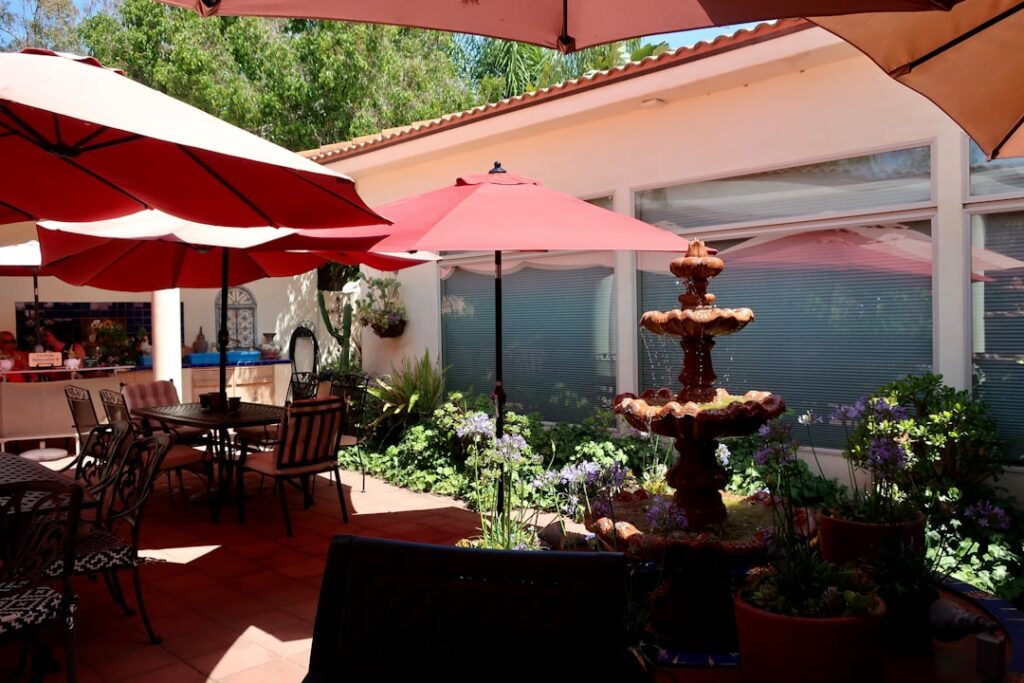
Why Covered Patios Are Taking Backyards by Storm
Covered patio ideas are changing how homeowners think about outdoor living. A covered patio extends your home’s living space while protecting you from sun, rain, and the elements – creating a comfortable outdoor room you can enjoy year-round.
Quick Covered Patio Ideas:
- Pergolas – Wooden or aluminum structures with open or lattice roofs
- Solid roof extensions – Permanent structures attached to your home
- Retractable awnings – Flexible shade that adjusts to weather
- Pavilions – Freestanding covered structures
- Shade sails – Modern, budget-friendly fabric covers
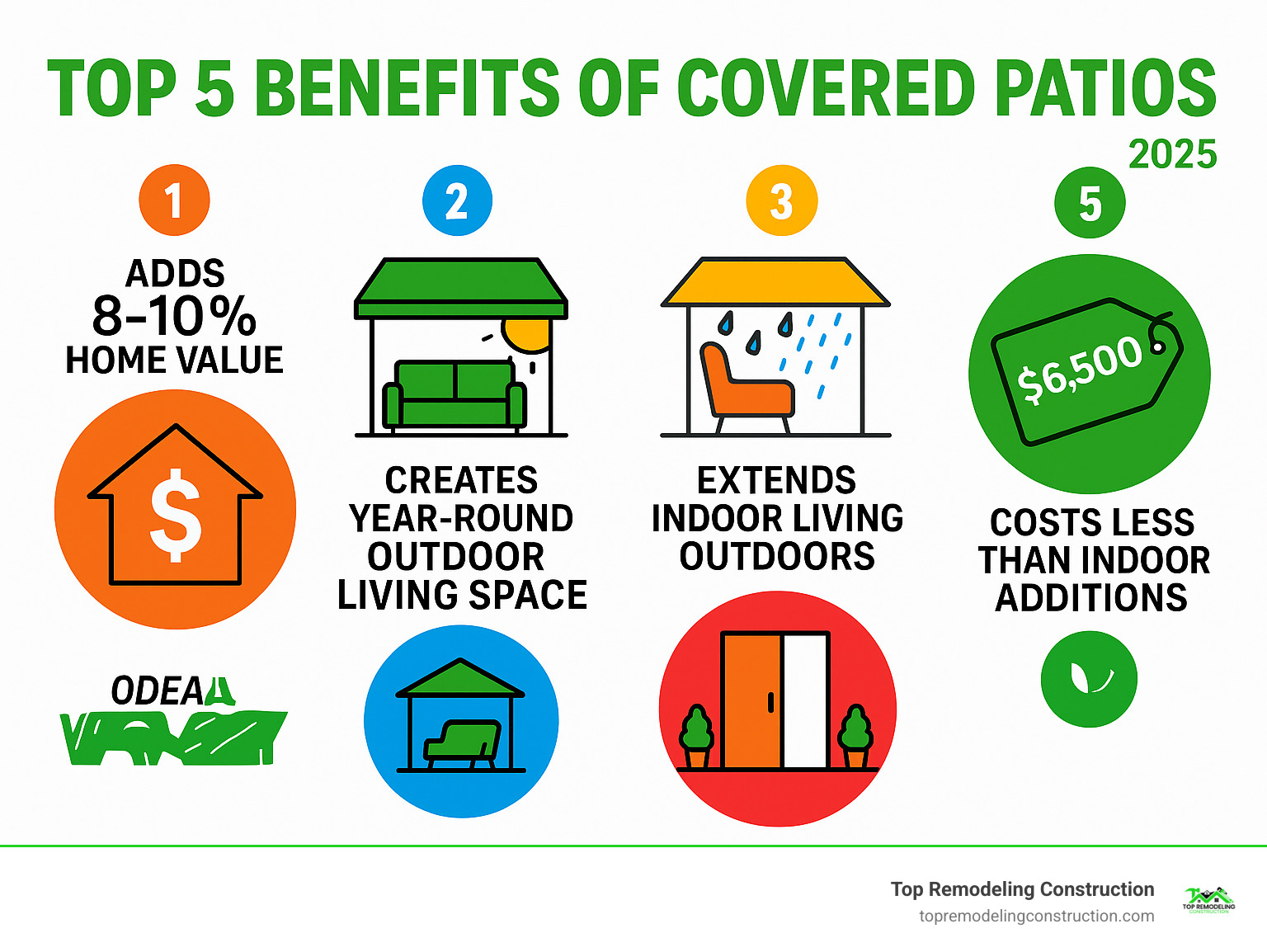
The numbers tell the story: homeowners spend an average of $6,500 to add a roof over their patio, and it can increase home value by 8-10 percent. More importantly, a covered patio gives you that extra square footage Helen needs without the complexity of a full home addition.
“Covered patios blend the comforts of the indoors with the laidback atmosphere of the outdoors,” creating spaces perfect for morning coffee, family dinners, or entertaining friends – no matter what Mother Nature has planned.
Whether you’re dreaming of a cozy retreat with a fireplace or an entertainer’s paradise with an outdoor kitchen, the right covered patio design can transform your backyard into your favorite room of the house.
Why a Covered Patio is a Smart Home Addition
Picture this: you’re sipping your morning coffee outside, enjoying the fresh air without squinting in the harsh sun or worrying about sudden rain. That’s the magic of a covered patio – it transforms your outdoor space into a functional outdoor area that works for you, not against the weather.
The biggest win? Extended living space that doesn’t require knocking down walls or dealing with complex indoor renovations. Your covered patio becomes an outdoor room where kids can play while you cook dinner, where friends gather for weekend barbecues, or where you can finally have that quiet workspace you’ve been dreaming about. It’s like adding a whole new room to your house, but with a breeze.
Here’s something that’ll make you smile: a well-designed covered patio can increase your property value by 8-10 percent. With the average installation cost around $6,500, you’re looking at an investment that actually pays you back. Unlike some home improvements that drain your wallet, this one adds real value that future buyers will appreciate.
Weather protection isn’t just about staying dry during surprise showers. In places like Las Vegas, where the sun can be relentless, your covered patio becomes a cool refuge during those blazing summer afternoons. Your outdoor furniture stays vibrant longer, and you can actually enjoy being outside when it’s 100 degrees. No more racing inside the moment clouds appear or hiding indoors during peak sun hours.
The visual impact is impressive too. A thoughtfully designed covered patio dramatically improves curb appeal, giving your home an architectural element that says “this family knows how to live well.” It’s not just about looking good from the street – though it certainly does that – it’s about creating a space that draws people outside and keeps them comfortable once they’re there.
What makes covered patios especially smart is their versatility. Ground-level construction with concrete, stone, or brick typically costs less than liftd structures, making them an accessible way to expand your home’s footprint without breaking the budget.
Ready to explore how a covered patio addition could work for your home? Check out our comprehensive guide to home additions to see all your options for expanding your living space.
Foundational Choices: Patio Covers & Materials
Building your dream covered patio starts with some fundamental decisions about its structure and the materials it will be made from. These choices will define the aesthetic, durability, and functionality of your new outdoor sanctuary.
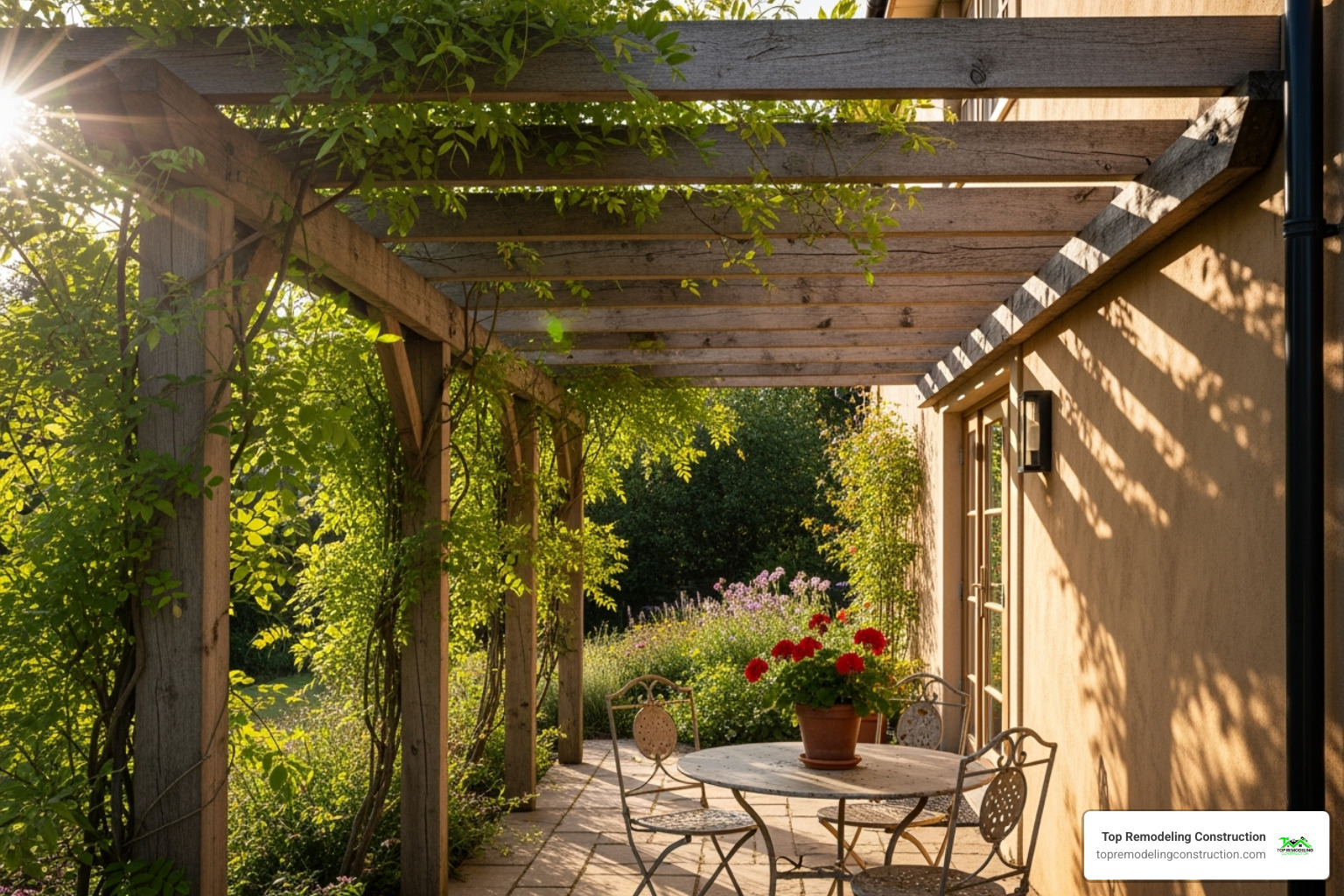
This section covers the essential structural decisions for your patio.
Types of Patio Covers
The variety of covered patio ideas available means there’s a perfect solution for every home and lifestyle. Here are some of the most popular types we see homeowners choose:
- Pergolas: These are perhaps the most popular and versatile patio covers. Pergolas feature an open, slatted roof design supported by columns or posts. They provide partial shade, allowing filtered sunlight to create beautiful patterns on your patio. Pergolas come in various materials and styles, from traditional wood to modern metal, and can be freestanding or attached to your home. They’re excellent for creating a defined outdoor room feel without completely blocking the sky. You can even improve them with climbing vines or fabric shades for more coverage.
- Solid Roof Extensions: If you’re looking for maximum protection from the sun and rain, a solid roof extension is your best bet. These are essentially an extension of your home’s existing roofline, creating a seamless transition from indoors to outdoors. They offer full shade and weather protection, making your patio truly an “outdoor room.” This option often requires more significant construction but provides the most robust and permanent cover.
- Awnings: Awnings are fabric or metal covers that extend from your home’s exterior wall to provide shade. They can be fixed, providing permanent shade, or retractable, offering flexibility to enjoy the sun when you want it and shade when you need it. Retractable awnings are particularly popular for their convenience, allowing you to adapt to changing weather conditions instantly. They come in a wide array of colors and patterns, adding a pop of style to your home’s facade.
- Freestanding Pavilions: For those who desire a dedicated outdoor structure separate from the main house, a freestanding pavilion is an excellent choice. These structures are typically larger and more elaborate than pergolas, often featuring solid roofs and sturdy columns. They can house outdoor kitchens, dining areas, or lounge spaces, creating a true outdoor destination. Pavilions offer an open, airy feel while providing substantial protection.
- Lattice Covers: Similar to pergolas, lattice covers feature a grid-like roof structure. The smaller openings in the lattice provide more shade than a typical pergola while still allowing some light and air circulation. They are often used to create a soft, dappled light effect and can be a beautiful aesthetic addition to your patio.
- Shade Sails: For a modern, minimalist, and budget-friendly option, shade sails are a fantastic choice. These are pieces of tensioned fabric stretched between anchor points, providing effective shade with a contemporary look. They are easy to install and remove, making them a flexible solution for temporary or seasonal shade.
To see examples of these and other patio cover types in action, we invite you to View our project gallery for inspiration.
Comparing Common Materials
The material you choose for your covered patio structure profoundly impacts its appearance, durability, and maintenance requirements. Let’s compare some of the most common options:
| Material | Pros – Cons | Maintenance | Best For | |
|---|---|---|---|---|
| Wood | Natural beauty, customizable, classic appeal, can be stained or painted, relatively affordable, easy to work with during installation | Requires regular maintenance, susceptible to weather damage, can warp or crack, may attract insects, shorter lifespan than alternatives | Annual staining or sealing, regular inspection for damage, occasional repairs, protection from moisture | Traditional homes, DIY enthusiasts, those preferring natural materials, temporary or budget-conscious installations |
| Aluminum | Extremely durable, weather-resistant, low maintenance, won’t warp or crack, insect-proof, long lifespan, available in wood-like finishes | Higher upfront cost, limited customization options, can be noisy in rain, may dent from impact, industrial appearance unless finished | Occasional cleaning, minimal upkeep required, periodic inspection of fasteners | Modern homes, high-wind areas, those wanting low-maintenance solutions, permanent installations |
| Vinyl | Very low maintenance, weather-resistant, won’t rot or fade, affordable, easy to clean, insect-proof | Limited color options, can become brittle in extreme cold, may look artificial, difficult to repair if damaged, thermal expansion issues | Simple soap and water cleaning, virtually no other maintenance needed | Budget-conscious projects, areas with extreme weather, those prioritizing minimal upkeep over aesthetics |
Wood remains the classic choice for good reason – its natural beauty and warmth create an inviting atmosphere that’s hard to replicate with synthetic materials. Woods like cedar and redwood offer natural weather resistance, while pressure-treated lumber provides affordability with decent durability. The ability to stain wood in any color or leave it to weather naturally gives you complete control over your patio’s appearance. However, wood does require commitment to regular maintenance to keep it looking its best and performing well over time.
Aluminum has revolutionized the patio cover industry by offering the appearance of wood with the durability of metal. These materials excel in areas with harsh weather conditions, high winds, or extreme temperature fluctuations. The initial investment is higher, but the long-term value becomes apparent when you consider the minimal maintenance requirements and extended lifespan. Modern manufacturing techniques now produce aluminum products that closely mimic the grain and texture of natural wood.
Vinyl appeals to homeowners who prioritize practicality and minimal maintenance above all else. While it may lack the natural beauty of wood or the sophisticated appearance of premium aluminum, vinyl delivers reliable performance year after year with almost no upkeep required. It’s particularly well-suited for areas with harsh winters or intense sun exposure where other materials might struggle.
The choice ultimately comes down to balancing your aesthetic preferences, maintenance tolerance, budget considerations, and local climate conditions. Each material has its place in covered patio ideas, and the right choice is the one that best fits your unique situation and long-term vision for your outdoor space.
Foundational Choices: Patio Covers & Materials
Building your dream covered patio starts with some fundamental decisions about its structure and the materials it will be made from. These choices will define the aesthetic, durability, and functionality of your new outdoor sanctuary.
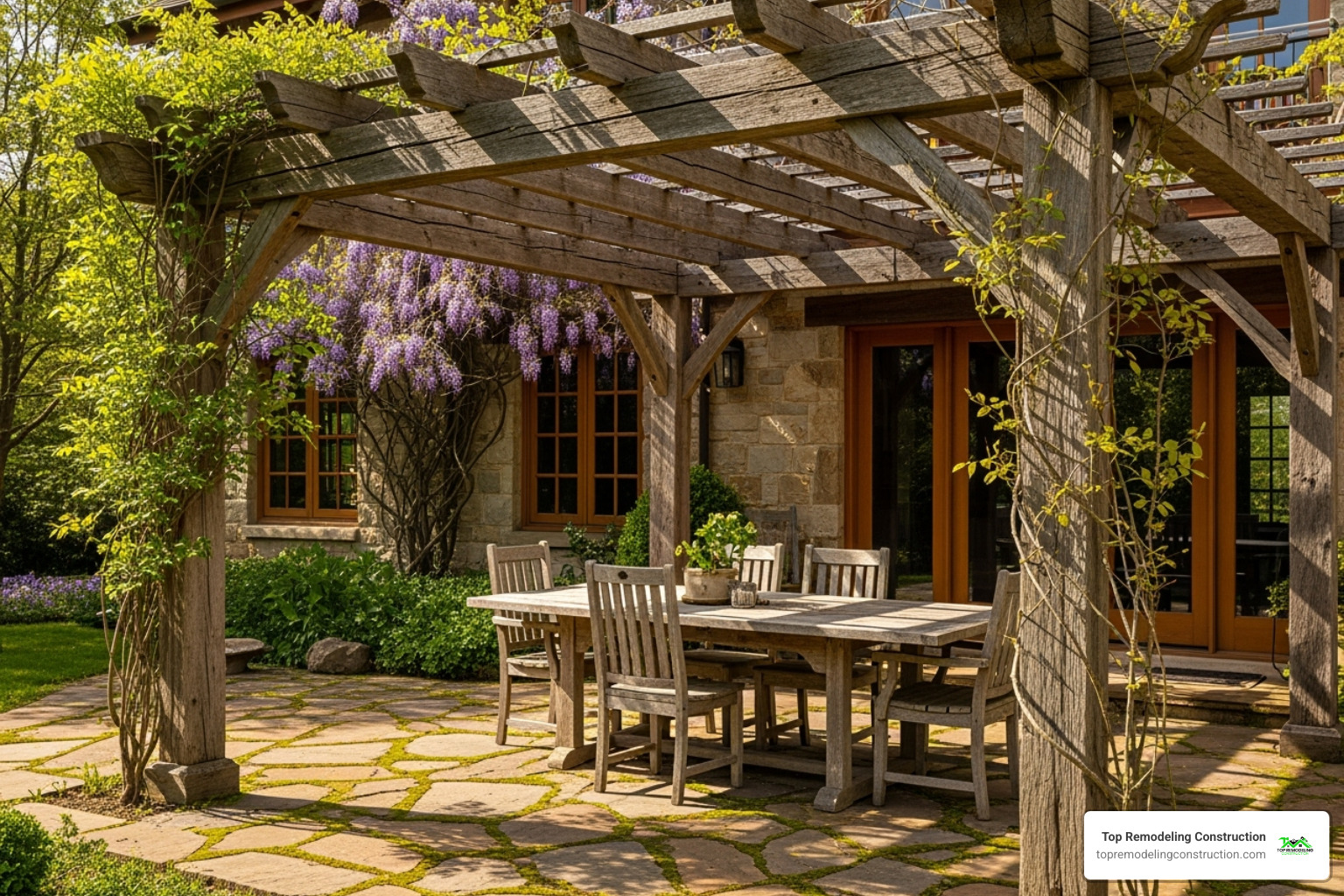
This section covers the essential structural decisions for your patio.
Types of Patio Covers
When exploring covered patio ideas, you’ll find there’s truly a perfect solution for every home and lifestyle. The key is understanding which type of cover best matches your needs, budget, and aesthetic preferences.
Pergolas remain the most beloved choice among homeowners, and it’s easy to see why. These neat structures feature an open, slatted roof design supported by sturdy columns or posts, creating that perfect balance between shade and openness. What makes pergolas so appealing is their versatility – you can choose from traditional wood that weathers beautifully over time, or opt for modern aluminum that requires virtually no maintenance. Whether you attach it directly to your home for a seamless extension or install it as a freestanding feature, a pergola creates a defined outdoor living without making you feel boxed in. Many of our clients love how they can improve their pergola with climbing vines for natural coverage or add retractable fabric panels for adjustable shade.
For those seeking maximum protection from the elements, solid roof extensions offer the ultimate in weather coverage. These structures essentially extend your home’s existing roofline, creating a true outdoor room that’s completely protected from sun and rain. While this option requires more substantial construction, it delivers the most permanent and robust coverage available. The seamless transition from indoor to outdoor space makes your patio feel like a natural extension of your home’s architecture.
Awnings bring flexibility to your outdoor space in ways that fixed structures simply can’t match. These fabric or metal covers extend from your exterior wall, and the retractable versions are particularly popular for their adaptability. Imagine being able to enjoy full sun for your morning coffee, then extending your awning for shaded afternoon relaxation – all with the simple turn of a crank or push of a button. The variety of colors and patterns available means you can add a striking design element to your home’s facade while gaining practical shade coverage.
Freestanding pavilions create their own special outdoor destination, separate from your main house but equally important to your outdoor living experience. These larger, more elaborate structures often feature solid roofs and substantial columns, making them perfect for housing outdoor kitchens, dining areas, or comfortable lounge spaces. A pavilion becomes the focal point of your backyard, drawing family and guests to gather in its welcoming shelter.
Lattice covers offer a middle ground between the openness of traditional pergolas and the coverage of solid roofs. The grid-like structure provides more shade than standard pergola slats while still allowing light and air to filter through, creating those beautiful dappled light patterns that make outdoor spaces so magical.
For modern homeowners looking for contemporary style and budget-friendly options, shade sails deliver both in striking fashion. These tensioned fabric pieces stretch between anchor points to create dramatic geometric shapes overhead. They’re surprisingly effective at blocking UV rays and can be easily removed for seasonal storage or when you want completely open sky above your patio.
To see examples of these and other patio cover types in action, we invite you to view our project gallery for inspiration.
Comparing Common Materials
The material you choose for your covered patio structure profoundly impacts its appearance, durability, and maintenance requirements. Understanding the characteristics of each option helps you make the best choice for your specific situation and long-term goals.
| Material | Pros | Cons | Maintenance | Best For |
|---|---|---|---|---|
| Wood | Natural beauty, customizable, classic appeal, can be stained or painted, relatively affordable, easy to work with during installation | Requires regular maintenance, susceptible to weather damage, can warp or crack, may attract insects, shorter lifespan than alternatives | Annual staining or sealing, regular inspection for damage, occasional repairs, protection from moisture | Traditional homes, DIY enthusiasts, those preferring natural materials, temporary or budget-conscious installations |
| Aluminum | Extremely durable, weather-resistant, low maintenance, won’t warp or crack, insect-proof, long lifespan, available in wood-like finishes | Higher upfront cost, limited customization options, can be noisy in rain, may dent from impact, industrial appearance unless finished | Occasional cleaning, minimal upkeep required, periodic inspection of fasteners | Modern homes, high-wind areas, those wanting low-maintenance solutions, permanent installations |
| Vinyl | Very low maintenance, weather-resistant, won’t rot or fade, affordable, easy to clean, insect-proof | Limited color options, can become brittle in extreme cold, may look artificial, difficult to repair if damaged, thermal expansion issues | Simple soap and water cleaning, virtually no other maintenance needed | Budget-conscious projects, areas with extreme weather, those prioritizing minimal upkeep over aesthetics |
Wood remains the classic choice for good reason – its natural beauty and warmth create an inviting atmosphere that’s hard to replicate with synthetic materials. Woods like cedar and redwood offer natural weather resistance, while pressure-treated lumber provides affordability with decent durability. The ability to stain wood in any color or leave it to weather naturally gives you complete control over your patio’s appearance. However, wood does require commitment to regular maintenance to keep it looking its best and performing well over time.
Aluminum has revolutionized the patio cover industry by offering the appearance of wood with the durability of metal. These materials excel in areas with harsh weather conditions, high winds, or extreme temperature fluctuations. The initial investment is higher, but the long-term value becomes apparent when you consider the minimal maintenance requirements and extended lifespan. Modern manufacturing techniques now produce aluminum products that closely mimic the grain and texture of natural wood.
Vinyl appeals to homeowners who prioritize practicality and minimal maintenance above all else. While it may lack the natural beauty of wood or the sophisticated appearance of premium aluminum, vinyl delivers reliable performance year after year with almost no upkeep required. It’s particularly well-suited for areas with harsh winters or intense sun exposure where other materials might struggle.
The choice ultimately comes down to balancing your aesthetic preferences, maintenance tolerance, budget considerations, and local climate conditions. Each material has its place in covered patio ideas, and the right choice is the one that best fits your unique situation and long-term vision for your outdoor space.

