Transform Your Outdoor Space with Professional-Quality Results
A brick patio creates a stunning, durable outdoor living space that can significantly increase your home’s value. It’s the perfect foundation for entertaining, family gatherings, or quiet relaxation. With the right guidance, you can achieve a professional-looking result yourself.
Quick Overview: Brick Patio Installation Process
- Planning & Design: Measure your space, choose a pattern, and gather materials.
- Site Preparation: Excavate the area and establish a proper drainage slope.
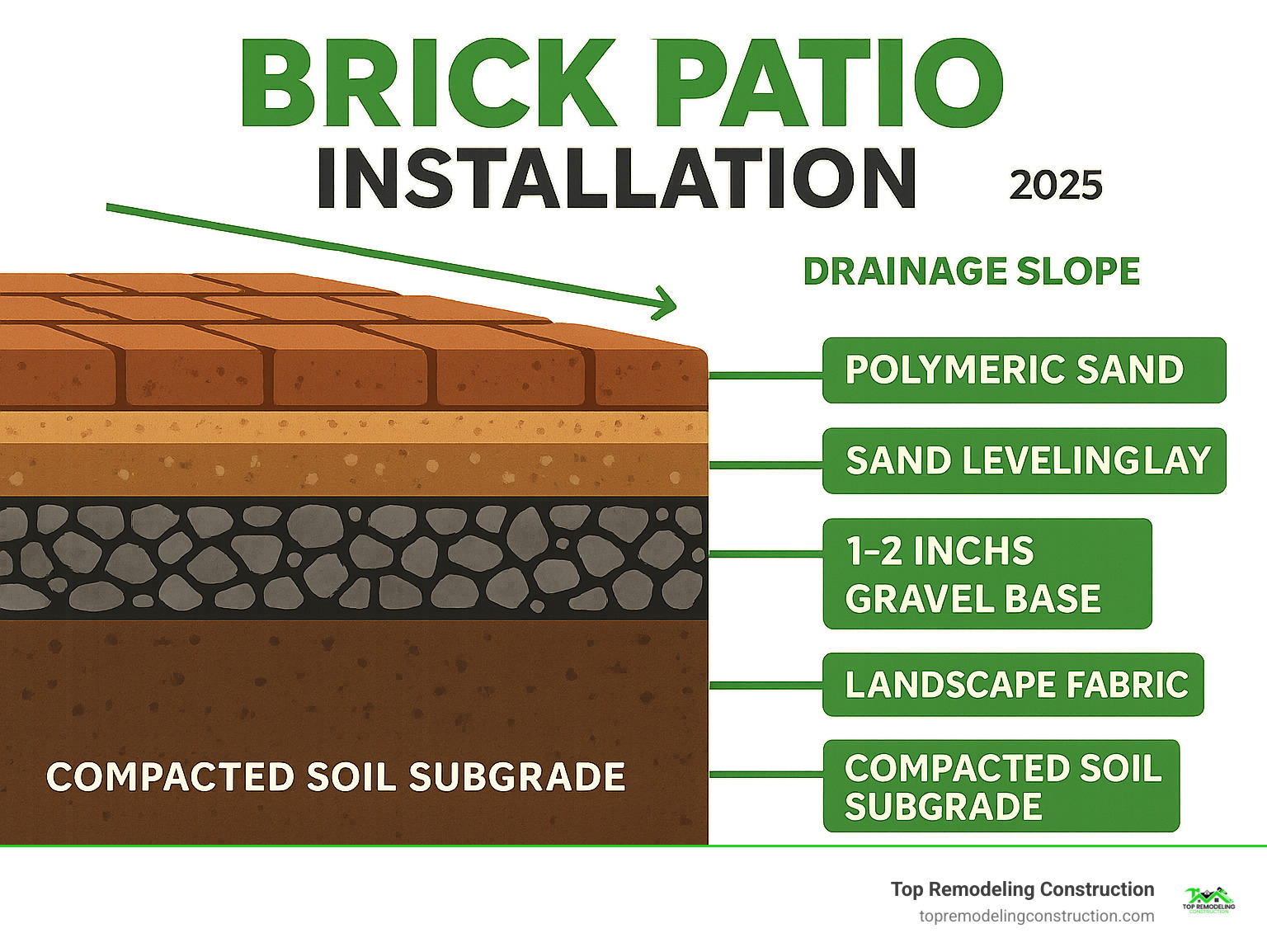
- Base Construction: Install landscape fabric, a gravel base, and a sand layer.
- Paver Installation: Lay the bricks in your chosen pattern.
- Finishing: Add edging, sweep in jointing sand, and compact the surface.
The beauty of brick lies in its timeless appeal and remarkable durability. A well-built brick patio can last for decades, making this a worthwhile investment. This guide will walk you through every step, from planning to the final seal, helping you transform your backyard in just a weekend.
Planning Your Perfect Brick Patio
Careful planning is the key to a successful brick patio installation. Taking the time to consider your design, budget, and materials will save you time and effort later on.
Understanding the Costs
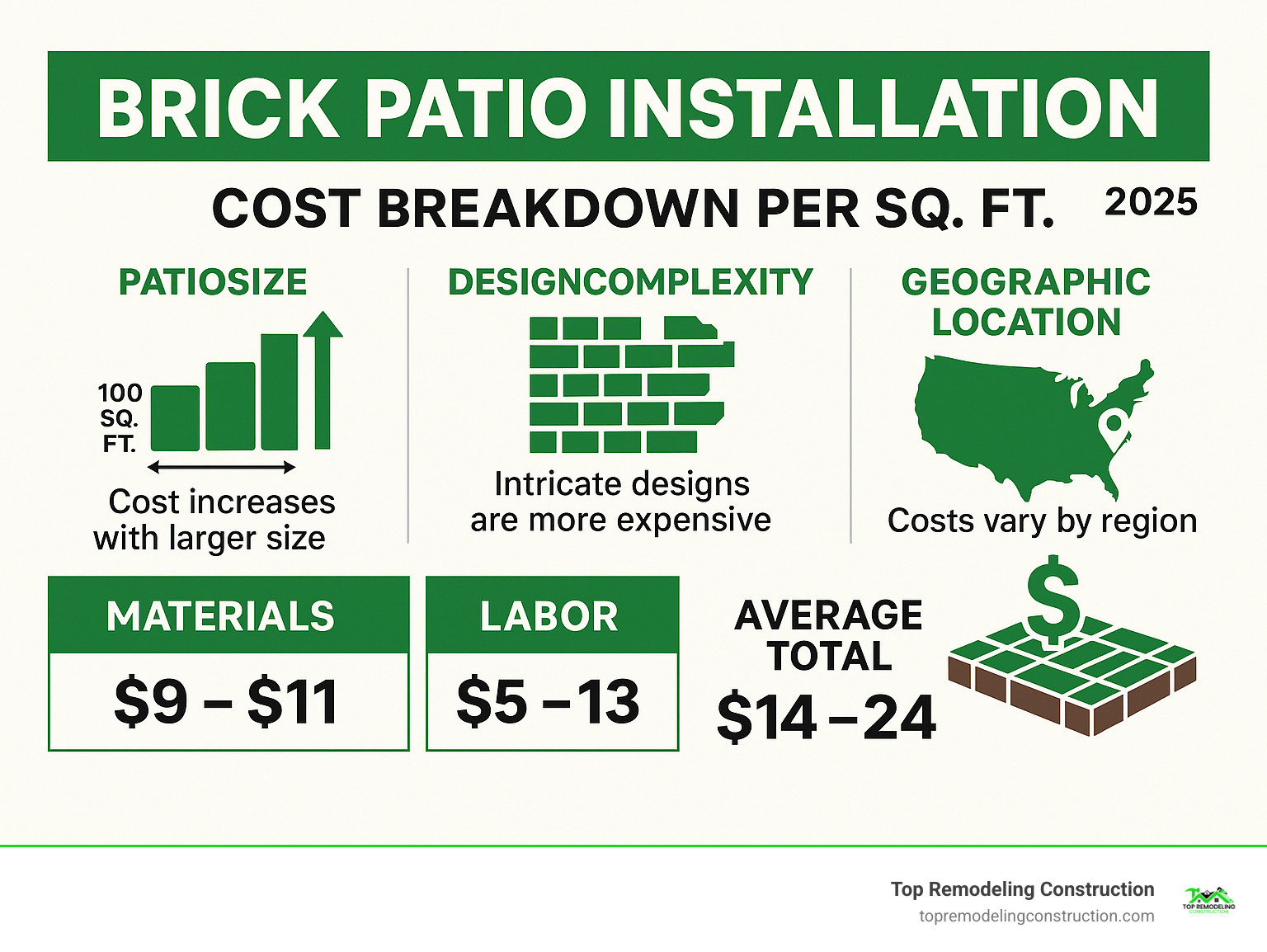
A DIY brick patio is a cost-effective way to improve your outdoor space. Here’s a general cost breakdown:
- DIY Cost: Expect to pay around $9 to $11 per square foot for materials. For a 200-square-foot patio, this totals approximately $1,800 to $2,200.
- Professional Installation: Hiring a pro typically costs between $14 and $24 per square foot, including labor and materials. The national average for a complete project is about $3,400.
Several factors influence the final cost:
- Patio Size: Larger projects often have a lower cost per square foot due to bulk material pricing.
- Design Complexity: Simple rectangular patterns are more affordable than intricate designs like curves or herringbone, which require more cutting and labor.
- Geographic Location: Material and labor rates can vary significantly by region.
Designing Your Patio and Choosing a Pattern
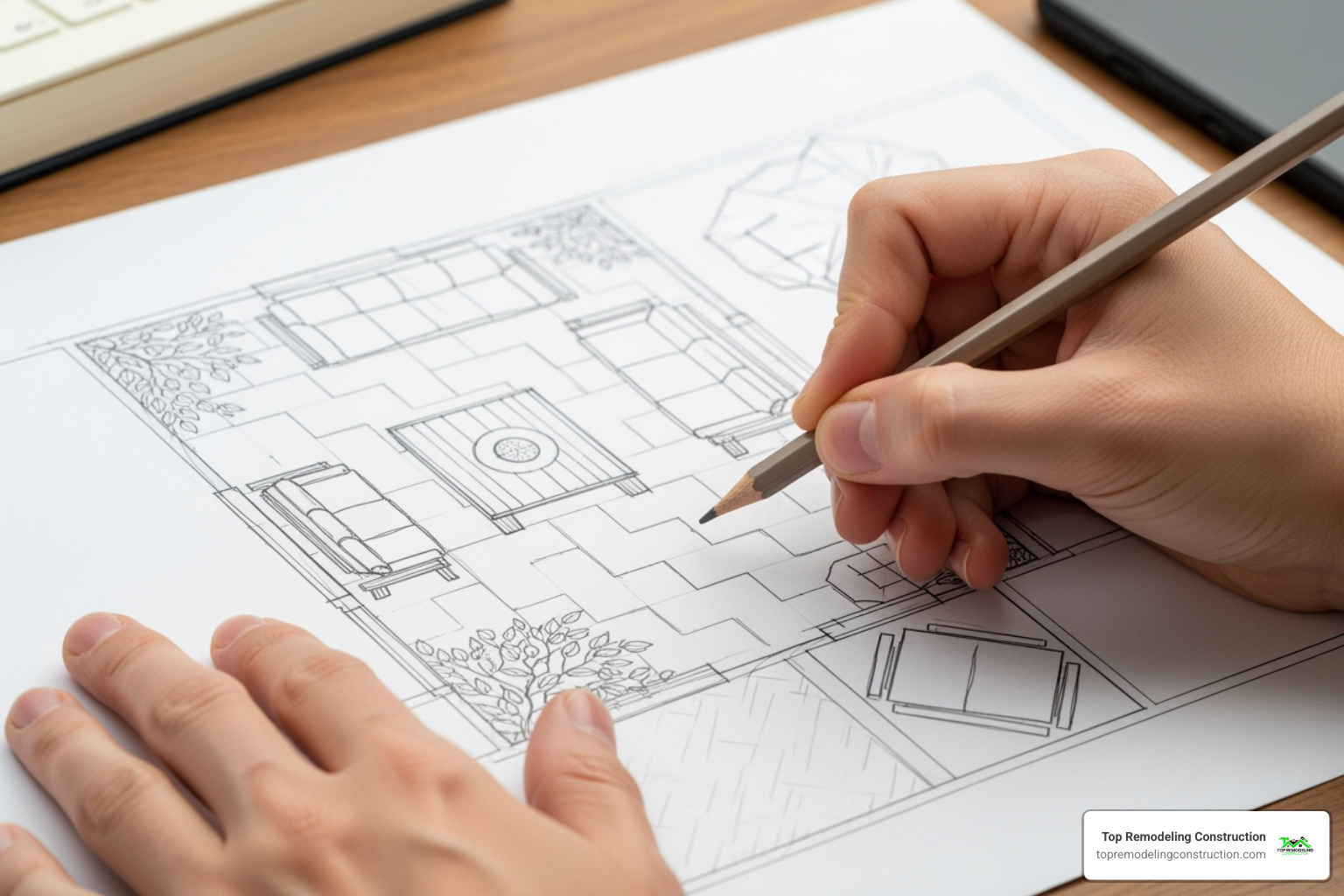
First, consider how you’ll use the space. Will it be for dining, lounging, or a small, intimate seating area? This will help determine the ideal size.
Next, choose a pattern that complements your home’s style:
- Herringbone: A classic, neat zigzag pattern that requires precise cuts.
- Basket Weave: A charming, traditional pattern that is relatively easy to install.
- Running Bond: A simple, linear pattern that is efficient and modern.
- Circular Kits: Ideal for creating a central focal point in your yard.
Once you have a design, measure the area accurately to calculate the required materials. Pro Tip: Always order about 10% extra material to account for cuts and potential mistakes.
For more complex designs or if you’d prefer professional guidance, our team can help bring your vision to life with expert craftsmanship.
Essential Tools and Materials
Gathering all your tools and materials beforehand will make the installation process much smoother. Here’s what you’ll need:
Tools:
- Shovel and rake
- Hand tamper or plate compactor (rentable)
- Level (both short and long)
- Mason line and stakes
- Wheelbarrow
- 2×4 screed board
- Rubber mallet
- Broom
- Safety glasses and gloves
Materials:
- Paving bricks (rated for outdoor use)
- Gravel base (crushed stone or paver base)
- Coarse paver sand
- Landscape fabric
- Plastic paver edging
- Polymeric sand
- Masonry sealer (optional but recommended)
Do You Need a Permit?
Before you start digging, check with your local building department to see if a permit is required. While many simple, on-grade patios don’t need one, larger or more complex projects often do. Permit costs can range from $50 to a few hundred dollars.
Most importantly, call 811 before you dig. This free national service will mark the location of underground utility lines, preventing dangerous and costly accidents. It’s a simple step that ensures safety for everyone involved.
The Ultimate Guide to Brick Patio Installation
With your plan and materials ready, it’s time to build your patio. Follow these steps for a professional-quality result that will last for years.
Step 1: Site Preparation and Excavation
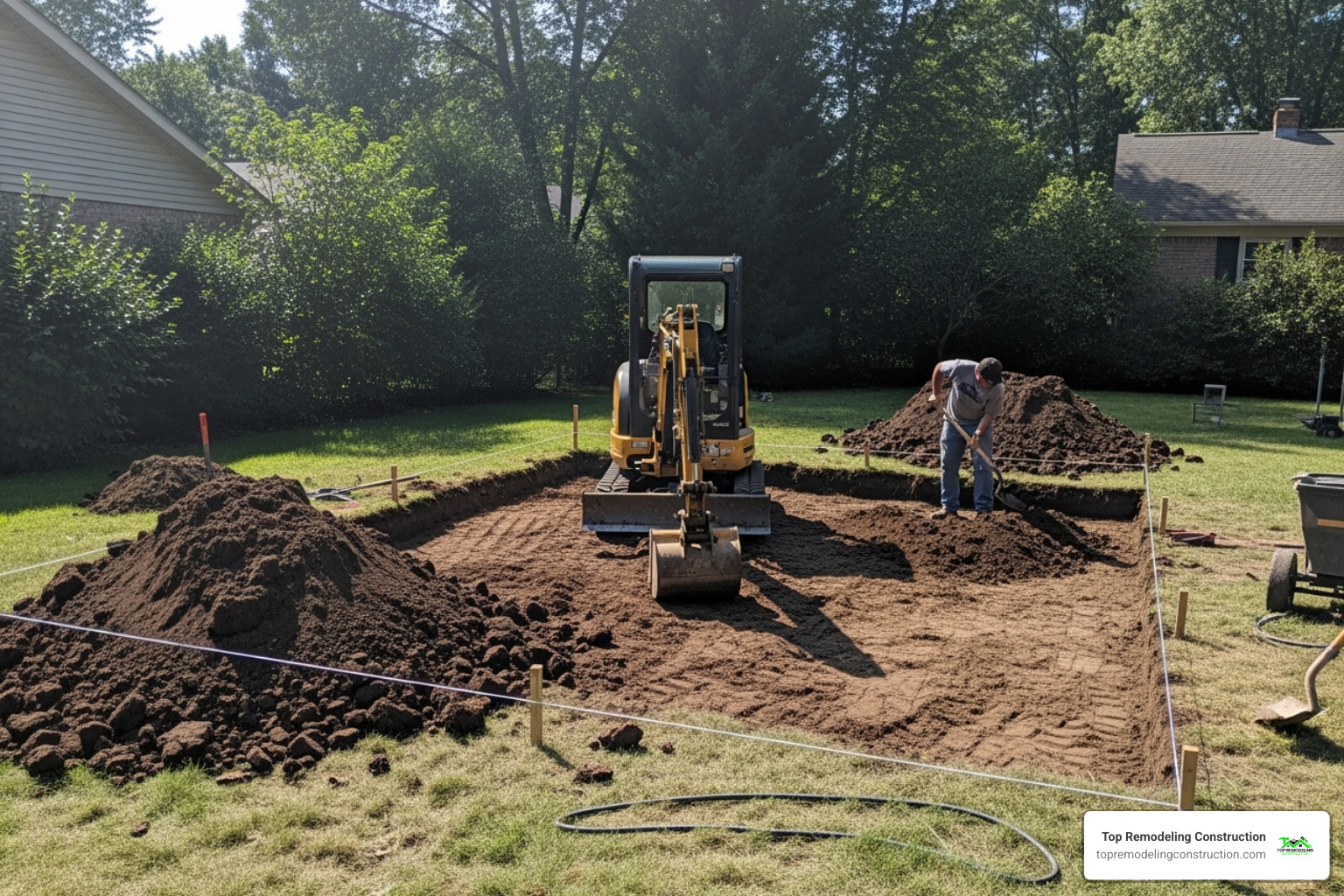
This is the most labor-intensive part, but it’s critical for a stable, long-lasting patio.
- Mark the Area: Use stakes and mason’s line to outline the patio’s perimeter. For rectangles, ensure the diagonals are equal to get perfect 90-degree corners.
- Excavate: Remove all grass and topsoil. Dig down about 7-8 inches to accommodate the base layers and pavers.
- Create a Slope: The excavated area should slope away from your house at a rate of 1/4-inch per foot to ensure proper water drainage.
- Compact the Soil: Use a hand tamper or plate compactor to create a solid, level subgrade.
Step 2: Creating a Stable Base
A solid base prevents your patio from shifting or sinking over time.
- Lay Landscape Fabric: Cover the entire excavated area with landscape fabric, overlapping the seams by at least 6 inches. This prevents weeds and keeps the base materials separate from the soil.
- Add Gravel Base: Spread a 4- to 6-inch layer of gravel or paver base. Add it in 2-inch layers, compacting each layer thoroughly with a plate compactor before adding the next.
- Install Edging: Place plastic paver edging around the perimeter and secure it with stakes. This will hold the pavers in place.
- Add Sand Bed: Spread a 1- to 2-inch layer of coarse sand. Use two parallel 1-inch pipes and a 2×4 board to screed the sand to a perfectly flat and level surface. Remove the pipes and fill in the gaps.
Step 3: Best Practices for Laying Brick Pavers
Now for the rewarding part: laying the bricks.
- Start at a Corner: Begin laying pavers from a 90-degree corner, preferably against the house, and work your way out.
- Place, Don’t Slide: Set each paver directly onto the sand bed. Do not slide them, as this will disturb the sand. Keep a small gap (about 1/8 inch) between pavers.
- Tap and Level: Gently tap each paver with a rubber mallet to set it into the sand. Use a level frequently to ensure the surface is even.
- Cut Pavers as Needed: Use a masonry saw with a diamond blade for any necessary cuts. Always wear safety glasses and a mask when cutting.
- Kneel on Plywood: To avoid disturbing the pavers you’ve already laid, kneel on a piece of plywood to distribute your weight.
If you need assistance with this stage, our flooring installation specialists can help ensure a perfect finish.
Step 4: Finishing with Edging, Joint Sand, and Sealer
These final steps lock your patio together and protect it from the elements.
- Sweep in Polymeric Sand: Pour polymeric sand over the dry patio surface and use a push broom to sweep it into all the joints until they are completely full.
- Compact the Pavers: Run a plate compactor over the entire patio. This settles the pavers into the sand bed and helps lock them together.
- Final Sanding: Sweep more polymeric sand into the joints, as the compaction will have created more space. Then, use a leaf blower or soft broom to remove all excess sand from the paver surfaces.
- Activate the Sand: Lightly mist the patio with a garden hose to use a fine spray. The water activates the polymers in the sand, which will harden and secure the pavers. Follow the manufacturer’s instructions for watering and curing time.
- Seal the Patio (Optional): After the sand has fully cured (usually 24-48 hours), apply a masonry sealer to protect against stains and weathering.
Brick Patio Maintenance and Considerations
Congratulations! You’ve built a beautiful brick patio. Now, let’s talk about keeping it looking great for years to come and what makes brick such a fantastic choice.
Key Features of Brick Pavers
Brick pavers are a popular choice for patios due to their unique combination of qualities.
| Feature | Description |
|---|---|
| Durability | With a proper base, a brick patio can last for decades, resisting cracking from freeze-thaw cycles. |
| Cost-Effective | While an initial investment, the long lifespan and low maintenance make it a great value over time. |
| Low Maintenance | Requires only occasional sweeping, washing, and re-sanding/sealing every few years. |
| Aesthetic Appeal | Offers a classic, timeless look that complements any home style. |
| Repairability | Damaged or stained bricks can be individually replaced without redoing the entire patio. |
| Eco-Friendly | Made from natural clay and permeable, allowing for better water drainage and reducing runoff. |
Long-Term Maintenance and Troubleshooting
Proper maintenance will keep your patio looking its best and prevent major issues.
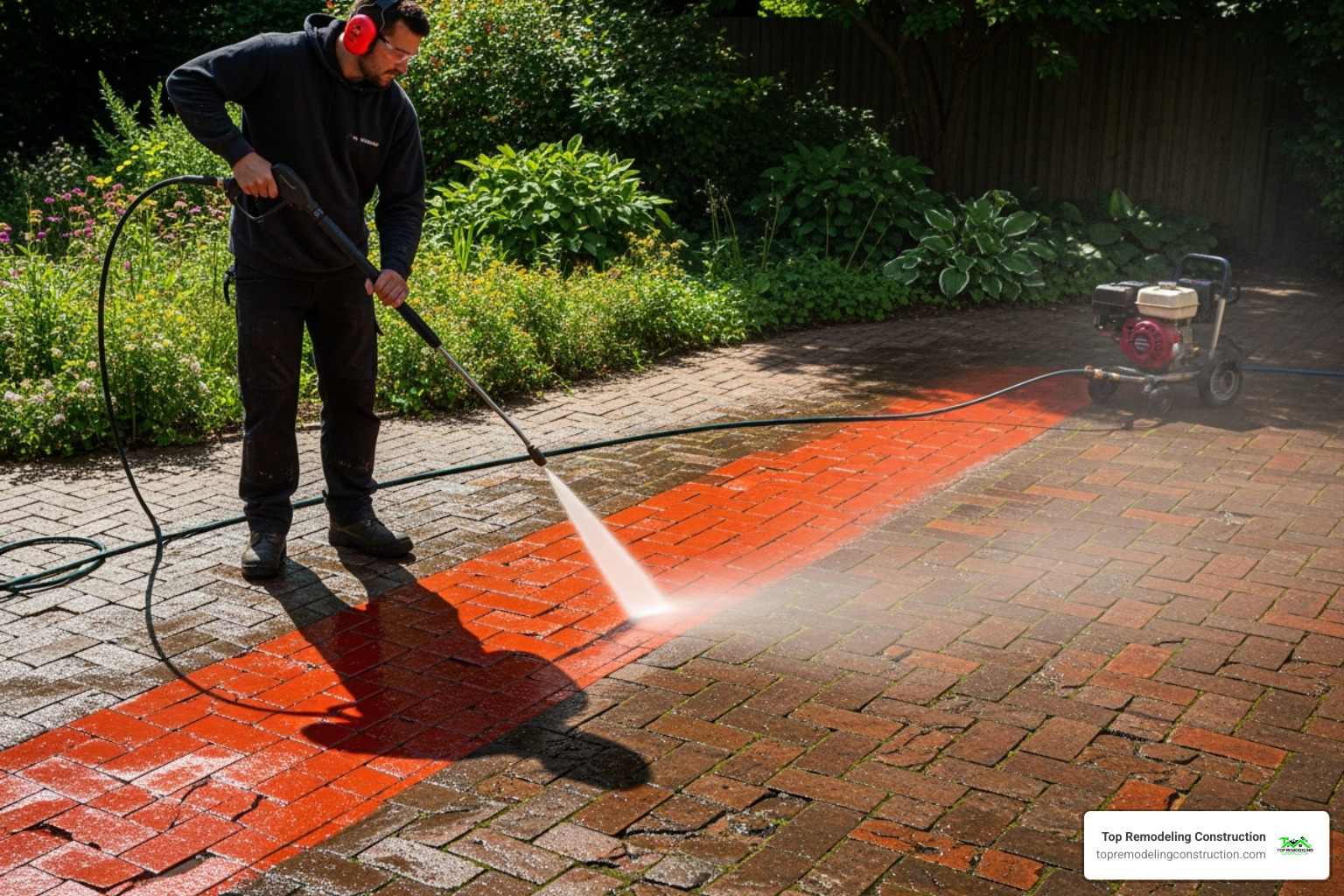
- Regular Cleaning: Sweep regularly to remove debris. For deeper cleaning, use a garden hose or a pressure washer on a low setting to avoid dislodging joint sand.
- Sealing: Apply a quality masonry sealer every 2-3 years to protect against stains, UV fading, and weather damage.
- Weed Control: The polymeric sand in the joints is your first line of defense. Pull any weeds that appear immediately to prevent them from taking root.
- Fixing Uneven Pavers: If a paver becomes loose or uneven, simply lift it, adjust the sand base, and reset it. If a large area becomes uneven, it may indicate a problem with the base that needs to be addressed.
- Addressing Drainage: If you notice water pooling, it could be a sign of settling. Ensure downspouts are directed away from the patio and that the surrounding grade still allows for proper water runoff.
Your Beautiful New Patio Awaits
Building your own brick patio is a rewarding project that adds significant value and enjoyment to your home. With careful planning and the right techniques, you can create a durable, beautiful outdoor space that will last for generations.
If a DIY project seems too daunting, or you want to ensure a perfect, professional result, don’t hesitate to reach out. Contact us today for a consultation and let our experts help you build the patio of your dreams.
Brick Patio Maintenance and Considerations
Our beautiful new patio is complete! Now, let’s talk about keeping it looking fantastic for years to come and some important considerations for its long-term health.
Key Features of Brick Pavers
Brick pavers are a fantastic choice for many reasons, but like all materials, they have their own characteristics. Let’s outline their key features:
| Feature | Description ## Brick Patio Installation Cost: What You Need to Know
Are you considering a beautiful new brick paver patio for your home? You’re in good company! Brick patios are loved for their classic aesthetic appeal, durability, and relatively low maintenance. But before you start dreaming of backyard BBQs and cozy outdoor evenings, it’s natural to wonder: “How much does a brick paver patio cost?”
At Top Remodeling Construction, we believe in transparency and helping you make informed decisions. This guide will break down the average costs, influencing factors, and provide insights into both professional installation and DIY approaches for your brick paver patio.
What is the average cost of installing a brick paver patio?
The average cost of brick paver patio installation can vary significantly based on several factors. On average, you can expect to pay anywhere from $14 to $24 per square foot, which typically includes both materials and labor if you hire a professional.
For a mid-sized project, the national average cost to build a paver patio generally falls between $2,400 and $7,000, with a common national average around $3,400.
What factors influence the cost of a brick paver patio?
Several key elements play a role in determining the final price tag of your brick paver patio:
- Patio Size: This is often the most significant cost driver.
- Design Complexity: Intricate patterns, curves, and multi-level designs require more labor and potentially more material cuts.
- Type of Brick Pavers: While our focus is on brick, even within “brick” there are variations (e.g., traditional clay brick vs. concrete pavers designed to look like brick). High-end pavers will cost more.
- Site Preparation: If your site requires extensive excavation, grading, or drainage solutions, these will add to the cost.
- Geographic Location: Material and labor costs vary by region. For instance, installation costs in Las Vegas, NV, might differ from those in other parts of the country due to local market conditions.
- Permits: Depending on your local regulations, you may need a permit, which comes with its own fee.
How does the size of the patio affect the cost per square foot?
Interestingly, the cost per square foot for brick paver patio installation often decreases as the overall size of the project increases. This is primarily due to economies of scale. Larger projects allow contractors to purchase materials in bulk at lower prices and spread fixed costs (like equipment mobilization) over more square footage.
For example, while a small 100-square-foot patio might cost at the higher end of the per-square-foot range, a 500-square-foot patio might fall closer to the lower end. This doesn’t mean the total cost is less for a larger patio, but rather that the unit cost becomes more efficient.
What are the typical labor costs for installing a brick paver patio?
Labor is a significant portion of the total cost for a professionally installed brick paver patio. On average, professional labor costs can range from $5 to $13 per square foot. This covers the expertise, time, and physical effort required for site preparation, base installation, paver laying, and finishing touches.
For a DIY enthusiast, while you save on labor costs, a project of this scale can take considerable time. An average-sized DIY brick patio can take two to three days for an experienced individual, but potentially 2-3 weeks if you’re an experienced DIYer with help, or even up to a month for an inexperienced person. It’s a rewarding but physically demanding endeavor!
How do different design patterns impact the overall cost?
Design patterns can definitely sway the price. Simple patterns like a running bond are generally the most cost-effective because they require fewer cuts and less intricate placement.
More complex patterns, such as herringbone or intricate circular designs, will increase labor costs. These patterns demand more precision, more time for cutting pavers, and a higher skill level from the installers. While they offer a stunning aesthetic, be prepared for a slightly higher investment for these artistic layouts.
What are the cost differences between professional installation and a DIY approach?
This is a common dilemma for homeowners. Here’s a breakdown:
-
Professional Installation:
- Cost: $14 to $24 per square foot (including labor and materials).
- Pros: Expertise, efficiency, professional-grade tools, warranties, less physical strain for you, typically faster completion.
- Cons: Higher upfront cost.
-
DIY Approach:
- Cost: Approximately $9 to $11 per square foot (materials only). For an average-sized patio, this could be $1,000 to $2,000 in total.
- Pros: Significant cost savings on labor, sense of accomplishment, full control over the project.
- Cons: Requires significant time (2-3 days for average, or weeks for larger/inexperienced), physical exertion, need to rent or buy tools, potential for errors if not carefully followed.
The choice depends on your budget, time availability, skill level, and comfort with physical labor. Many people find the physical demands of excavating and moving heavy materials quite challenging.
Are permits required for brick paver patio installations, and what is the typical cost?
Permit requirements vary widely by local municipality. In Las Vegas, NV, or any other location, it’s crucial to check with your local building department before starting any construction.
Generally, smaller, at-grade patios that don’t alter drainage significantly or attach to a structure might not require a permit. However, larger patios, those with significant excavation, liftd designs, or those that could impact water runoff, often do.
Permit costs are typically nominal, ranging from $50 to a few hundred dollars, depending on the project’s scope and local regulations. Ignoring permit requirements can lead to fines, project delays, or even the need to dismantle your patio.
Crucially, regardless of permit requirements, always call 811 (the national “Call Before You Dig” hotline) a few days before you plan to excavate. This free service ensures that underground utility lines (gas, water, electric, communication) are marked, preventing dangerous and costly accidents. Safety first!
What are the essential materials needed for a brick paver patio installation?
A successful brick paver patio relies on a specific layering of materials, each serving a vital purpose:
- Paving Bricks: The top layer, available in various colors, sizes, and styles. Make sure they are rated for outdoor use.
- Polymeric Sand: This special joint sand hardens when moistened, locking pavers in place, preventing weed growth, and deterring insects.
- Edging Material: Plastic paver edging or landscape timbers are used to create a border that holds the pavers securely in place.
- Bedding Sand (Coarse or Paver Sand): A 1-2 inch layer that provides a level surface for the pavers to rest on.
- Gravel Base (Crushed Stone or Paver Base): A 4-6 inch layer that provides structural support, distributes weight, and ensures proper drainage.
- Landscape Fabric: Placed between the excavated soil and the gravel base, it prevents weeds and keeps the base materials from migrating into the soil.
What are the key steps involved in preparing the site for a brick paver patio?
Site preparation is the backbone of a durable patio. We need to:
- Mark the Area: Use stakes and string to clearly define the patio’s perimeter. Ensure corners are square by measuring diagonals.
- Clear Vegetation: Remove all grass, weeds, and roots from the marked area.
- Excavate: Dig down to the required depth (typically 7-8 inches to accommodate the gravel, sand, and brick layers).
- Establish Slope: Ensure the excavated subgrade has a consistent slope (1/4-inch per linear foot) away from any structures for drainage.
- Compact Subgrade: Use a plate compactor to thoroughly tamp down the exposed soil, creating a firm foundation.
How do you create a stable base and edging for a brick paver patio?
A stable base is paramount for longevity. After compacting the subgrade:
- Lay Landscape Fabric: Roll out landscape fabric over the entire excavated area, overlapping seams by at least 6 inches, to prevent weed growth and stabilize the base.
- Add Gravel Base: Spread 4-6 inches of gravel (crushed stone or paver base). Compact this layer thoroughly using a plate compactor, in 2-3 inch lifts, lightly watering between compaction passes to aid settlement.
- Install Edging: Place your chosen edging material (plastic paver edging or timbers) around the perimeter. Secure it with stakes driven into the ground, ensuring it’s level or follows the desired slope of the patio. This edging will hold the pavers in place.
- Add Bedding Sand: Spread 1-2 inches of coarse paver sand over the compacted gravel. Use screed rails (1-inch diameter pipes) and a 2×4 board to level the sand, creating a perfectly smooth and consistent bedding layer for the pavers.
What are the best practices for laying brick pavers to ensure a level and durable surface?
Laying the pavers requires precision and patience:
- Start Smart: Begin laying pavers from a fixed point, such as a house foundation or a straight edge, working your way outwards.
- Follow the Pattern: Lay pavers according to your chosen design (e.g., herringbone, running bond). Maintain consistent spacing between bricks (typically 1/8-inch, which polymeric sand fills).
- Place, Don’t Slide: Gently place each paver onto the sand bed. Avoid sliding them, as this can disturb the leveled sand.
- Tap into Place: Use a rubber mallet to tap each paver firmly into the sand, ensuring it’s level with adjacent pavers and the overall patio surface.
- Check Level Regularly: Continuously check the level of your pavers, both individually and across the entire patio, using a small level and a long carpenter’s level.
- Cut as Needed: Use a masonry saw with a diamond blade (and proper safety gear) to cut pavers for edges, curves, or intricate patterns.
- Kneel on Plywood: As you work, place a sheet of plywood over installed pavers to kneel on. This distributes your weight and prevents disturbing the laid bricks.
If you ever feel overwhelmed or want to ensure a flawlessly laid surface, Our Flooring Installation Specialists can help with expert paver installation.
How do you finish a brick paver patio, including filling joints and sealing?
The finishing touches are what truly complete our patio and ensure its longevity:
- Spread Polymeric Sand: Once all pavers are laid and cut, spread polymeric sand generously over the entire patio surface.
- Sweep into Joints: Using a stiff broom, sweep the polymeric sand into all the joints between the pavers. Sweep in multiple directions to ensure complete filling.
- Compact and Refill: Run a plate compactor over the entire patio surface. This vibrates the pavers, settling the sand deeper into the joints. You will likely need to add more polymeric sand and sweep it in again after compaction until the joints are completely full.
- Clear Excess: Carefully sweep off any remaining polymeric sand from the surface of the pavers. Any sand left on the surface can harden and leave a visible haze.
- Moisten to Activate: Lightly mist the entire patio with a garden hose using a fine spray. The water activates the polymers in the sand, causing it to harden. Avoid heavy streams of water that could wash sand out. You may need to mist a few times, allowing the surface to dry slightly between applications.
- Apply Sealer (Optional but Recommended): Once the polymeric sand has fully cured (check product instructions, usually 24-48 hours), you can apply a clear masonry sealer. This protects the pavers from stains, improves their color, and adds an extra layer of weather protection.
Brick Patio Maintenance and Considerations
Our beautiful new patio is complete! Now, let’s talk about keeping it looking fantastic for years to come and some important considerations for its long-term health.
Key Features of Brick Pavers
Brick pavers are a fantastic choice for many reasons, but like all materials, they have their own characteristics. Let’s outline their key features:
| Feature | Description